
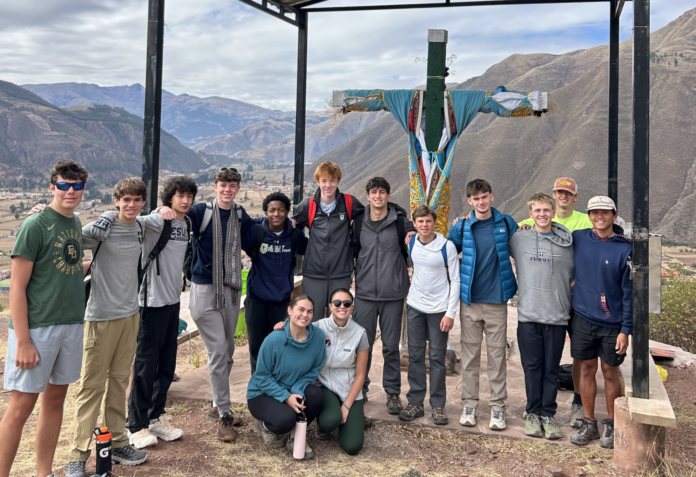
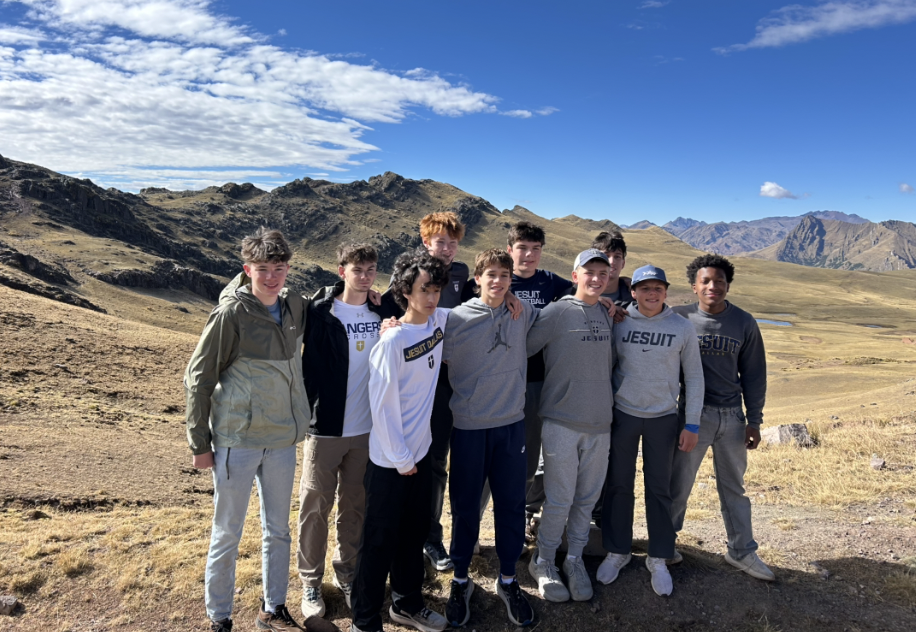
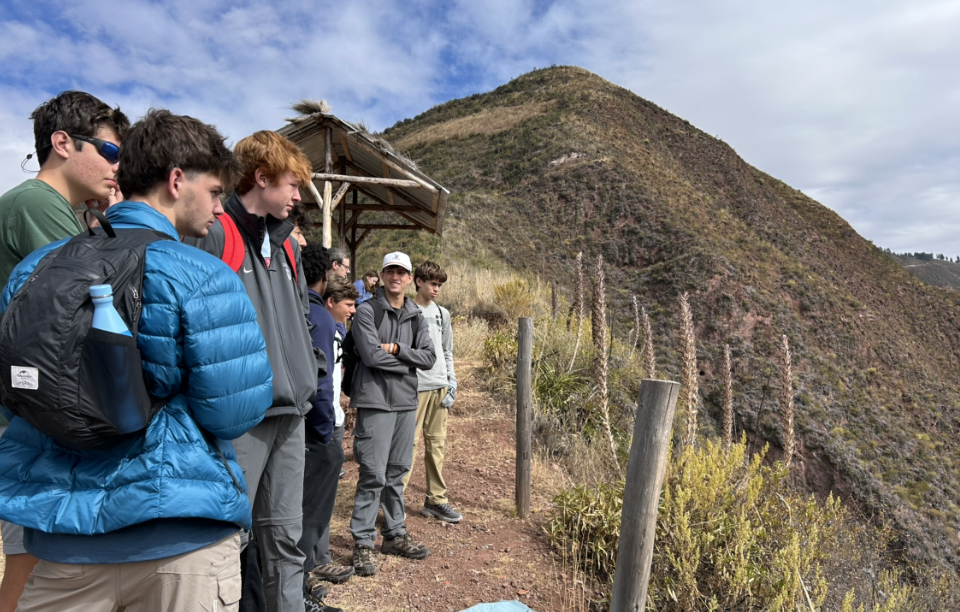
There, on the imposing shelf of an Andean mountain sat in a staggered circle two groups of high-school age, young adults, drastically different in their upbringing yet remarkably unified. Through grins and laughs, simple translations were exchanged from English to the local language, Quechua, and vice versa, communicated via the common language, Spanish; this conversation hardly functioned as informative (I don’t remember a single word of Quechua passed to our group), but it perfectly showcased something integral to our nature: we’re all brothers and sisters, and superficial differences in language, heritage, and wealth do not matter in creating true kinship and community.
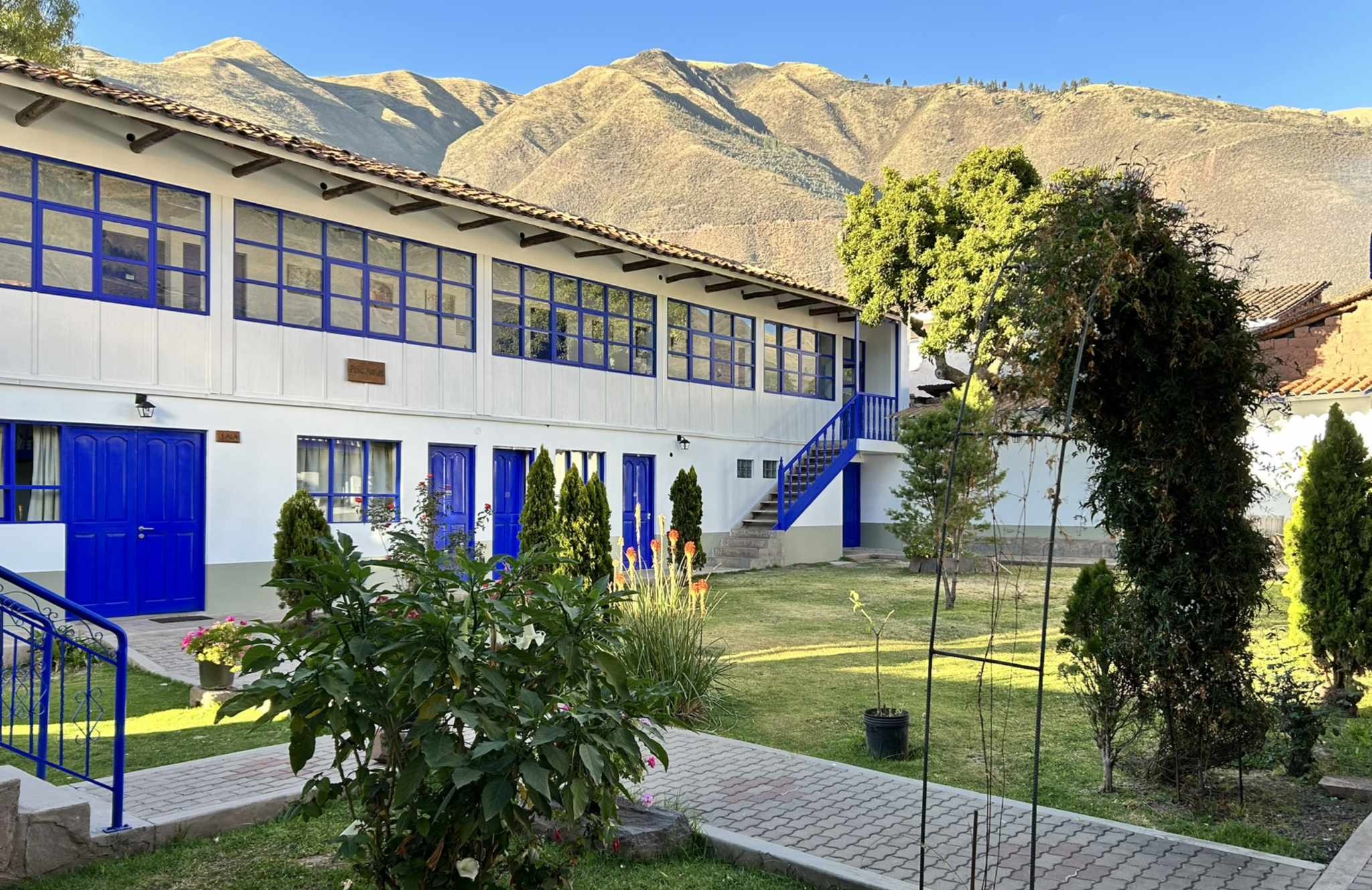
Over the summer of 2026, Jesuit students from various classes began their odyssey into Peru, flighting from Miami to Lima, from Lima to Cusco, and driving from Cusco to the small, mountainous community of Andahuayllilas, the site of the parish where students and faculty on the trip would stay. Once we had arrived in Andahuayllilas and our phones were seized for the remainder of the trip, our group attended a beautifully chaotic mass in the San Pedro Apóstol de Andahuaylillas Church. This Jesuit church was constructed during early Spanish conquests of the Andes and founded upon around a meter of ancient Incan stone, decorated with grand, bright murals and abundant gold. During this mass, locals rushed throughout the church and the surrounding platform as a pre-festival celebration was being hastily assembled outside; the turbulent atmosphere, I felt, closely mirrored the erratic, disorganized and nevertheless beautiful nature of our own faith lives. This idea of joy, that being uncomfortable happiness, would become a central theme throughout this trip and a crucial component in our renewed view on vocational discernment.
Highlights of the Trip
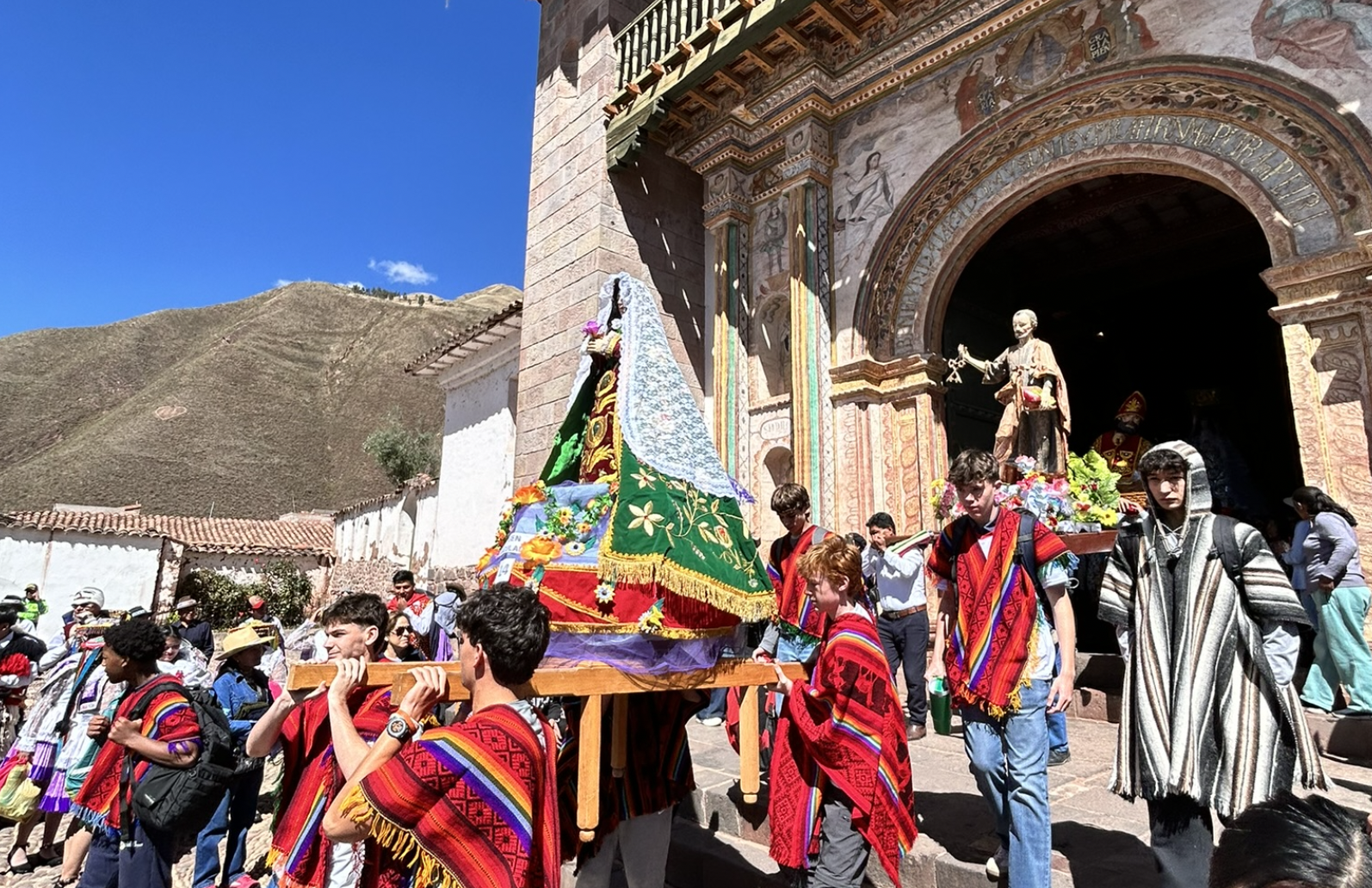
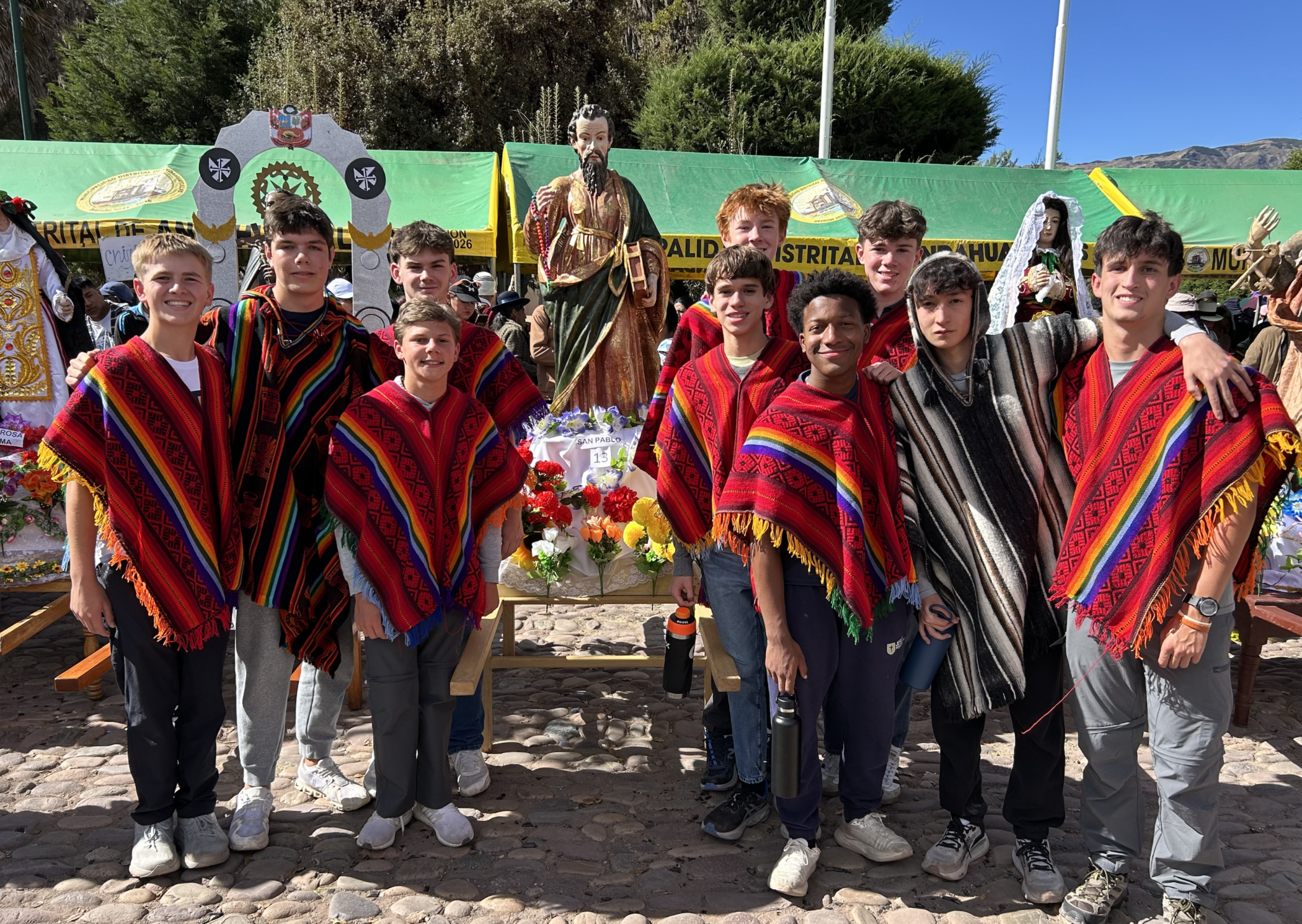
On the first full day in Andahuayllilas, our group met for our first daily reflection before taking part in the annual Festividad de San Pedro Apósto (The Feast of Saint Peter the Apostle), a town-wide, day-long celebration featuring the parading of carved statues and images of around 50 sacred figures throughout the streets. Our group carried two heavy statues, one crewed by four and another by eight, the first depicting of the town’s patron saint, Saint Peter, and the other the Virgin Mary. We made our way around the town twice, dismounted the statues in the church and wandered around the very active square, starting pickup games with locals and riskily tasting street food, notably ordering from one makeshift stand a slightly vile-looking but delicious dish of local guinea pig. Altogether, this was our first major “thrown into the waters” event culturally and something I feel so grateful to have experienced.
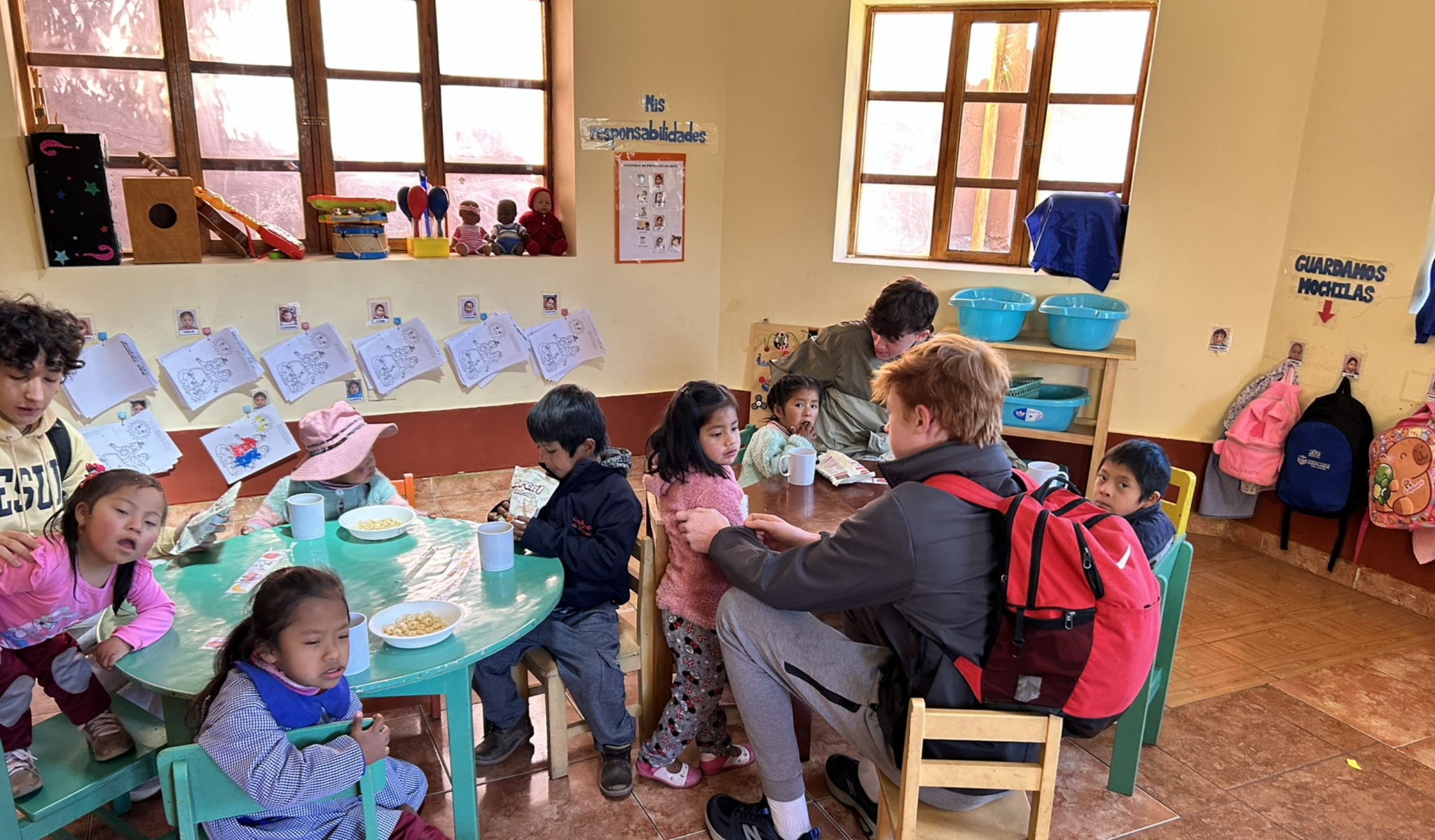
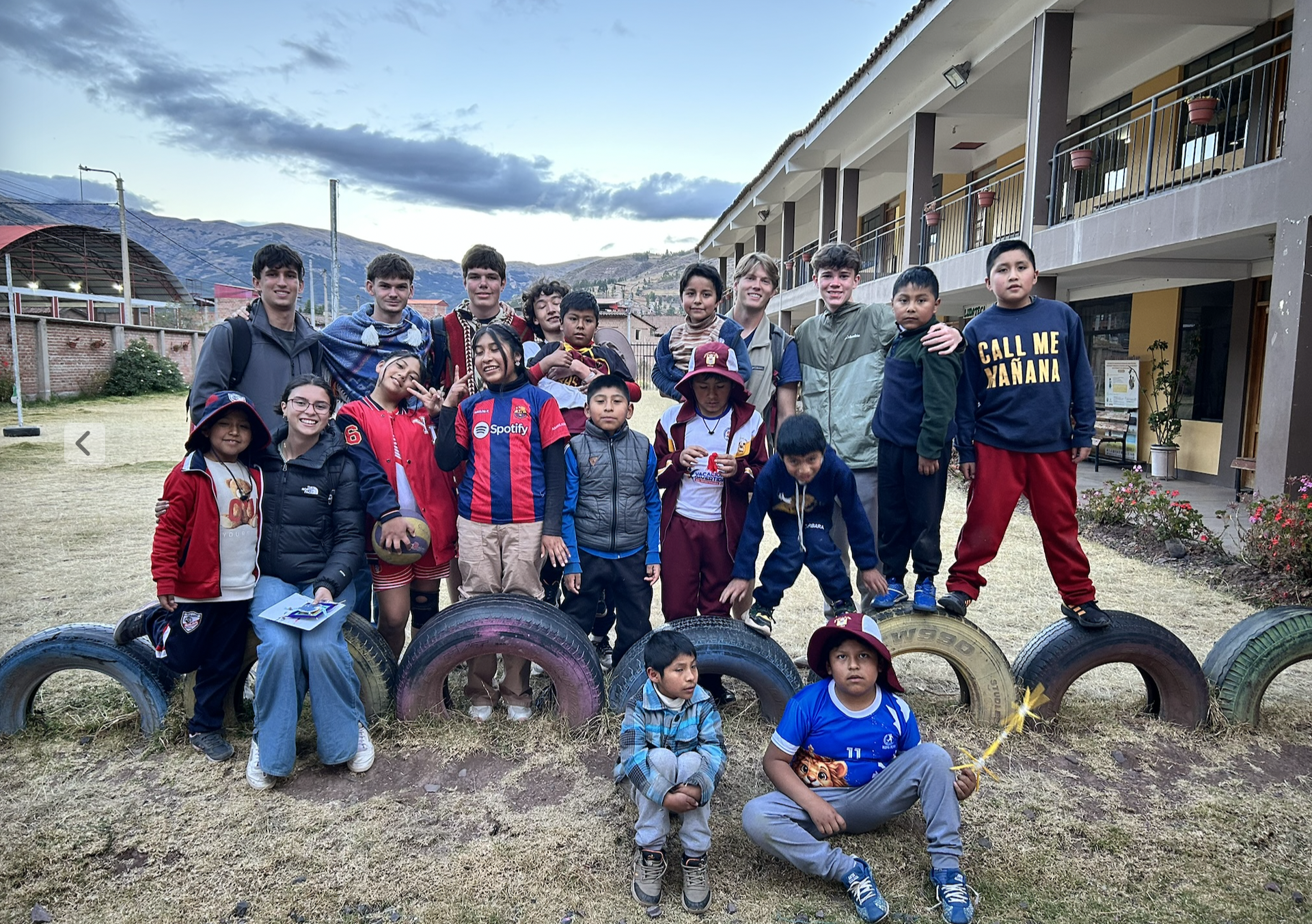
After our second night spent in the parish, we set out to the CEBE San Antonio School, the only school for children with cognitive disabilities in the province of Cusco. We spent the school day in two different segments: one indoors participating with the schoolchildren in highly interactive arts and crafts, and the next outdoors in a proportionally-explorative recess in the garden. While inside the classroom, we and the students recited days of the week, months of the year, and each others’ names, glued different fragments of colored paper to fashion a paper duck and ate a simple but delicious breakfast of cereal and quinoa. Outside, everyone was called to watch a performance of a Peruvian national march performed by an older group of students at the school, followed by a long recess period. During the recess period, I especially remember helping a student water the garden’s plants and teaching him how different types of plants would react to their allocated sum of water.
“My most memorable moment at the San antionio school was eating breakfast with the kids. It was significant to me because they had welcomed us into their traditions and it was the first moment that we were now longer strangers but brothers and sisters in Christ.” – Jacob Guyette ’28
In the time spent at the CEBE San Antonio School, we came to vividly understand the hardships of the children, teachers, and parents; yet despite the extreme sacrifices made and heavy burdens lugged, the people I met at this school were some of the most joyful and loving people I’ve ever met. I feel that this experience, too, highlights the point I made earlier about discomfort coexisting with, or sometimes even being a driver of, joy. To my point on brotherhood and sisterhood, there could hardly be a better example of factors like wealth, heritage, and neurological difference holding no real significance in forming human solidarity. One girl I had an encounter with at the school, Sophia, would even strictly refer to me as “hermano” or “brother,” a powerful word that truly captures, almost to a flawless degree, the strong bonds that were formed.
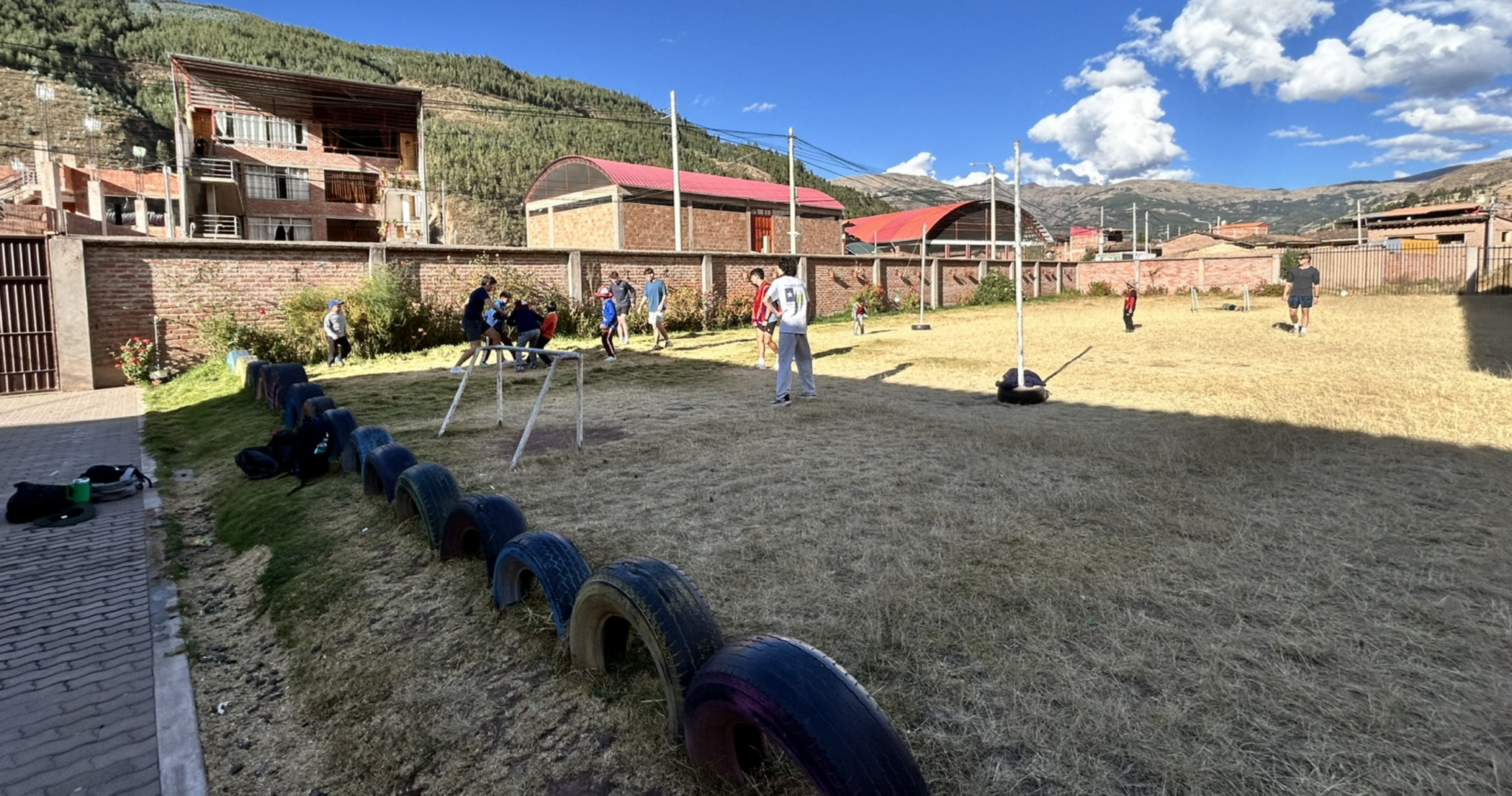
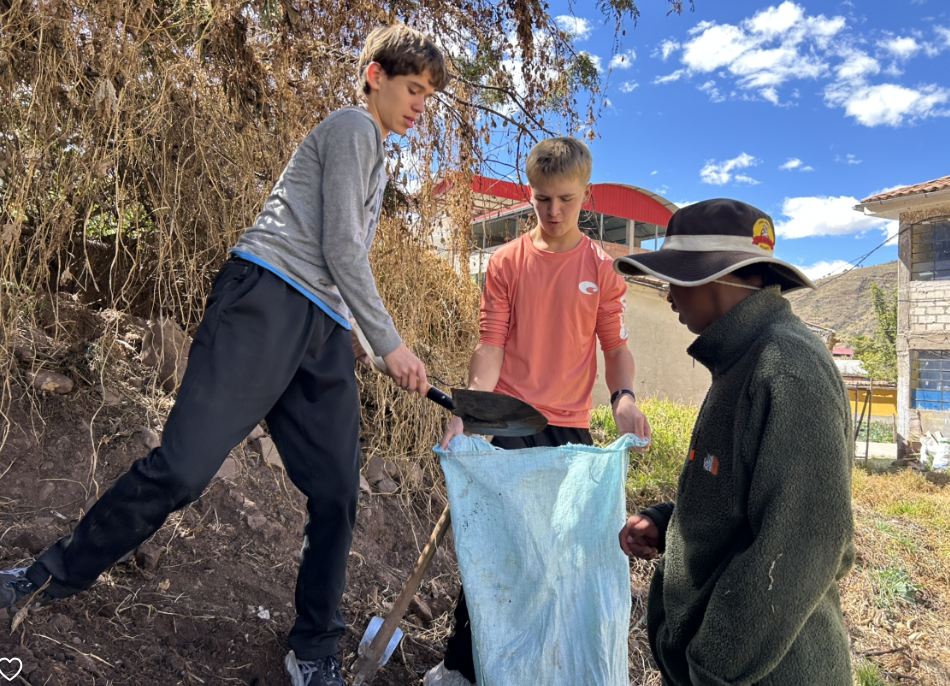
The same day, we broke into two smaller groups, mine traveling to a Jesuit school in a peripheral town called Urcos, and the other to a school in Huaro. In these respective schools over the course of two days, we spent hours tutoring, farming, playing soccer and more generally building connections with the schoolchildren and teachers. Most bittersweet was learning about their stories. Many children in Huaro have troubled households and an absence of fatherly guidance. For them, school, friendships and soccer provide a certain sense of belonging and stability they’d otherwise be missing. Having the opportunity to befriend and learn from the children I met in Huaro was incredibly special. To Luis, Max, Josue, and all of the other amazing young men and women I met, I hope to see you again in the near future.
The final major encounter I’d like to discuss was at the very remote Virgen del Rosario School, a school situated in the center of vast, sparse communities deep in the Andes Mountains, being the only educational institution available to these settlements spanning hours of driving. Due to their isolation-induced poverty, the families in this region lack any source of clean water or a steady supply of food, and have no direct means of communicating with the outside world. In fact, for a long stretch of time, the populations in these communities were noticeably shorter and fatigued due to servere malnutrition. For this reason, I’d like to immensely thank both Jesuit Dallas and the Quispicanchi Project for being the sole suppliers of school meals to the Virgen del Rosario School, and for paving the way towards sustainable food production through investments into agricultural infrastructure in the area.
Upon arriving, my group specifically was placed in a classroom with students of a similar age, and we were immediately welcomed. After undergoing a brief introductory period where names and snippets about our respective schools and backgrounds were exchanged, we transitioned into playing a game of soccer on a small stretch of grass, an activity that I found at this point to be the single best icebreaker in Peru. As exhaustion set in (our exhaustion), the game segued into the conversation I described in the introduction of this article: the back-and-forth translation of English and Quechua. I described this encounter twice, not only to provide a little more situational context, but because it so importantly demonstrates cultural and linguistic difference as a precursor to relationship rather than an inhibitor.
My Personal Takeaway
The experiences I’ve described thus far were extremely meaningful to me, even potentially life-changing. This trip radically changed how I perceive poverty, and it allowed me to see beyond our bubble of abundance. Solidarity is the sole catalyst of life and happiness in these communities without access to basic necessities, and it’s something societies of abundance too often dismiss. We ignorantly value wealth and immediate comfort over our own brotherhood and sisterhood, an ignorance that can only truly be broken after building relationships with anyone at any given opportunity.
And beyond the feeling of joy derived from these relationships that is absent in material wealth (which shouldn’t be a primary end for action anyways), this type of interdependency and fellowship is vital to express, to the greatest extent, our intrinsic humanity. It’s easy to watch through a television a stranger, someone who lives in a world irreconcilable to your own, suffer tragedy; it’s impossible to watch your brother suffer the same conditions, as you too, feel pain. In Pedro Arrupe’s words, “only by being a man or woman for others does one become fully human,” and in such a world that we live in, where machinery becomes increasingly resemblant of humans and where humans are likened to machinery, it is necessary that we take counteraction through kinship and solidarity, our utmost expression of humanity, for if we don’t, humanity as a concept will cease to exist.
Additional Activities and Thoughts
I’ve outlined the four experiences I found most integral to the overarching theme of solidarity and that were most challenging to my existing worldviews, but this was only a fraction of the trip and I’d like to give some coverage to some of the other activities and adventures.
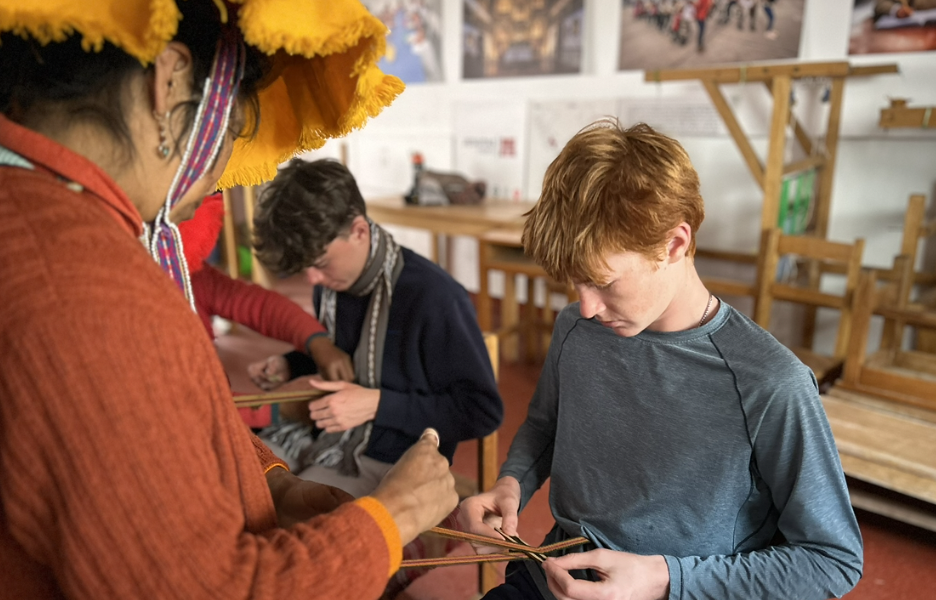
First, on the fourth and fifth days, we were given the amazing opportunity to participate in two artisan workshops, one concerned with jewelry led by a very kind and hardworking woman named Eva, and the other with textiles, known as Fabrica. Fabrica, operated by the Quispicanchi Project itself, details their mission to help rural communities where “women and families experience high rates of unemployment, food insecurity, and lack of access to opportunities to improve their basic standard of living,” adding that “in many cases women also experience high rates of physical and emotional abuse at the hands of their spouse or partner.” Both workshops revealed to us certain important symbols, styles and techniques used in the Quispicanchi region, as well as the elaborate skills of individuals.
Then on the sixth day, after a bittersweet departure from Andahuayllias, we drove a little over two-and-a-half hours to the Ollantaytambo Archeological Site and underwent a fascinating tour led by Alfredo, a very intelligent and captivating friend of the Quispicanchi Project. Alfredo was an amazing guide, explaining the intricate architectural premises of the Incan Terraces and Temples such as their position towards the sun during a solstice or equinox, sacred times of the year. Early the next morning, we boarded the train to our next and final destination, Machu Picchu.
The noun “wonder” perfectly describes this incredible, lush Incan masterpiece, and I recommend that anyone who hasn’t seen it should put it at the top of their traveling bucket list. The in-depth tour of Machu Picchu was directed by Alfredo, and again, he did an impressive job, demonstrating a genuine command of historical and cultural context. There were so many more events I would’ve loved to discuss in this article, but I feel that painstakingly listing everything would make for an unreadable article without coming close to grasping the full content of this trip.
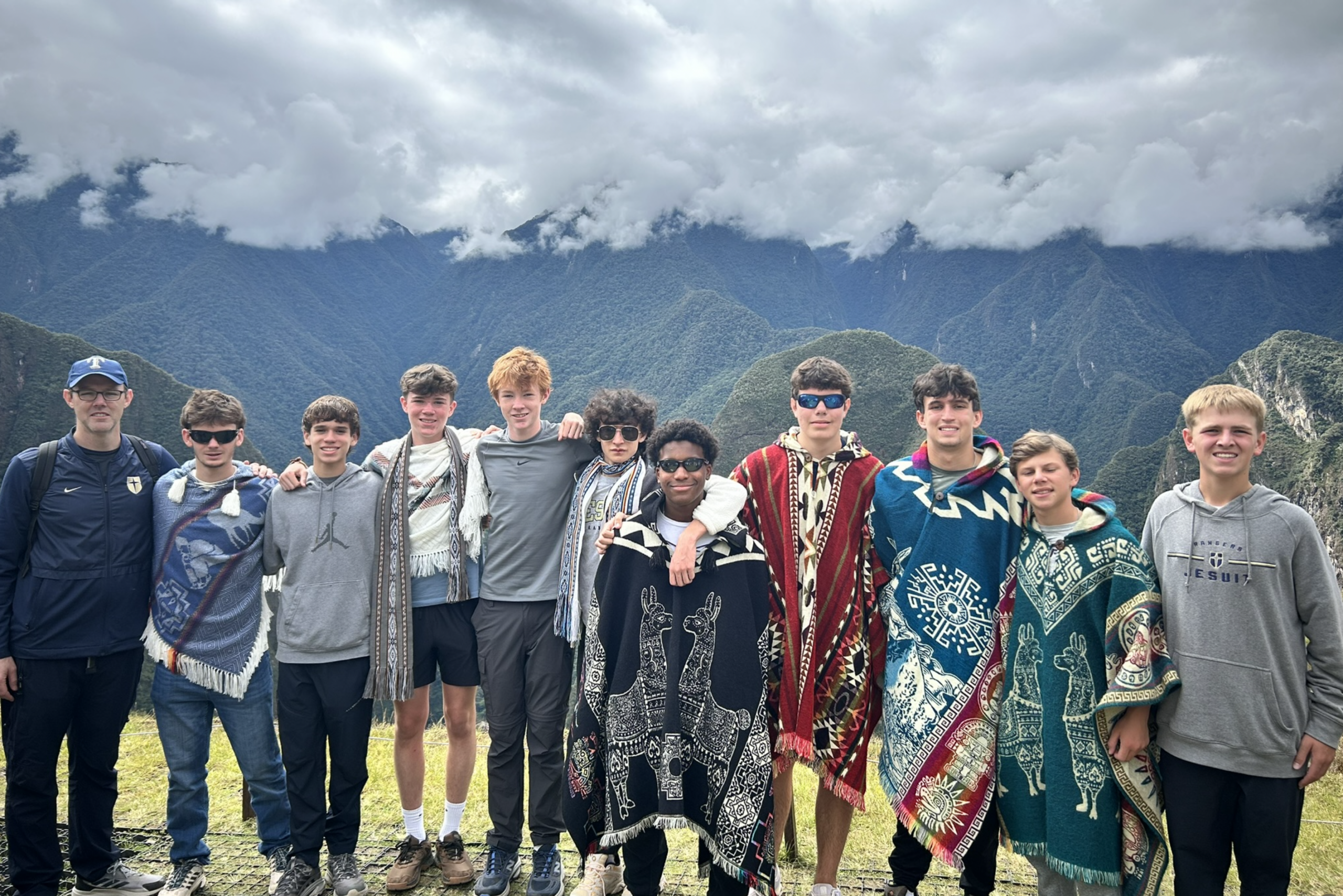
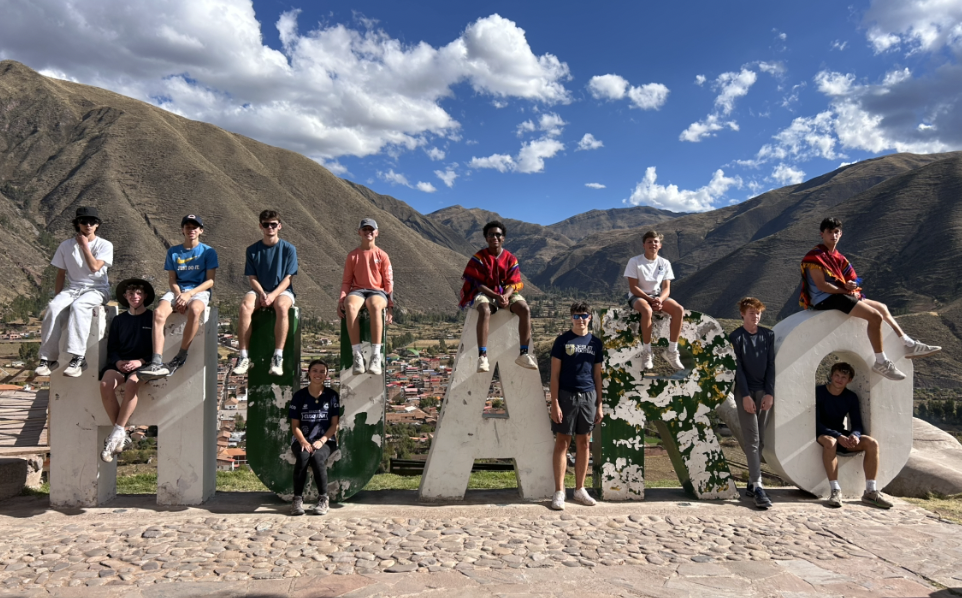
It is worth mentioning, too, that the trip sectioned off plenty of leisure to roam markets and have more independent adventures, whilst also giving us the tools to reflect and properly internalize what we came across. On the first morning (as I had stated) and every night after dinner, we were guided through a curated, scripture and essay-driven reflection, leading us through uncovering, in our own words and through our own personal experiences, associations to broader Catholic social teaching. This process surprisingly didn’t feel undesirable at all, but rather like a satisfying conclusion to the day that ensured no encounters I’d made would go to waste. The trip had a perfect balance of organized ventures, introspection and free exploration.
“[The reflections] were very well thought out and the questions were very thought provoking. There weren’t basic answers. It was definitely based around everything that we did on the trip, who we met and how we encountered them.” – Ms. Zink
I cannot speak highly enough about the Quispicanchi Project and its founder, Dr. Riemer, a graduate of Jesuit Dallas and a truly inspiring, enterprising proponent for social justice. This was the single most impactful journey I’ve been on, and I encourage all of my Jesuit brothers to venture out and attend this program. And to those who have the means, please consider supporting this project, whether it be through volunteer work or purchasing products from Fabrica. To all of those in the service department at Jesuit Dallas, I likewise express my gratitude for your hard work in providing us with opportunities to engage in the Catholic mission and become, to the fullest extent, Men for Others.
Tune into The Roundup for more immersion trip coverage!