

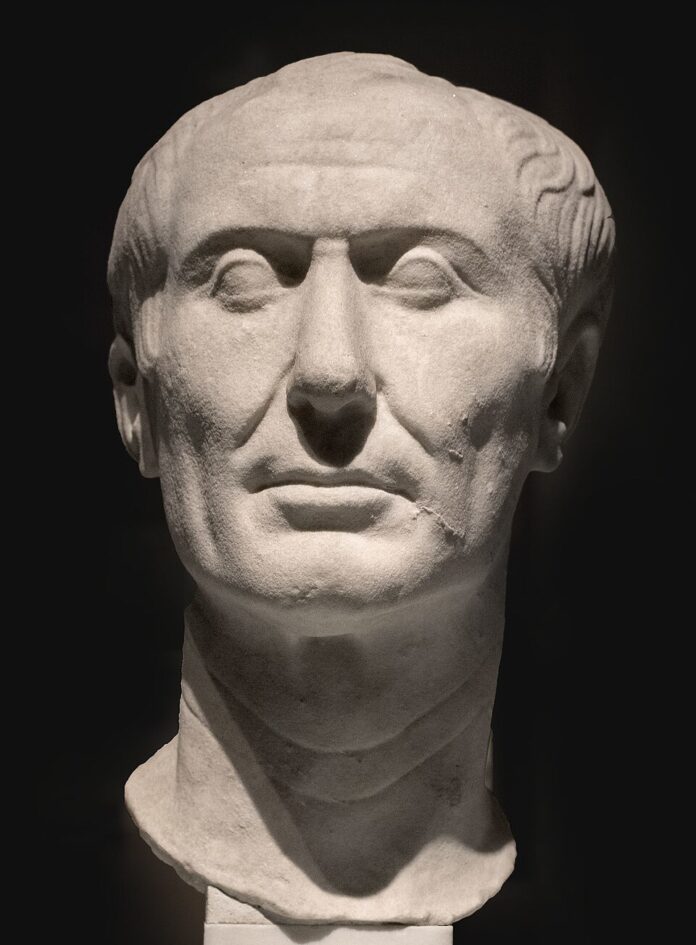
In my previous assertion on republicanism and the nature of states, “The Mint of Citizenry,” I discussed, using the mint of Athens as a metaphor, the functioning of a citizens’ republic, and more specifically the nature of the power dynamic between the citizens and the state in a republic. The State is the government of, by, and for the citizens. It is an extension of the citizenry as a limb is the extension of a body. In an ideal republic, the citizens and state are one and inseparable; its army is the citizens’ army, its treasury the citizens’ wealth, its leader the primus inter pares of equal citizens.
The State exists because of the People as a collective, not the other way around. The Turkish state exists because of the Turks; the Turks do not exist because of the Turkish state. The commonalities of the Turks justify the formation of a Turkish state to promote their common interest; the State relies upon its people. When the commonality of the people is destroyed, yet the State cannot cease to exist on account of the reliance of the people on its functions, Despotism is the result.
Despotism is the result of the decay of citizenship and the Republic. Originally, I stated, “Citizenship is a cornerstone of society. When it is not properly valued, [republican] society collapses… [a]fter all, order still must be maintained, and the system [of daily life] must continue to function. When the citizen republic no longer values citizenship, it is soon taught to respect the force of a dictator.”
Despotism is the opposite of republicanism. It is the governance of the dictator and the emperor.
The Derivation of Power
The most fundamental difference between the Republic and the Despotism is the source of power. In a Republic, the state rests upon the people; the reason for the state’s existence is the citizens’ existence. For example, the government of Poland would not exist without the Polish people; that a person is Polish is inherent to who they are, and the existence of a state for Poles follows from the common interests, nature, and culture of the Polish people.
Under despotism, it is the opposite. The collective of the people rests upon the state. For example, what makes Italians, Medes, Israelites, Celts, Germans, Greeks, Egyptians, and Syrians “Roman” in the year 300? It is that they are subject to the authority of the Emperor of the Romans. One is made Roman not by the Latin language, culture, or an ethnic descent, but by the force of the state. The imposition of the empire enforces a commonality on the people- the people’s existence is predicated on the state; the state’s existence is not predicated on the people.

The Causes of the Rise of Despotism
The reason for the rise of despots out of a republic is simple- the commonality of the citizens upon which the State rests has become unstable enough that the State is no longer secure upon its foundation, yet the State cannot cease to exist because its role in the lives of the people is significant enough that its disintegration would be so immensely destructive as to be unconscionable. When these circumstances are met, the only way to preserve both the State and the people under it is to impose an identity of force.
The identity of force is the national identity of despotism. It is founded not in cultural, ethnic, religious, or ideological similarity but simply in the fact that you are a subject of the same ruler. The identity of force is imposed by despotism to remedy the problem of identity that gave rise to it. It replaces the empirical commonality of the people which has previously been destroyed with the destruction of citizenship. Despotism is not the cause of the destruction of citizenship; it is a reaction to the destruction of citizenship.
Subjecthood, the Consequence of Despotism
This may seem to be no great issue, a change with little impact on reality, or a philosophical hallucination drawing a distinction where none exists. However, the change of a republic to a despotism comes with it a fundamental change in how national identity, rights, popular sovereignty, and self-determination function and are perceived.
In a republic, the rights of citizens naturally flow from the equality of citizens. Every right is a logical conclusion from the principles of the equality of citizens and their primacy over the State. In a despotism, on the other hand, where the State holds primacy over the citizens, the “rights” of the people are merely delegated privileges deemed convenient by the State. They can be revoked or added as is necessary for the State.
The situation of the people of a despotism can be described as subjecthood, because they are subjected to the authority of the state. The people as a collective body are no longer the origin point of the state, but simply one organ of the state among many. The subject does not have rights as does the citizen; he has privileges. The natural tendency is that the state will, over time and when it is convenient, revoke those privileges when they are not convenient and will generally not reinstate them.
The Object of the Despot
The goal of the State in despotism is the gathering of power under the State. The only moral object is the accumulation of state power; all serve the state, the economy, the people, the courts, and the systems of public welfare are all organized solely for the benefit of the state, and any benefit to others is purely incidental. Centralization and creation of power is the goal of all action. A despotism does not hesitate to alter its economy to make its people poorer, or dispossess them of their birthrights, as long as to do so will make the economy more useful to the State.
State-worship is the conclusion of despotism. Once the state is decoupled from its reliance on the people for moral justification for its existence, its only goal is to preserve its own power.

A Caveat
The process by which despotism arises as described herein is strictly a process of the decay of a citizen republic into despotism. I make no pretension that this is the only process by which a citizen republic may decay into despotism, nor do I claim that only a citizen republic may decay into despotism. However, this is a process of decay seen from Rome to the modern day, and is a constant, creeping danger so long as the people are not aware of what it means to be one of them. The fundamental problem is one of understanding; with each successive generation removed from the founding of a republic, the political and philosophical machinery of its functioning becomes more obscure if they are not properly taught; gradually, compromises will be made on the fundamental parts of republicanism for the sake of convenience. Proper education, classical education, an education in the higher levels of philosophy that enable complex thought, are a necessity to forestall decline and renew democratic virtue. Without philosophy, there is no Republic. Without philosophers, there is no philosophy. Therefore, a Republic is a nation of philosophers. The republican ideal is every citizen must be his own philosopher. This particular decay process can be prevented by a remedy of education in the fundamentals of philosophy, to allow the ordered and logical thought necessary to understand the machinery of a Republic.
Stay tuned into The Roundup for more student viewpoints!