
The Overview of the King Crab
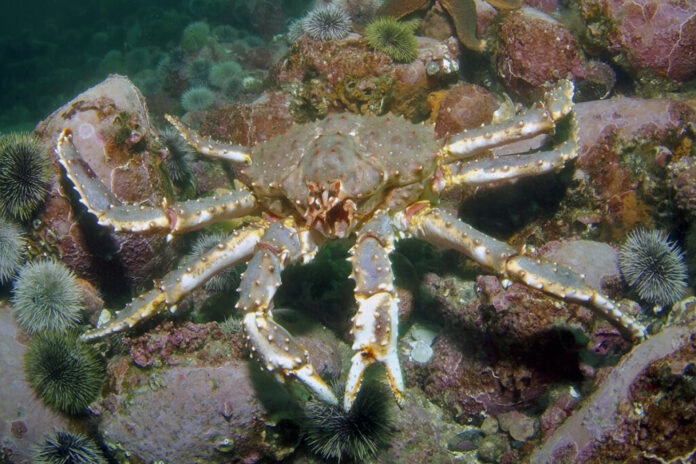
The red king crab, a formidable crustacean renowned for its colossal size and distinct reddish color, commands attention in the frigid waters of the northern Pacific and the Barents Sea. Also known as Paralithodes camtschaticus, this species stands out not only for its impressive appearance but also for its economic importance and ecological impact.
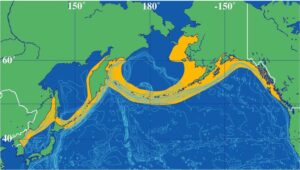
Native to the North Pacific, from Japan to the Gulf of Alaska, the red king crab has also been introduced to the Barents Sea, where it has flourished and become a significant component of local ecosystems. The crab’s robust, spiky exoskeleton can span up to 11 inches (28 centimeters), with males often growing larger than females. One of the most distinctive features of the red king crab is its set of formidable, powerful claws, which it uses for foraging, defense, and communication. Renowned for its succulent and flavorful meat, the red king crab supports a lucrative commercial fishery.
These crabs are harvested in large numbers, with the majority coming from the waters of Alaska. The fishery is highly regulated to ensure sustainability and prevent overexploitation of the crab populations. The economic significance of the red king crab extends beyond local markets, as it has become a sought-after delicacy in the international seafood trade.
Ecological Concerns: Suffering from Success
However, the success of the red king crab in non-native environments, such as the Barents Sea, has sparked ecological concerns. In these regions, the crab has been labeled an invasive species, impacting native ecosystems by outcompeting local species for resources and altering the dynamics of marine communities. This infestation of king crabs has been seen in the extreme case of Norway, which saw a dramatic rise “[The crabs] could even change the oxygen conditions on the seafloor since they nip out the animals that dig up and turn over the sediment,” said by marine biologist at the Norwegian Polar Institute, Haaron Hop. Oxygen depletion, also known as hypoxia, could lead to major species die-offs in great quantities in Norwegian and Arctic bays. Scientists and conservationists are closely monitoring these ecological shifts and studying the potential long-term consequences of the red king crab’s introduction to non-indigenous waters.
Ecology of the King Crab: Behaviors and diets
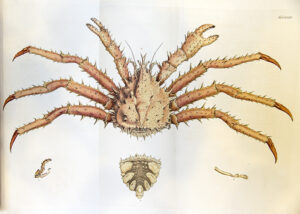
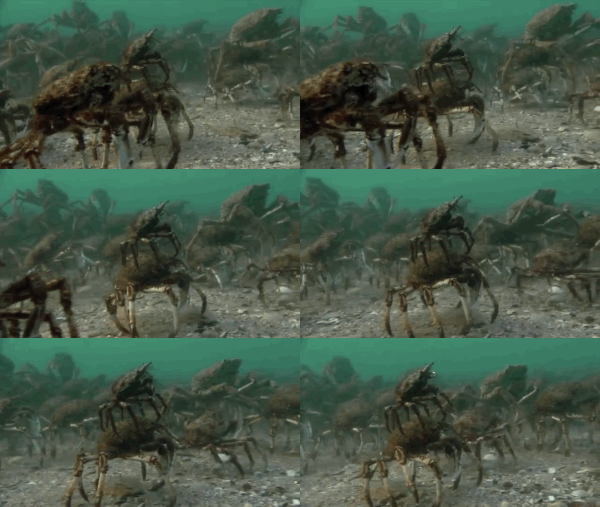
The red king crab has five sets of gills used for respiration, which are in the bronchial chamber within the carapace. The carapace is a covering of hard sheet-like exoskeleton. Because king crabs have this carapace, they can’t circulate blood throughout the carapace by diffusion, meaning the king crab needs an alternative method to move blood and oxygen throughout the body. They use special respiratory gases which they pump throughout the body to keep circulation. The diets of king crabs are similar to almost every other species of crab, which means they ingest anything they can grab and crush with their claws, scavenging algae, worms, and dead biomass on the seafloor. King crabs, when mature, they migrate from the shallow waters to the deeper sea floor, where they group in giant piles called “podding.” These piles can be hundreds or even thousands of crabs, coming together to deter the plethora of predators looking for their next meal.
Fun Facts:
- Some king crabs can walk over 100 miles during their annual migration and can travel up to a mile a day
- A female king crab can lay up to 2000 eggs at once
- A study showed that king crabs were able to navigate a maze and able to remember it up to two weeks later