

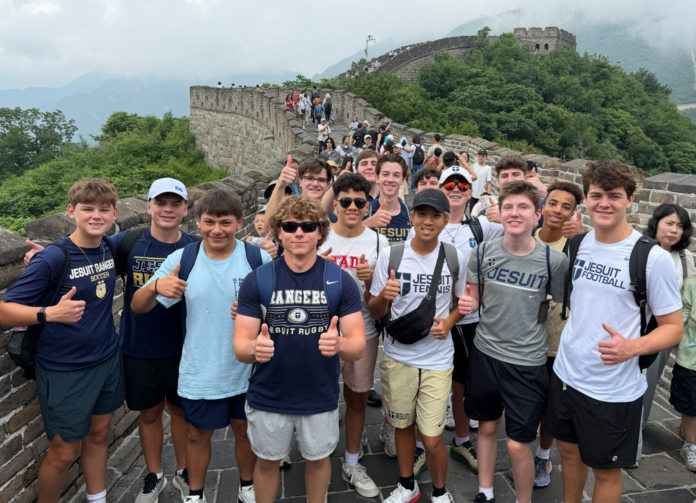
From Saturday, June 27 to Monday, July 6, a group of 16 Jesuit students ranging from rising sophomores to rising seniors, along with three Jesuit faculty members (Mrs. Lu, Mr. Gan and Mr. Pinto) embarked on a journey to the other side of the world, exploring a variety of cities throughout China, from the bustling streets of Beijing to the mountainous city of Lijiang. During the entirety of the trip, students, as well as the faculty accompanying them, were able to explore the culture and history of China hands-on and engage in authentic interactions with locals, allowing the group to have a much better idea of what life in China is truly like.
Beijing (北京 – Běijīng)
Day 1
Before the trip had even officially started, the entire group was faced with a major roadblock: the first flight of their connecting itinerary stopping in Tokyo that would have later arrived in Beijing had been cancelled. However, not wanting their months of preparation and the opportunity of a lifetime for their students to go to waste, the Jesuit faculty, along with help from the group’s personal travel agent Mrs. Cheng, were able to secure another flight to Tokyo to catch their second flight.
After the group arrived in Tokyo Airport, many students excitedly explored the terminal, as this trip marked many of these students’ first times to both China and Japan, even if the latter destination was simply a quick stop.
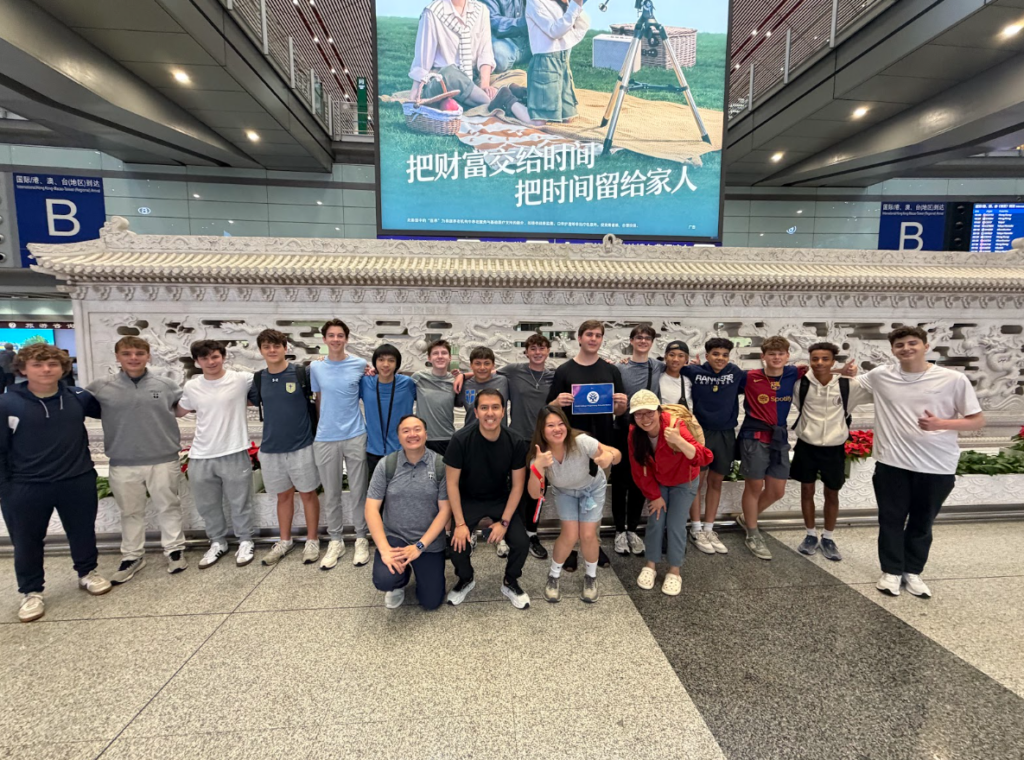
Following around 16 plus hours on flights, the group, feeling very tired and worn out, finally arrived at Beijing Capital International Airport. They received a warm welcome from their travel agent as well as their tour guide that would show them around Beijing. Goodie bags filled with familiar foods like Oreos and bananas also helped greet the group, making them feel comfortable before arriving at their hotel.
Day 2
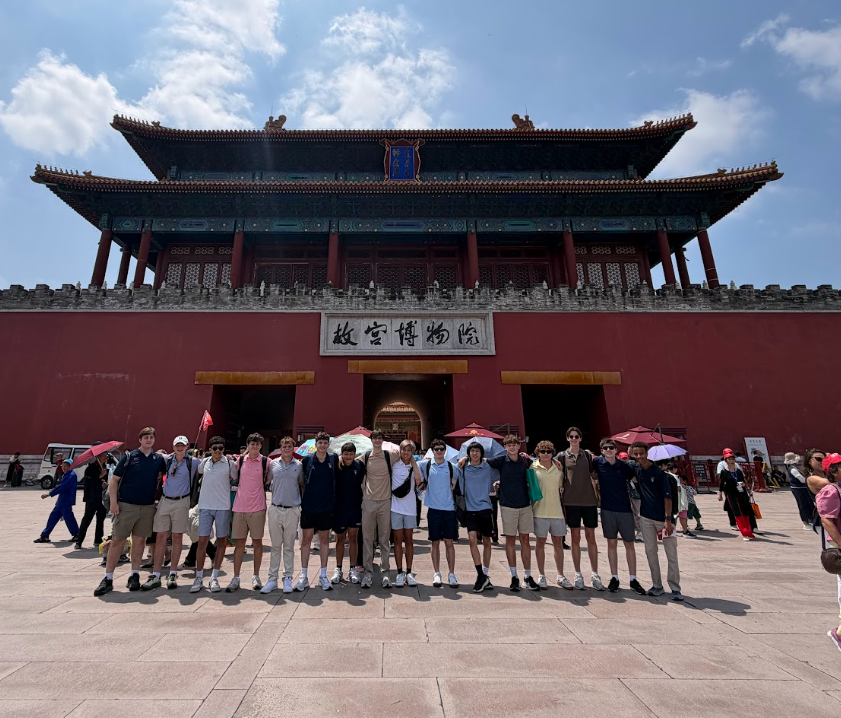
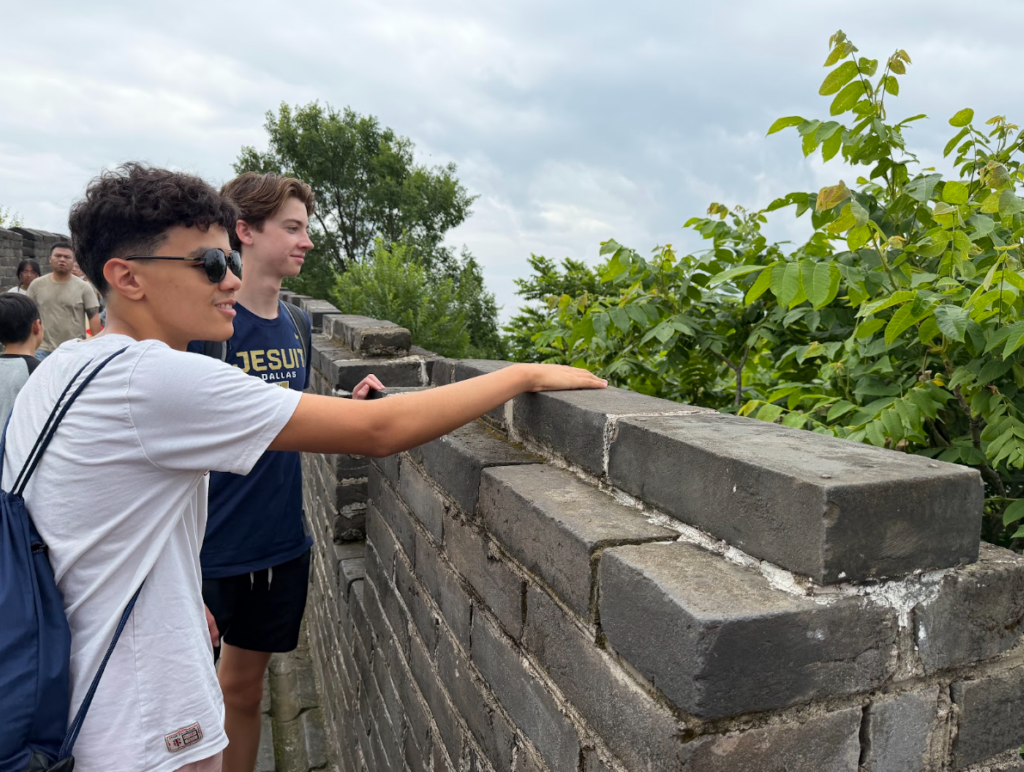
After spending their first night in China in a hotel located within a university’s campus, the group departed for the Great Wall (长城 – Chángchéng). To the group’s benefit, clouds filled the sky, making for a beautiful day while also shielding everyone from the sun.
“I really…liked [going to] the Great Wall of China. […] I’ve always wanted to go there…and it was really special…seeing the mountains. […] Standing on it is something extraordinary.”
– Leo Magana ’29
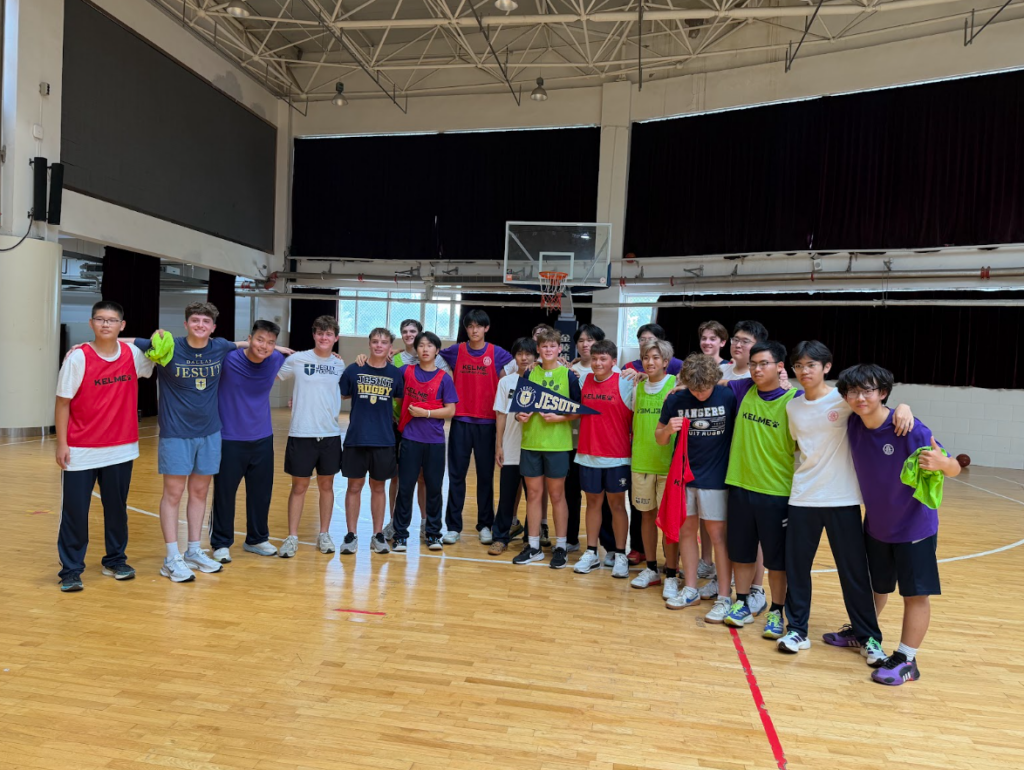
Following their time at the Great Wall, the group headed towards a Beijing High School that has been part of a program with Jesuit Dallas that allows for students at each school to be paired up with students at the other school, enabling them to be able to receive real-world experience with either English or Mandarin while also getting to build a relationship with someone from a distant country. Because of this, the students on the trip that had also been enrolled in this program looked forward to getting to meet their Pen-Pals (how partners in this program are referred to as) for the first time.
“When we visited the Chinese school, the American and Chinese students interacted so naturally and easily. Sports, music, art, food, movies, games, homework and exams gave them countless shared topics through which they could get to know each other. Basketball was an especially memorable example. Each team included both American and Chinese students, and even though they had never practiced together, they quickly developed impressive teamwork and made some awesome passes and plays.”
– Mrs. Lu
The afternoon at the high school kicked off with a tour of the facilities, which included a track and a chicken coup (for class pets) among countless other amenities. In addition to this, students were able to gaze upon the hallways of the high school, filled with student-made artwork. Then, Jesuit Dallas and the Beijing High School students teamed up with each other for a friendly game of basketball before the Jesuit students joined one of the high school’s English classes, answering questions about American highschoolers’ lives. To close out the day, the Jesuit students were finally able to meet their Pen-Pals face-to-face, exchanging gifts and playing games with each other.
“I felt heard. […My Pen-Pal] actually cared for what I liked and what I cared for…then she got me something…she knew I would like.”
– Leo Magana ’29
Day 3
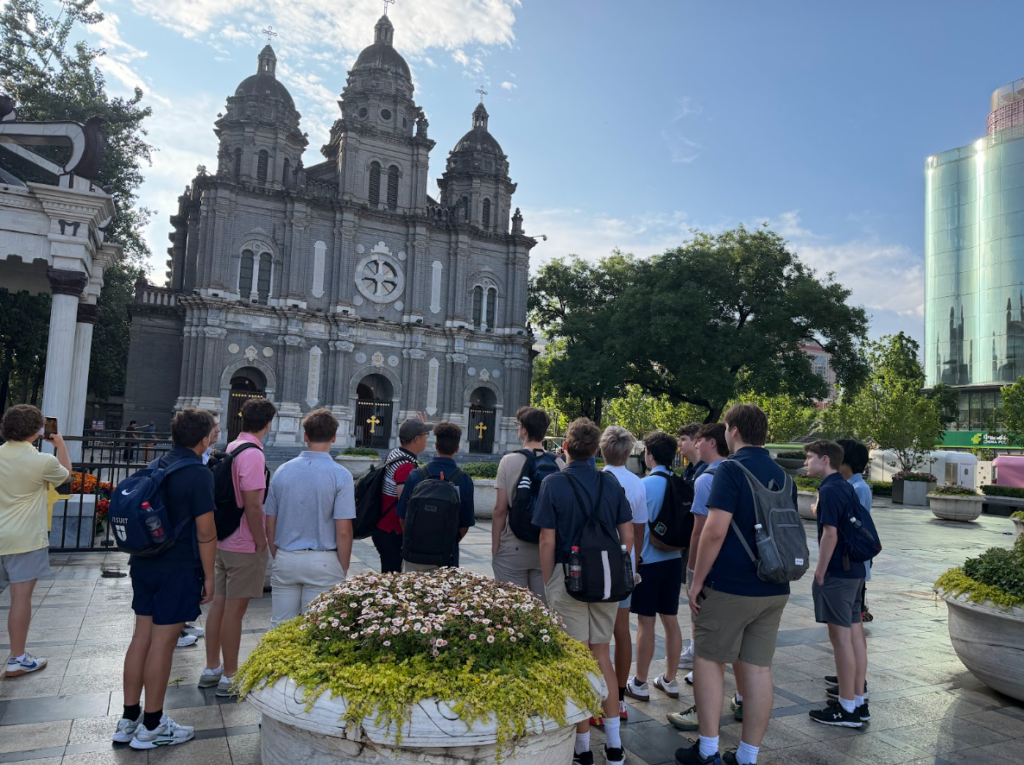
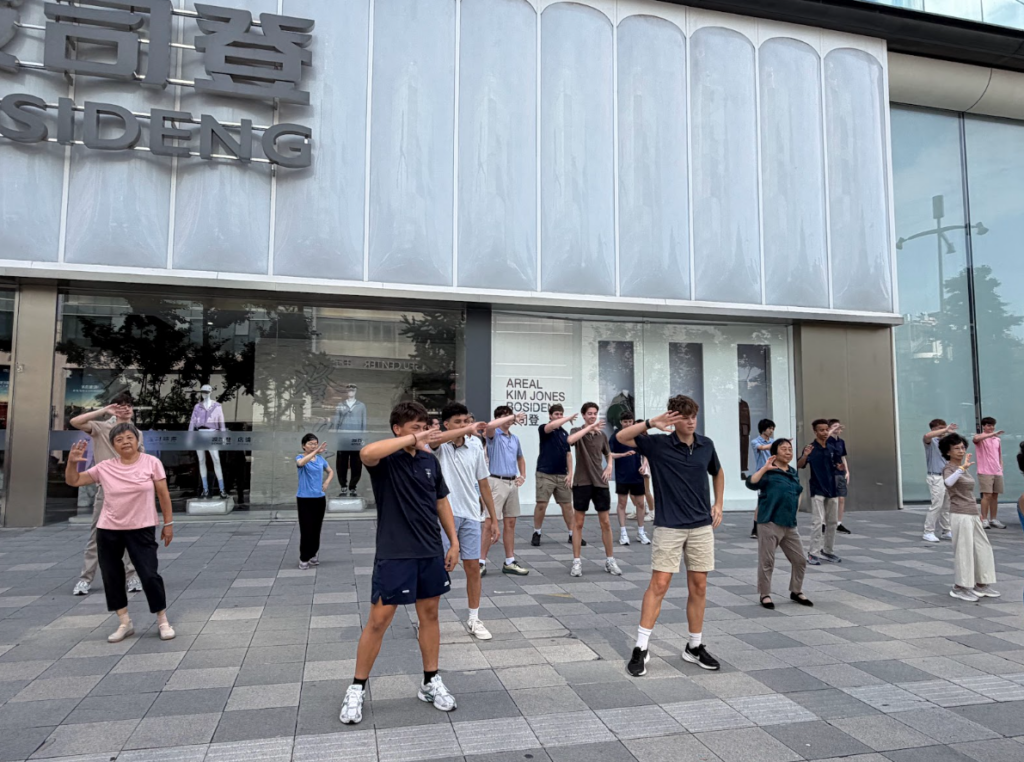
Students woke up early to attend mass at a Catholic cathedral in Beijing. Helping to wake them up, the students joined a group of locals engaging in the practice of Taji (太极 – Tàijí). Following the celebration, one of the priests helped explain how the cathedral operated and answered students’ questions. After leaving the cathedral that morning the group was able to join another group of people square dancing (广场舞 – Guǎngchǎng wǔ).
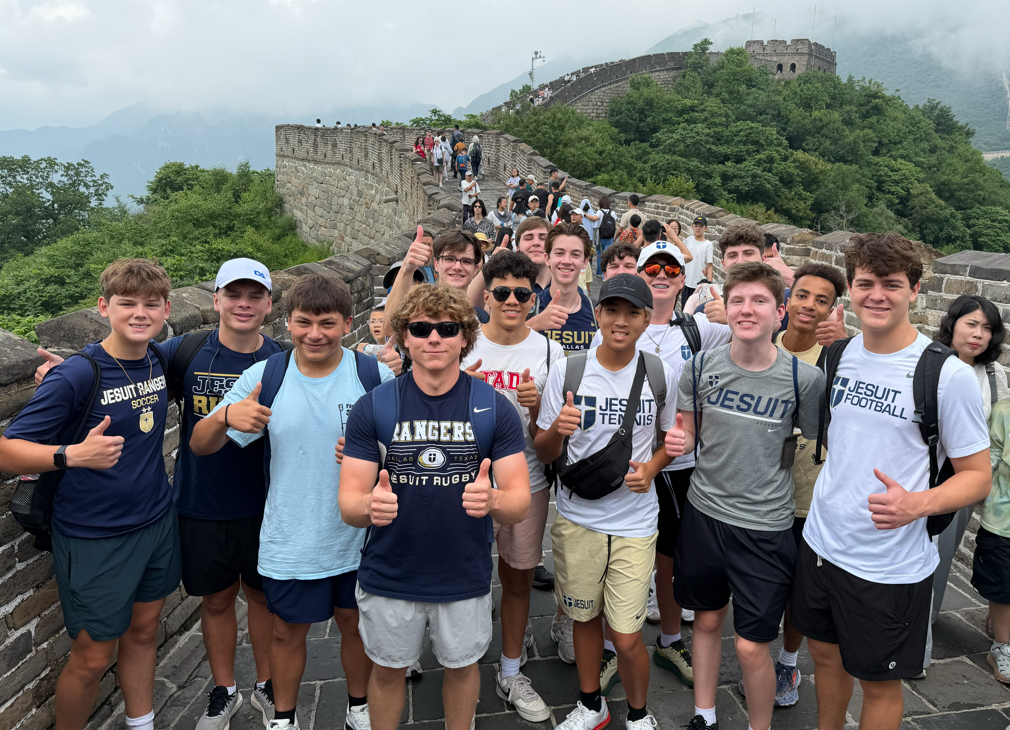
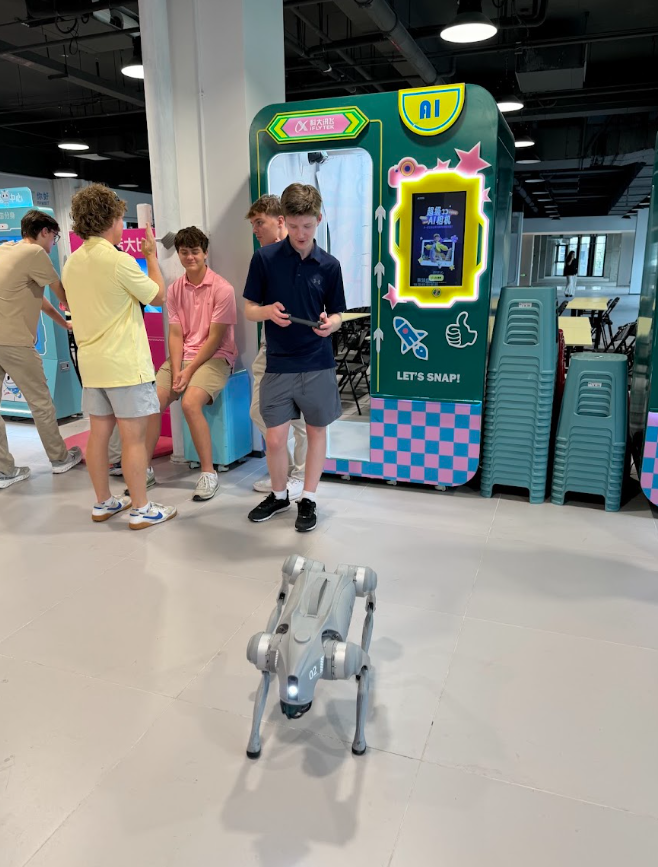
The group continued their day by visiting the Forbidden City (故宫 – Gùgōng), also known as the Palace Museum. Students were able to freely explore after a guided tour of the complex, with one of the places explored being the large garden. Their next stop, a Chinese technology company’s space called the iFLYTEK AI Science Popularization Base, allowed them to experiment and test out different implementations of Artificial Intelligence. One of the pieces of tech that drew in the most people was a robotic dog that interested students were able to control themselves. In addition to this, everyone in the group built voice-activated UFO night lights that they got to take home as souvenirs.
To round out the day students visited the National Stadium, nicknamed the Bird’s Nest, at Beijing’s Olympic Park.
“What truly helps us build connections and leave a lasting impression on others is our individual personality and unique character. […] Our Beijing [tour] guide was humorous and enthusiastic, loved sharing stories behind Chinese idioms and often introduced us to Chinese philosophies about life. […He did not speak] what would be considered perfect English, but after spending just a few days together, the students grew very fond of [him].”
– Mrs. Lu
Day 4
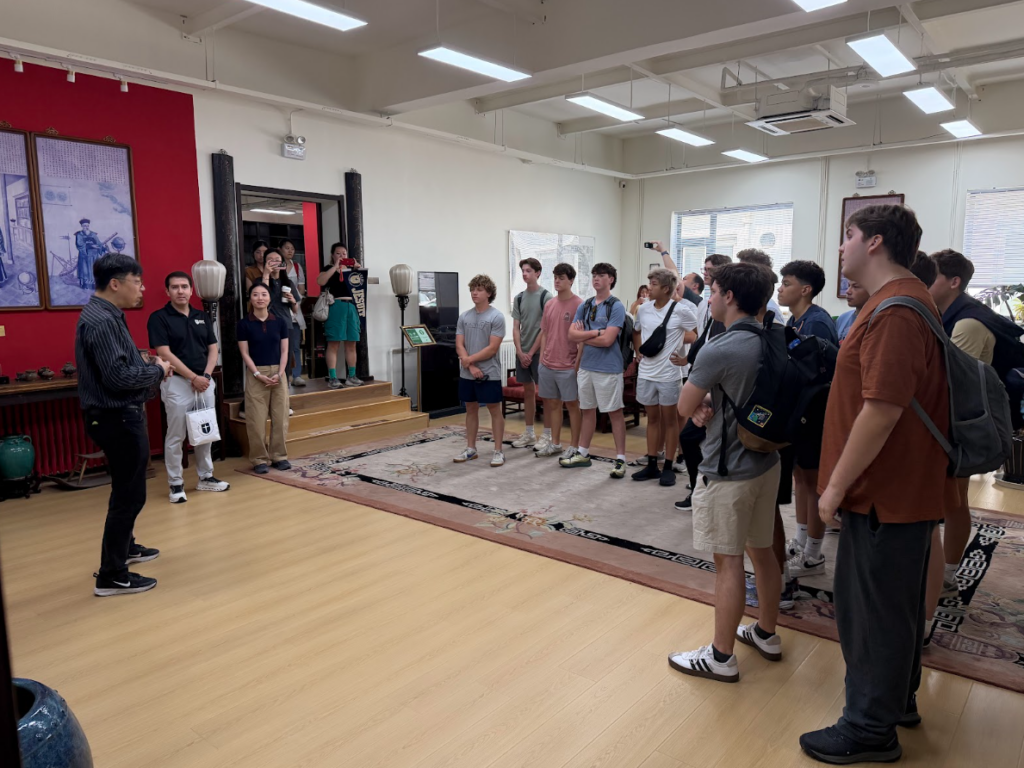
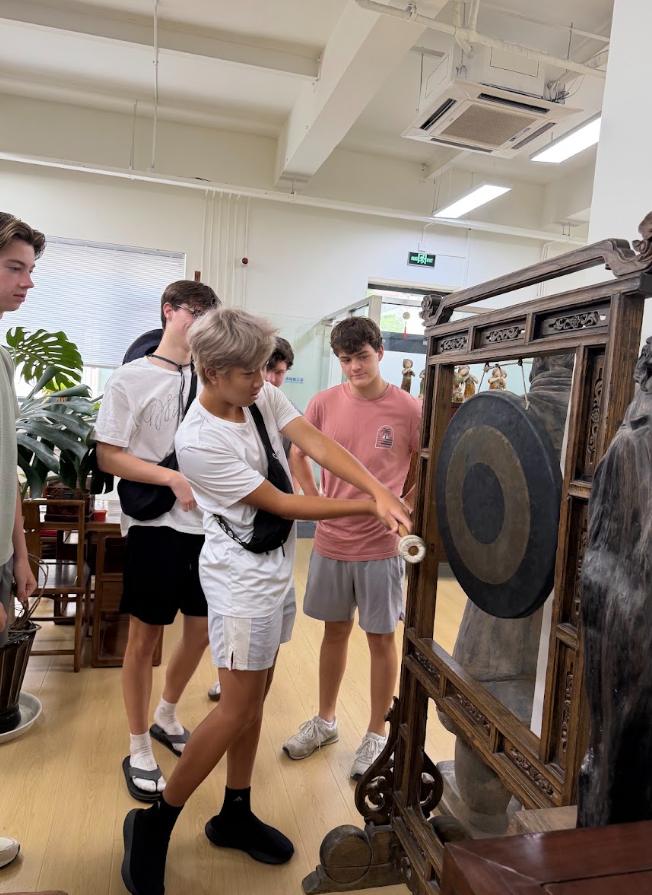
For their final activity in Beijing, the group travelled to the Jesuit Beijing Center, a building established by the Jesuits to help educate people visiting Beijing about the history of Chinese Culture. Unlike most museums, the staff at the Beijing Center encouraged students to touch the artifacts, the most popular one to touch being the gong.
Kunming (昆明 – Kūnmíng)
Day 5
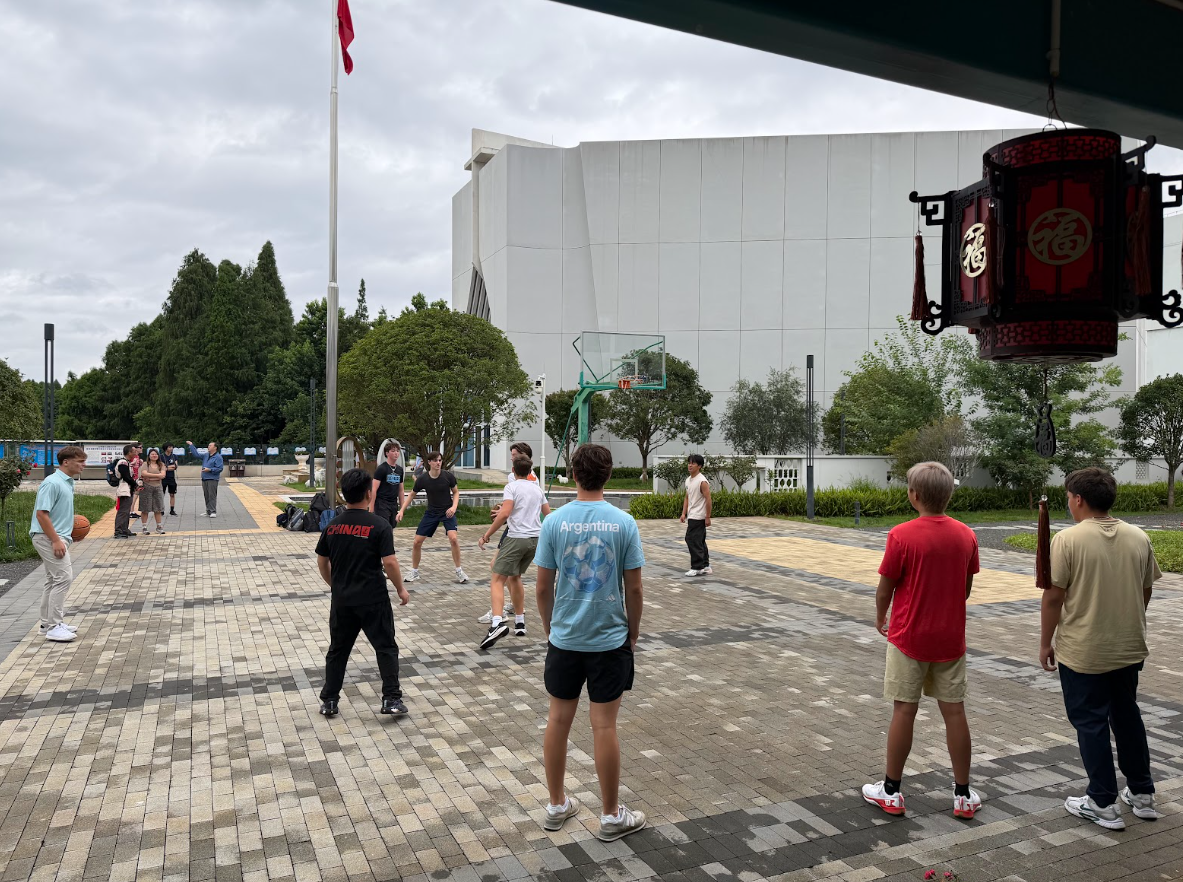
The group visited the Sacred Heart Cathedral, where they explored both inside and outside of the building. Statues of different biblical figures, such as the four evangelists, stood sprinkled throughout the campus. In addition, a basketball court lay within the campus, where the students, along with one of the priests as well as other locals, played. The priest then offered a blessing for the members of the group before they departed.
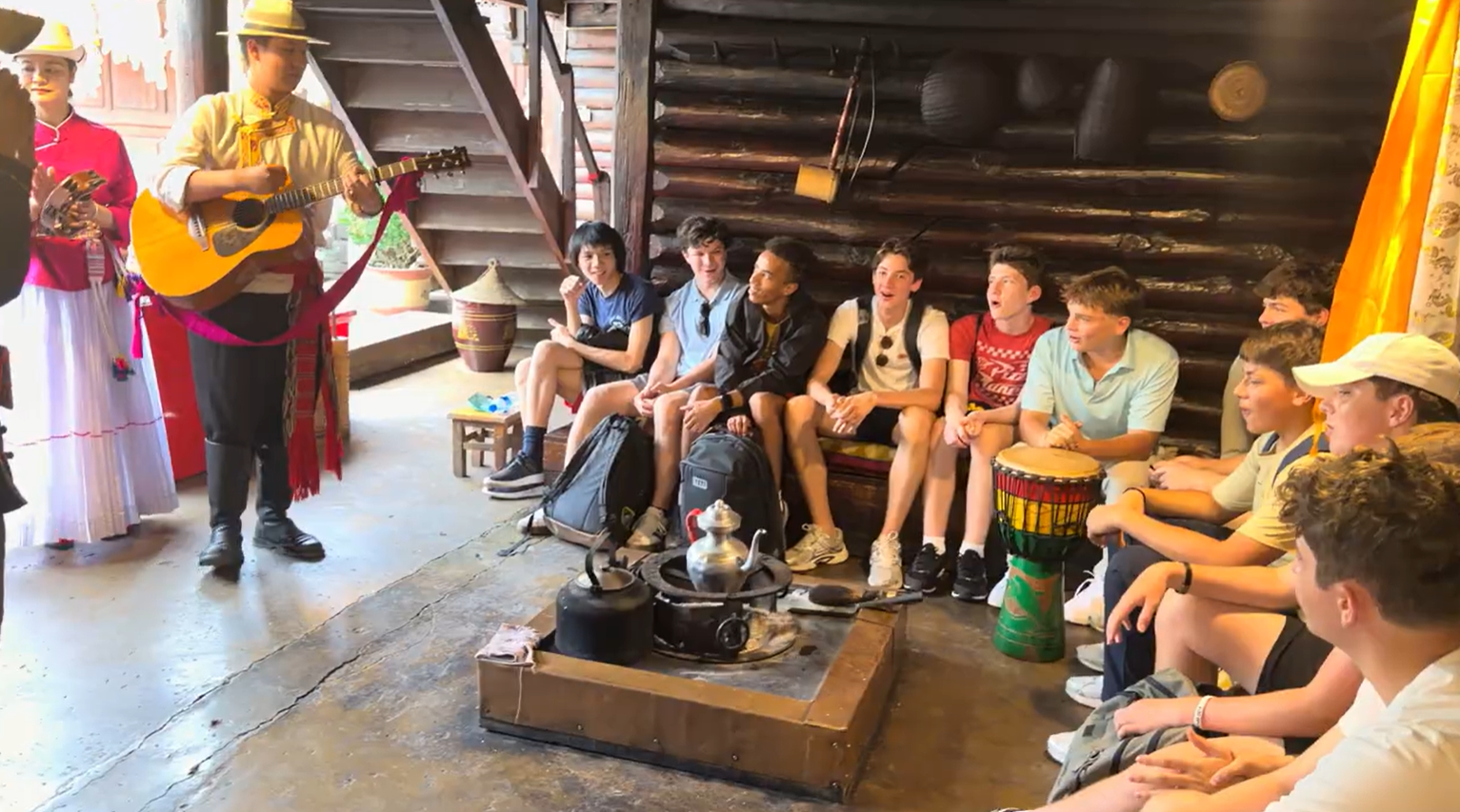
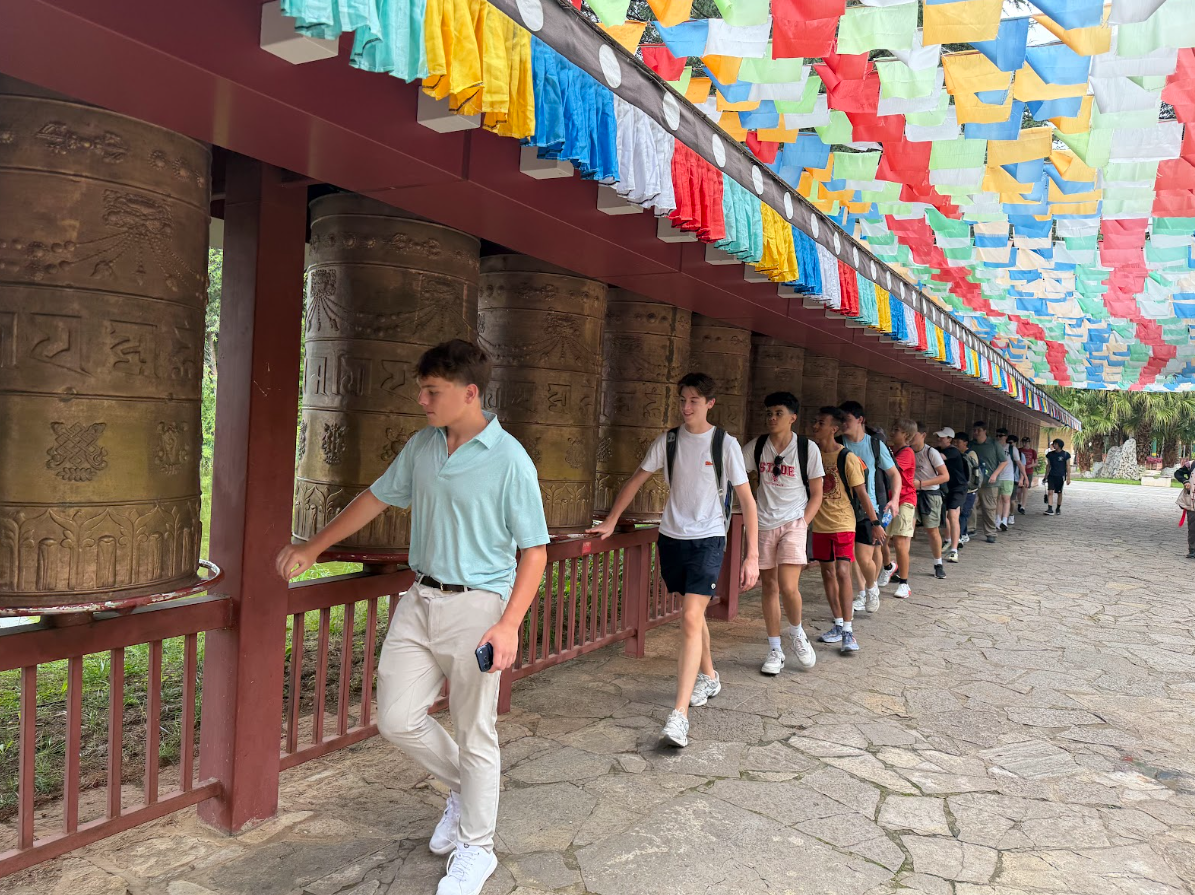
On their next stop, the group explored the Yunan Ethnic Village, a large park with pavilions representing many of the diverse ethnic groups of China. In each of these pavilions, members of the corresponding ethnic group would share various elements of their culture, including their music. One of these pavilions, built to honor the Lahu people (拉祜族 – Lāhù zú), featured a musical performance in which a group of hunters went off while their wives weaved beautiful tapestries, ending with a celebrational song following the hunters’ return.
“I was able to…talk with shopkeepers [at the Unan Ethnic Village] in Mandarin and negotiate prices. […] I felt really…at home there…because I was able to do that proficiently.”
– Mason Muskovich ’27
Dali (大理 – Dàlǐ)
Day 7
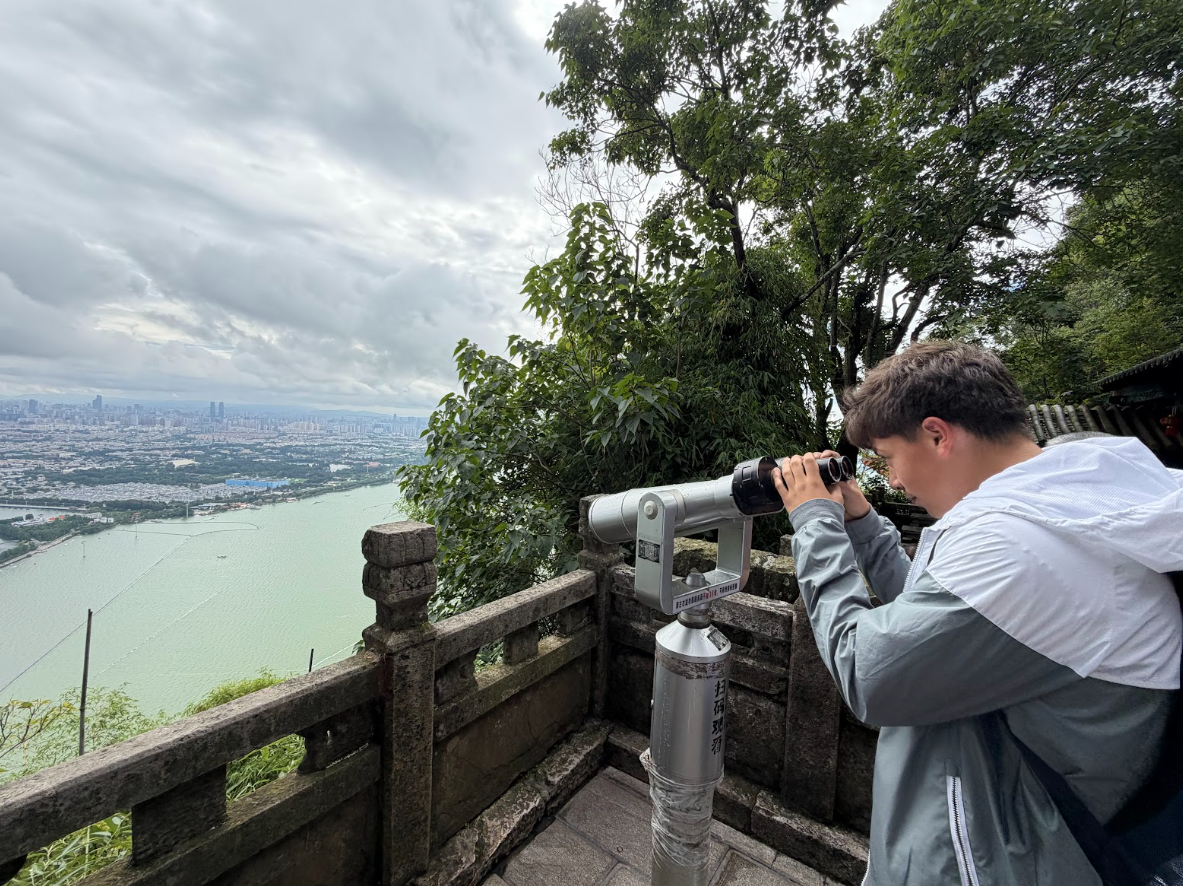
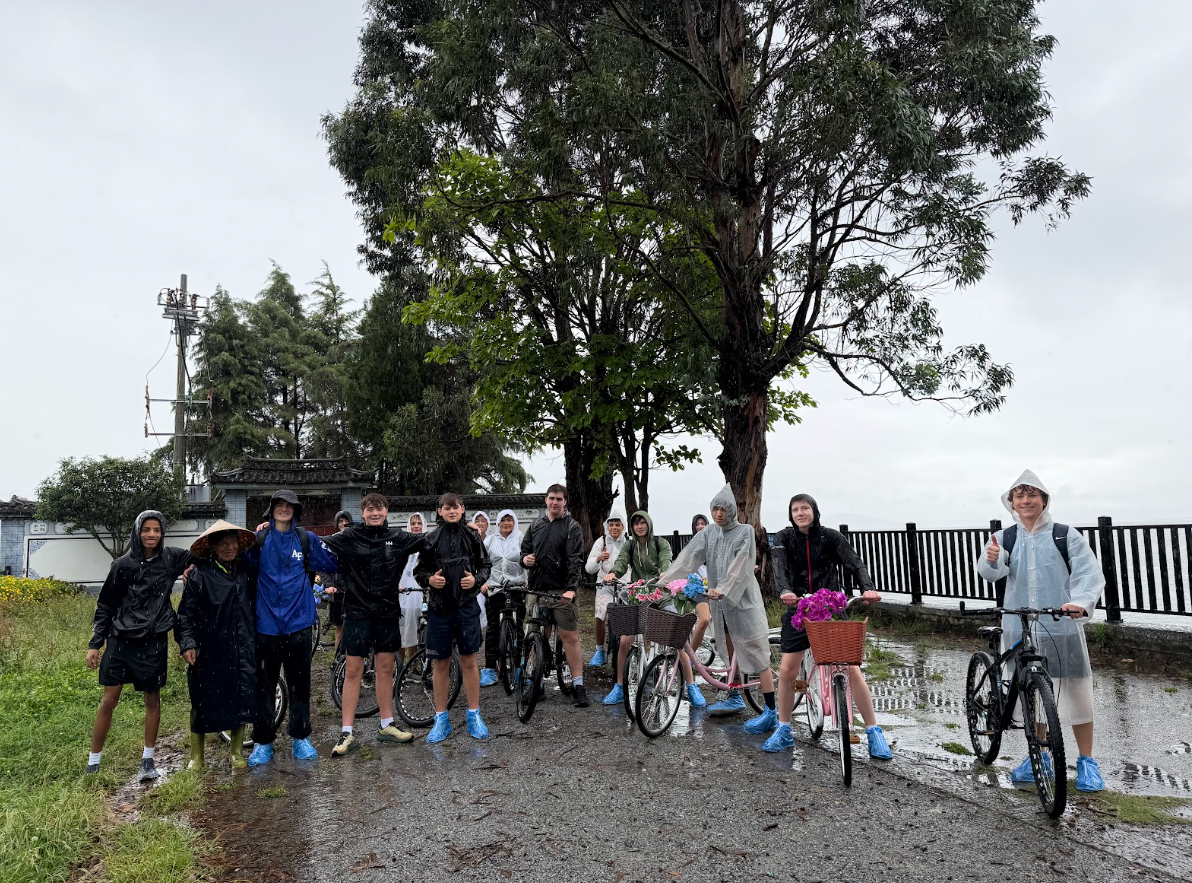
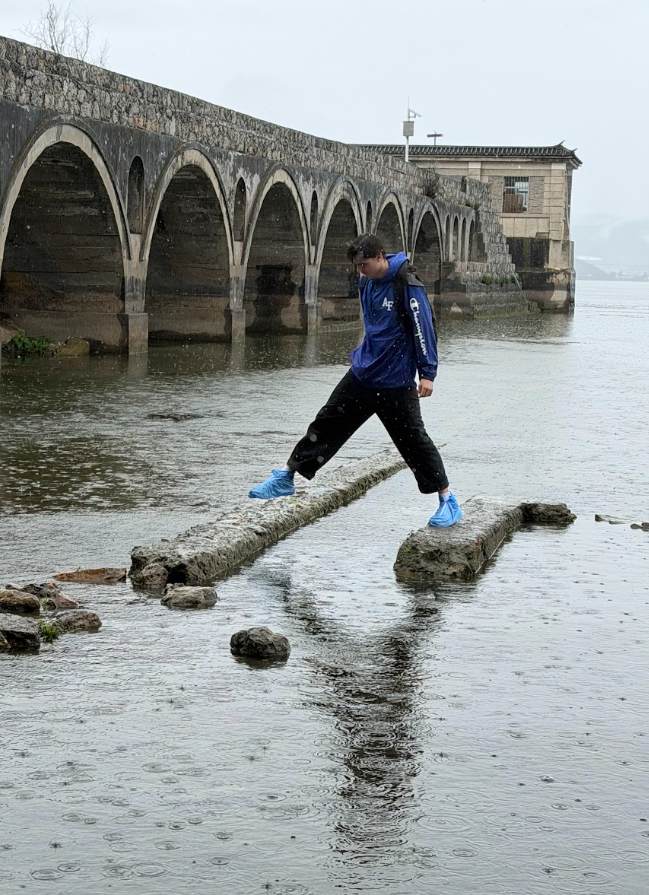
After a scenic hike up a mountain overlooking Dianchi Lake in Kunming, the group boarded a high-speed train to Dali on Day 6. During the morning of the following day, the group rode bikes around Dali’s Erhai River. Despite the heavy rain that morning, the group continued on, making occasional stops throughout the journey.
“When we were biking around Erhai lake, we were drenched and tired from the rain. We made many attempts to find a store or cafe to rest, but they were all closed. But one family decided to open their shop to a group of foreigners, who were soaked and dripping with [rainwater]. Their hospitality was very similar to how I felt when I moved to the [U.S.]. People were very eager to help in their small ways.”
– Mr. Gan
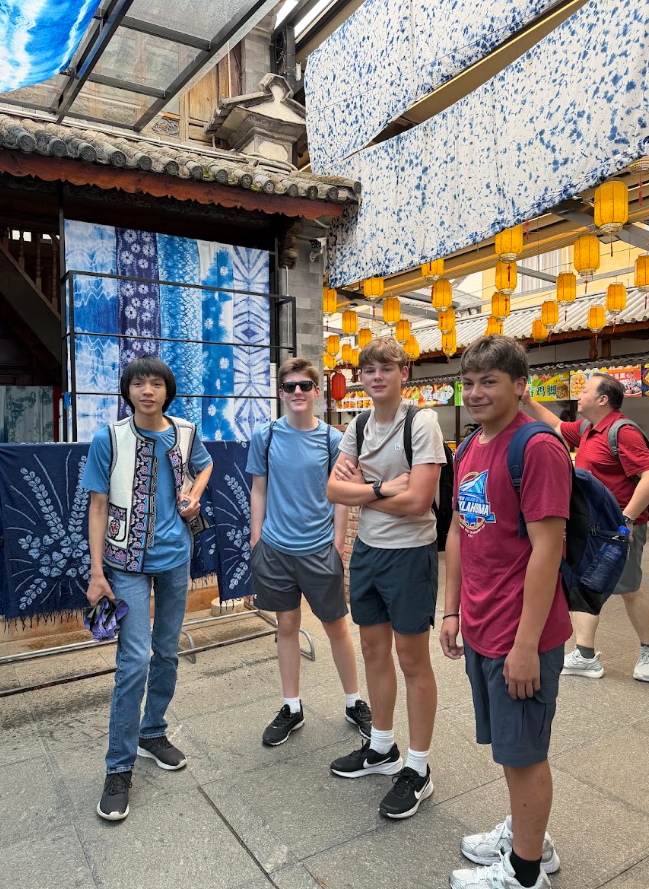
Later on, the group freely explored a market full of buildings with a distinct and historical architectural style following a three-part scavenger hunt in the area.
Day 8
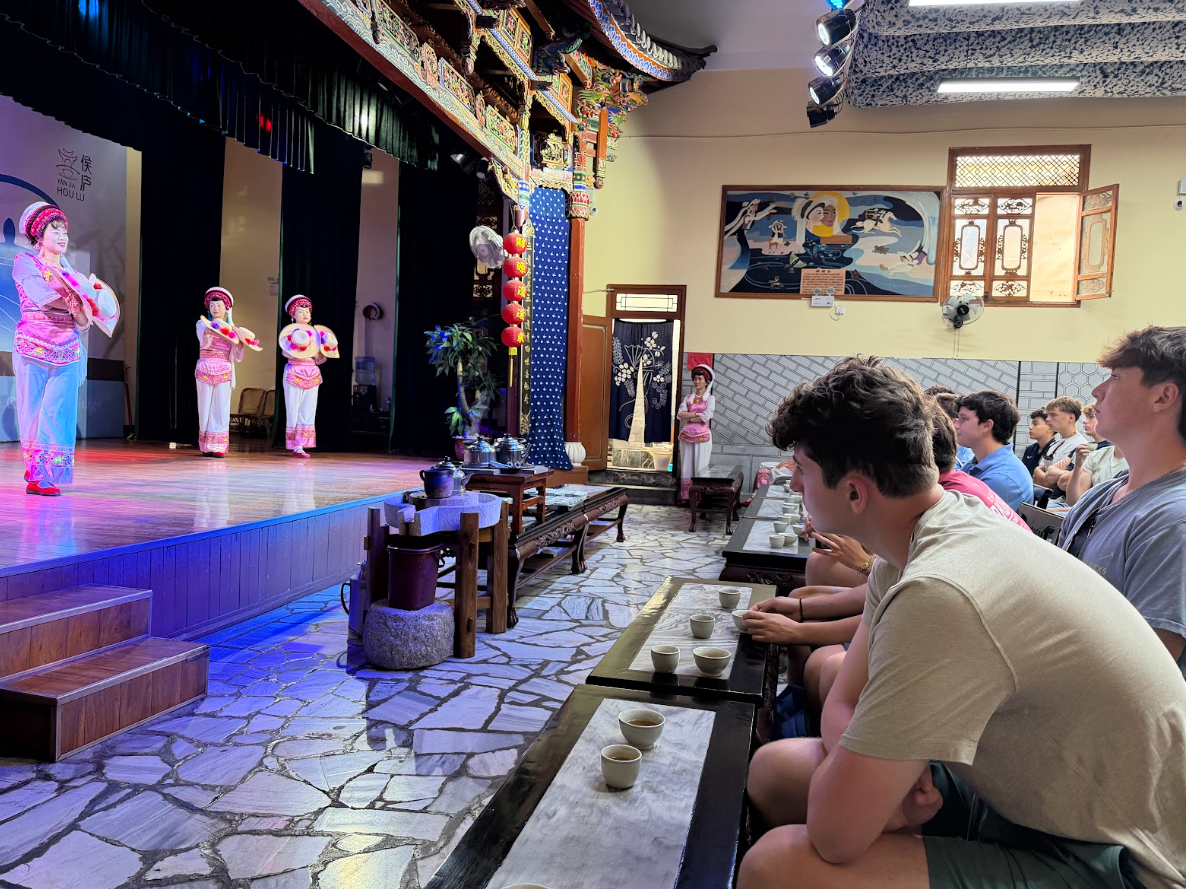
The group started off the day by visiting the Yan Family Compound, a complex that had been partially converted into a space meant to educate people about the culture of the Bai people (白族 – Báizú). Students tasted three varieties of traditional Bai tea and joined in for some traditional Bai dancing.
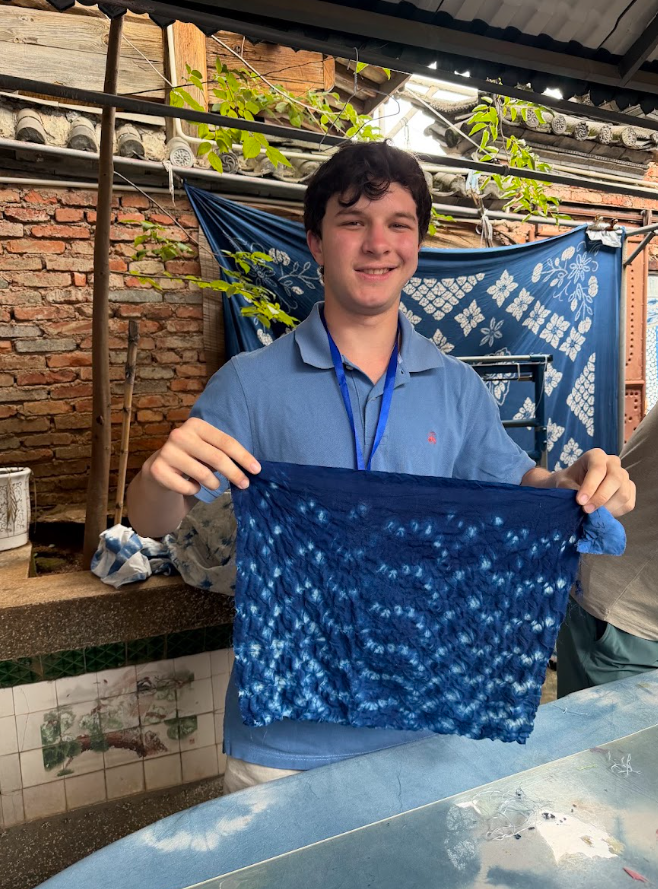
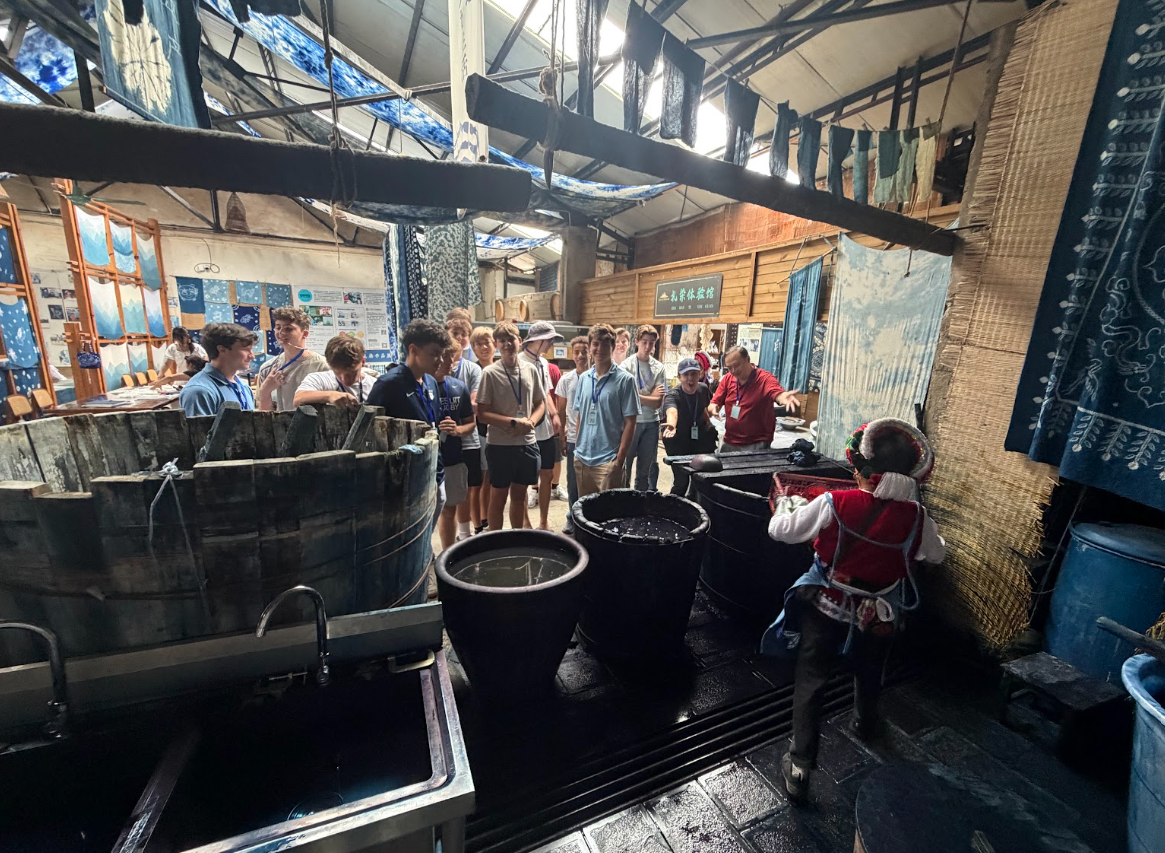
Along their bus ride to Lijiang, the group visited a shop specializing in Bai tie-dye, with many of the pieces possessing the distinct “Dali Blue” coloring. After watching a demonstration, students practiced their tie-dyeing skills, creating unique cloth designs to take home.
Lijiang (丽江 – Lìjiāng)
Day 9
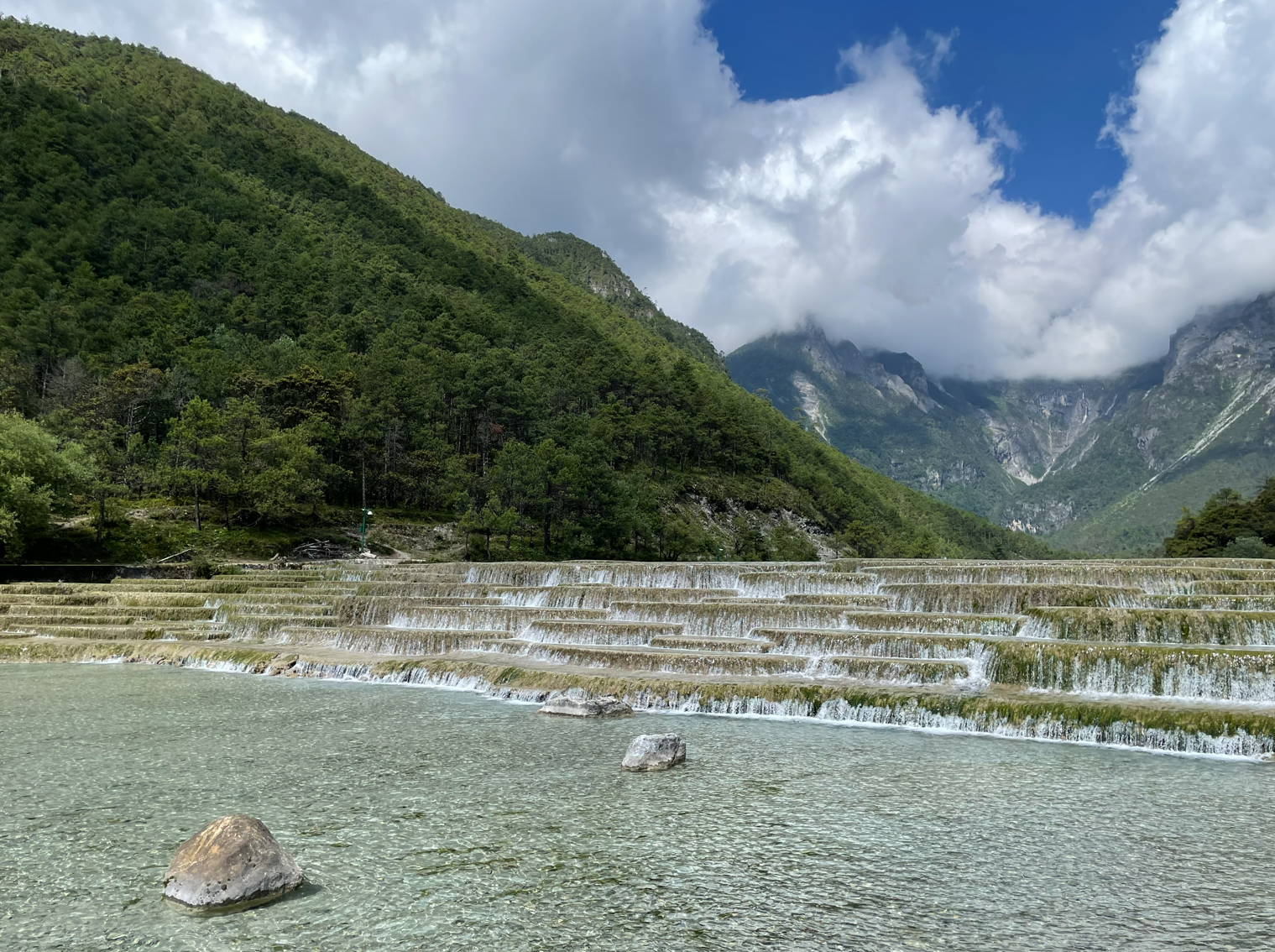
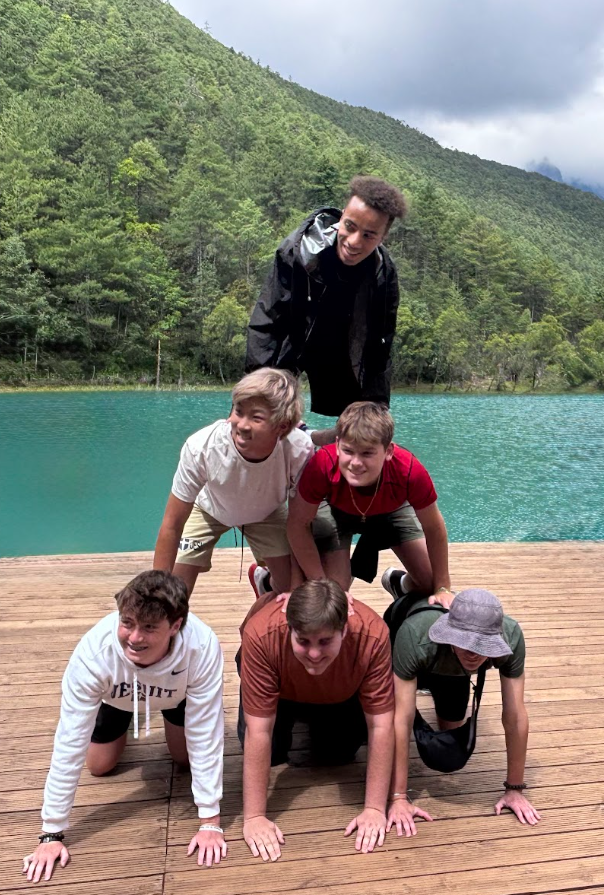
The day started early with a trip to Jade Dragon Snow Mountain in the Blue Moon Valley. Along the hike, students admired the distinct, turquoise-colored water and took many photos with the mountains.
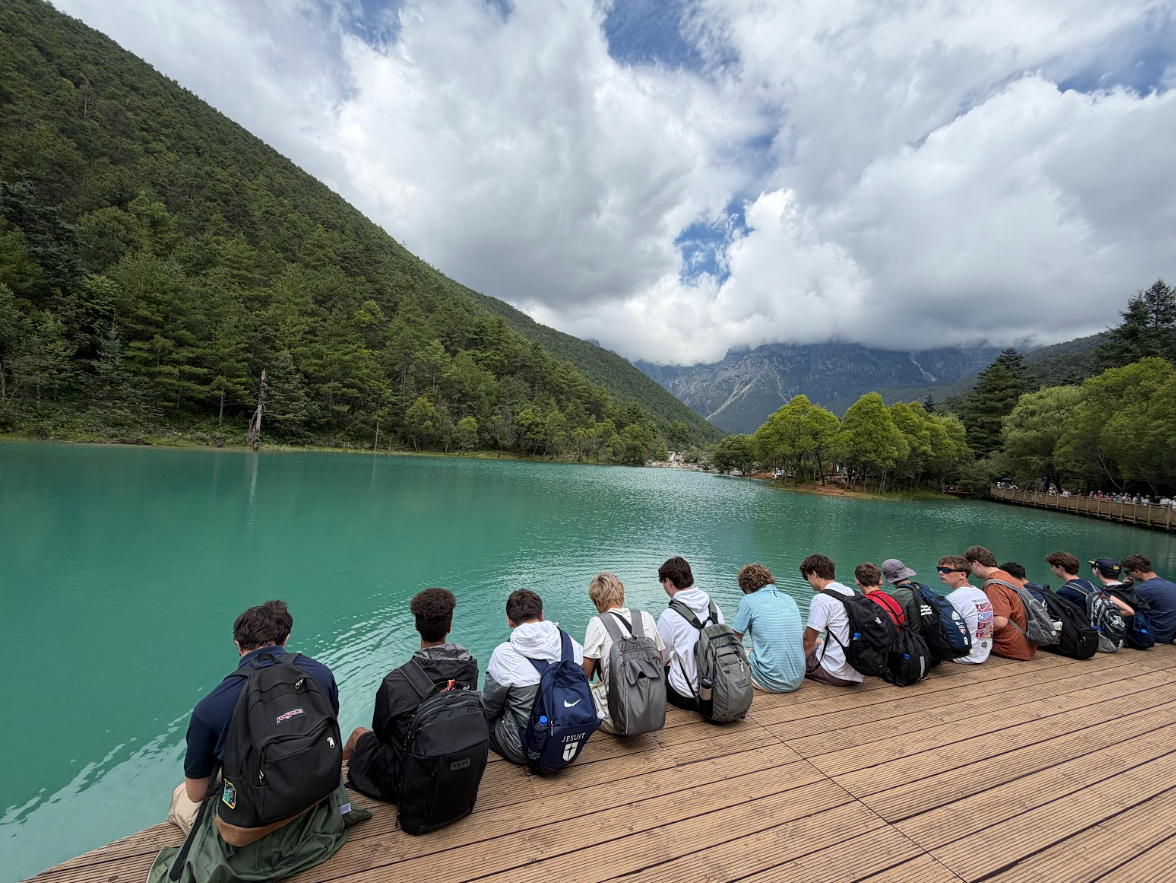
“I keep on looking at photos of [the Blue Moon Valley], because it’s honestly such a beautiful place. I’ve never seen water so blue and clear like that.”
– Leo Magana ’29
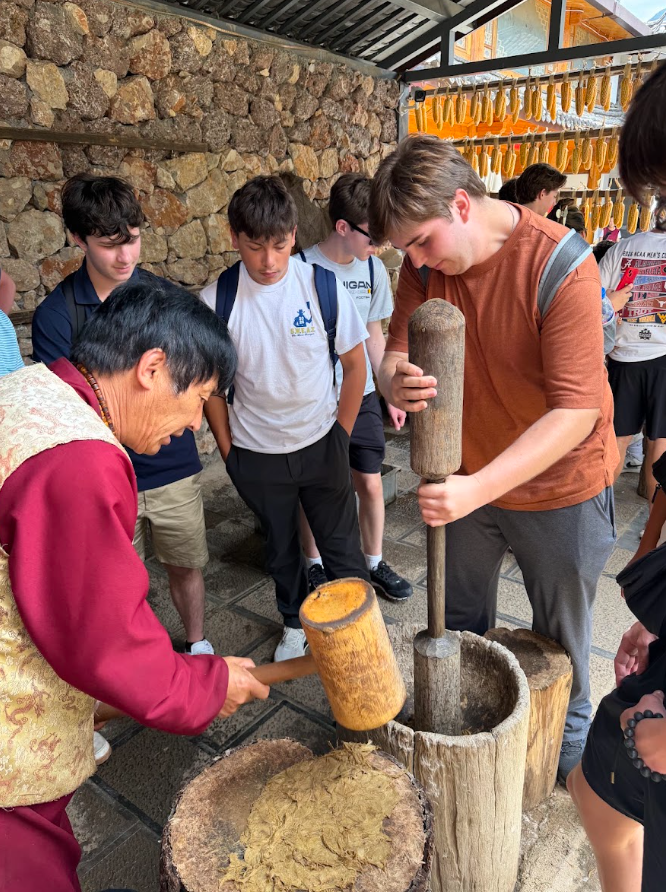
Following the hike, the group travelled to the homestead of a family of the Naxi people (纳西族 – Nàxī zú). Students tried their hands making Dongba paper, tasted special Naxi snacks, learned to write in the pictographic language of Dongba script and wore traditional Naxi outfits while dancing to Naxi songs. However, the cultural exchange was not one-sided, as the group taught one the Naxi family’s daughters the traditional American song “Hands, Shoulders, Knees and Toes.”
Shanghai (上海 – Shànghǎi)
Day 10
After landing in Shanghai, the group drove into downtown Shanghai where students were allowed to freely explore in groups of four. Some of the destinations visited included the Shanghai Pokémon Center, the White Rabbit Store (a popular milk candy in Chia), the SEGA store and more. In addition, the group’s tour guide encouraged students to try Xiaolongbao (小笼包 – Xiǎo lóng bāo), soup dumplings which, in Shanghai, are traditionally filled with crab meat.
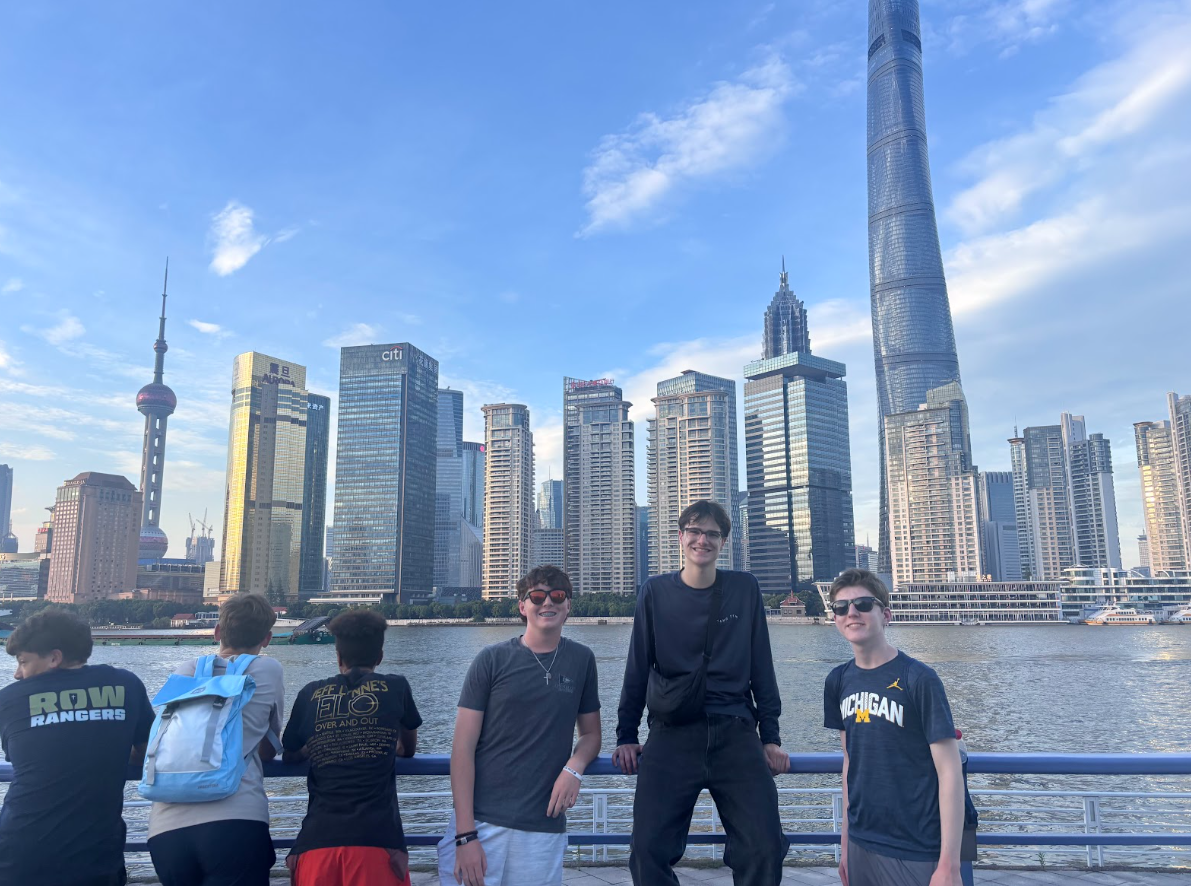
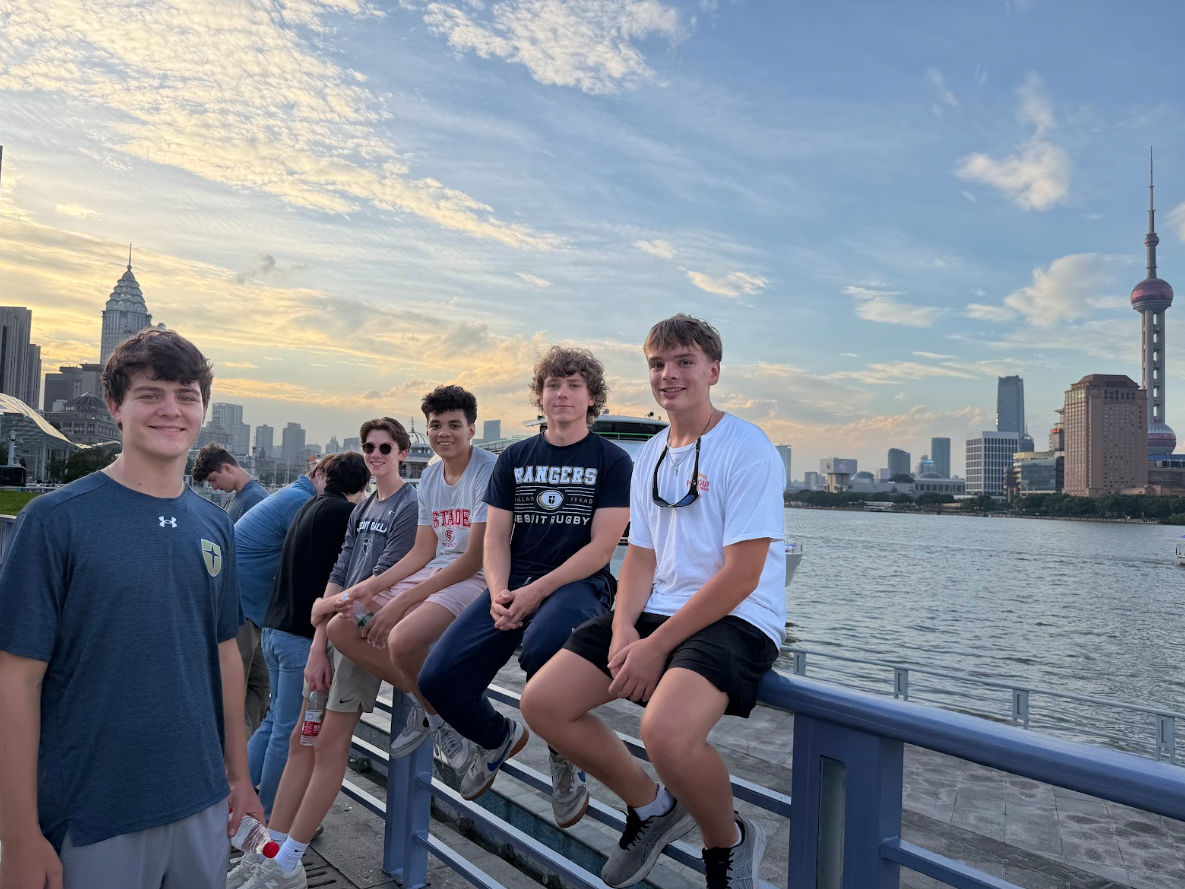
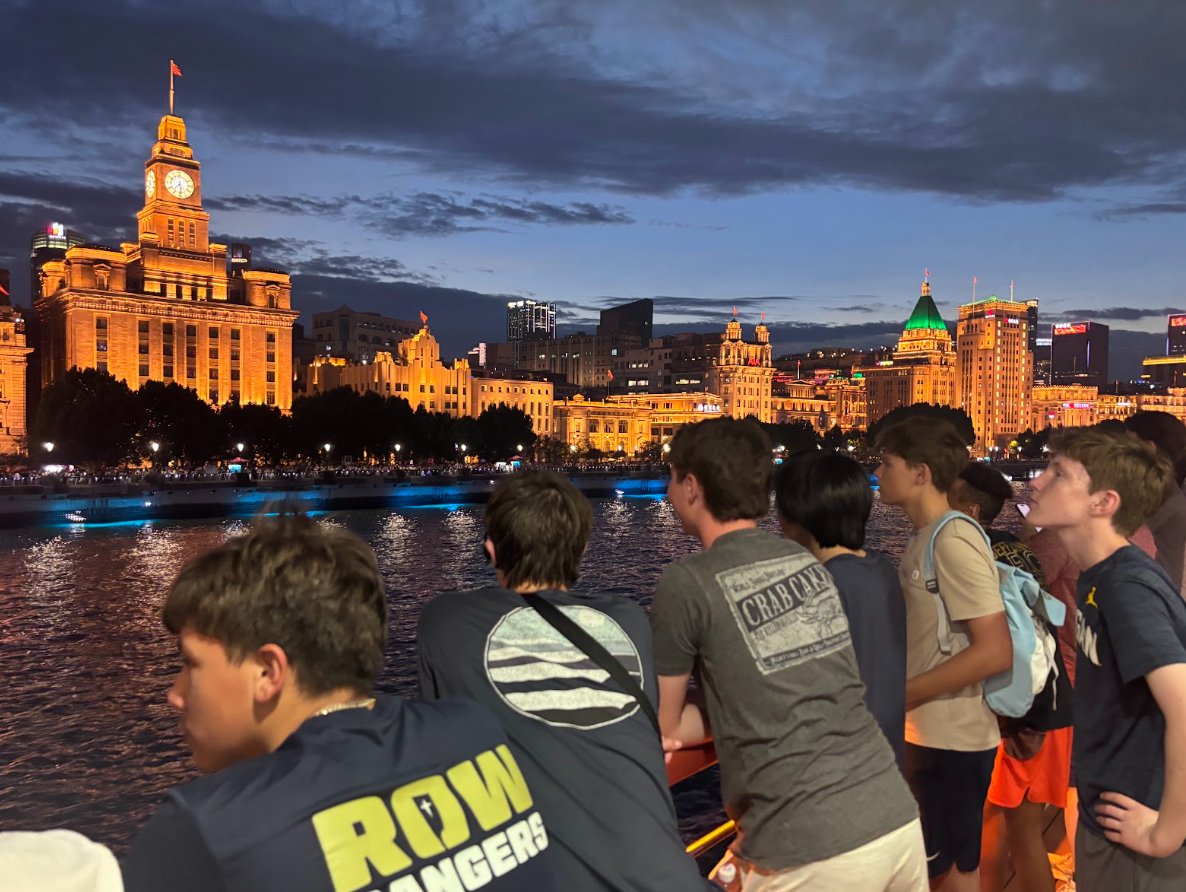
Following their exploration of downtown Shanghai, the group boarded a river cruise that went along the Huangpu River. Along the journey, students were met with views of the eastern-Shanghai skyline as the lights grew brighter and more colorful as it became darker outside.
“I…thought that seeing the…beautiful architecture of the city and also…the two different side[s] of history…on opposite sides of the river [during the river cruise]…was really cool to see.”
– Ned Golembeski ’28
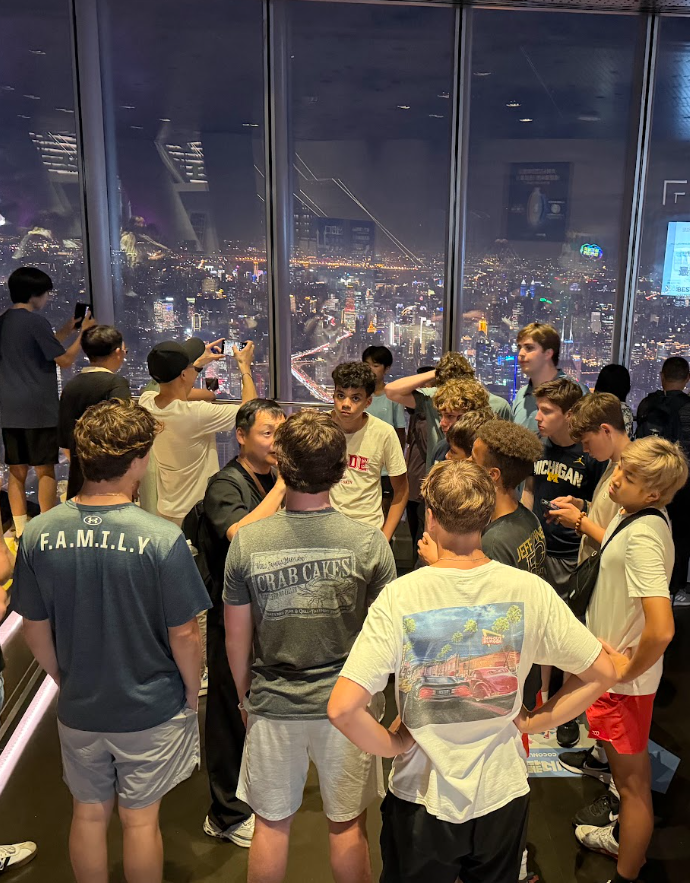
As their final major activity of the trip, the group took an elevator up Shanghai Center Tower, the tallest building of the Shanghai skyline. From the observatory deck, students had a top-down look at the entire city skyline, including buildings like the Oriental Pearl Tower, also known as TV Tower.
Day 11
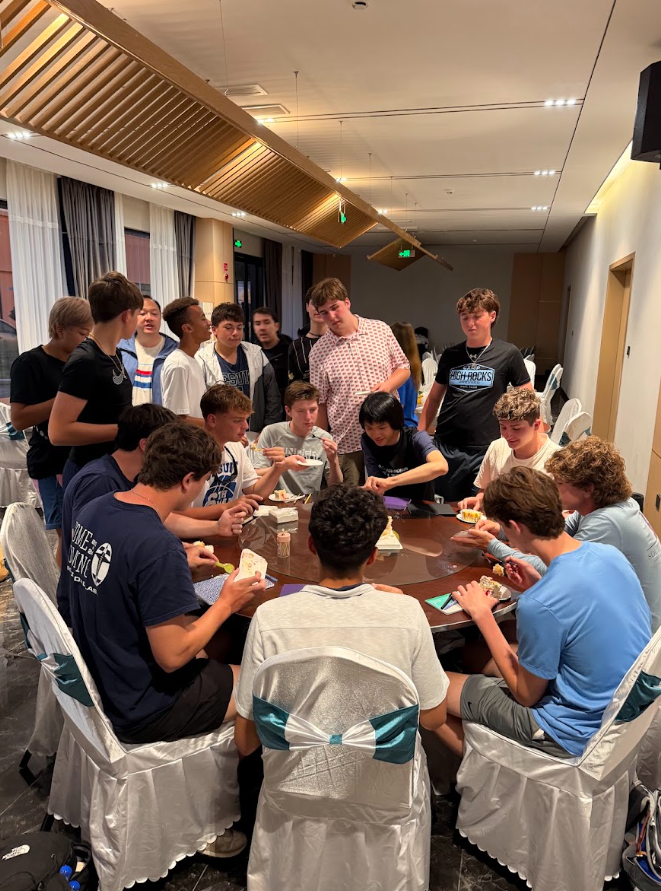
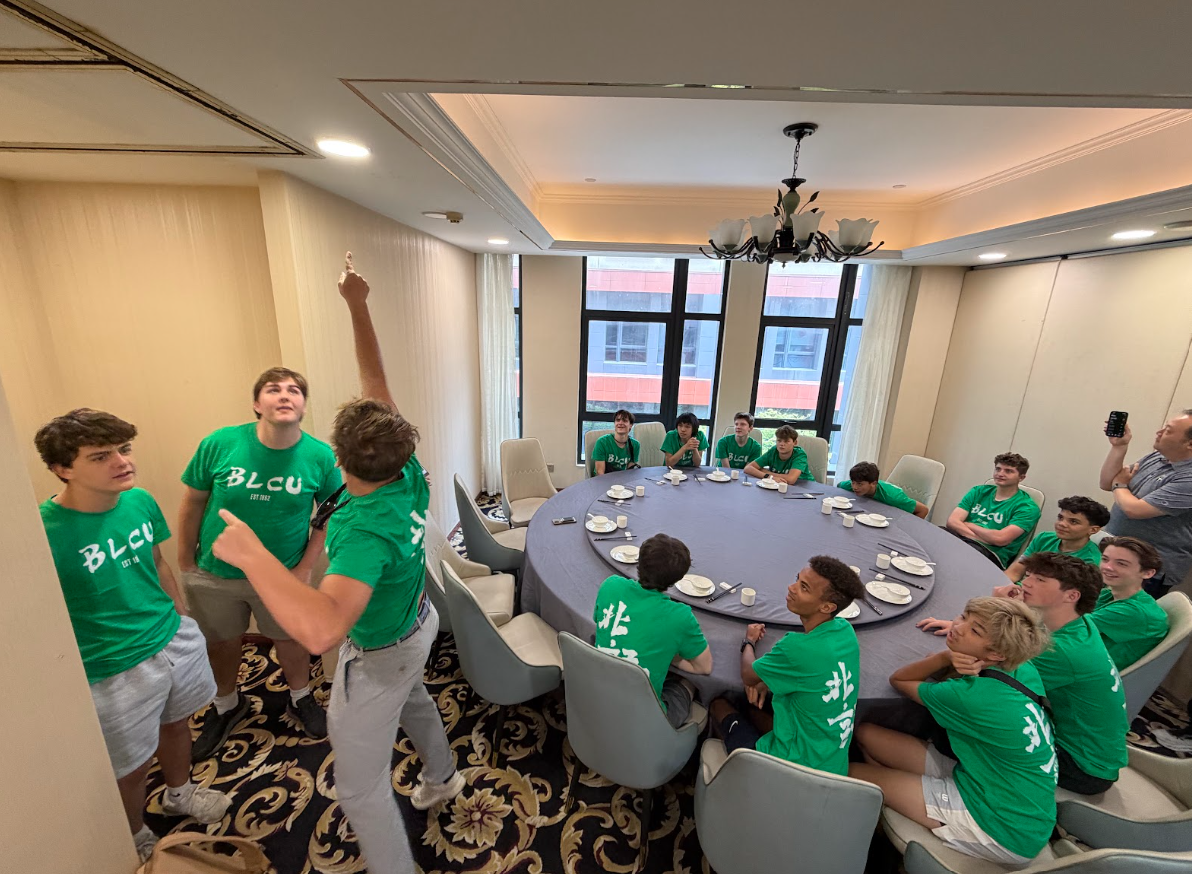
Before heading for the airport later that day, the group ate one final multi-course family-style meal. Then, the students split into four teams of four in a game of charades. Team members acted out various elements of the trip, allowing the group to appreciate all that they had experienced while creating new memories.
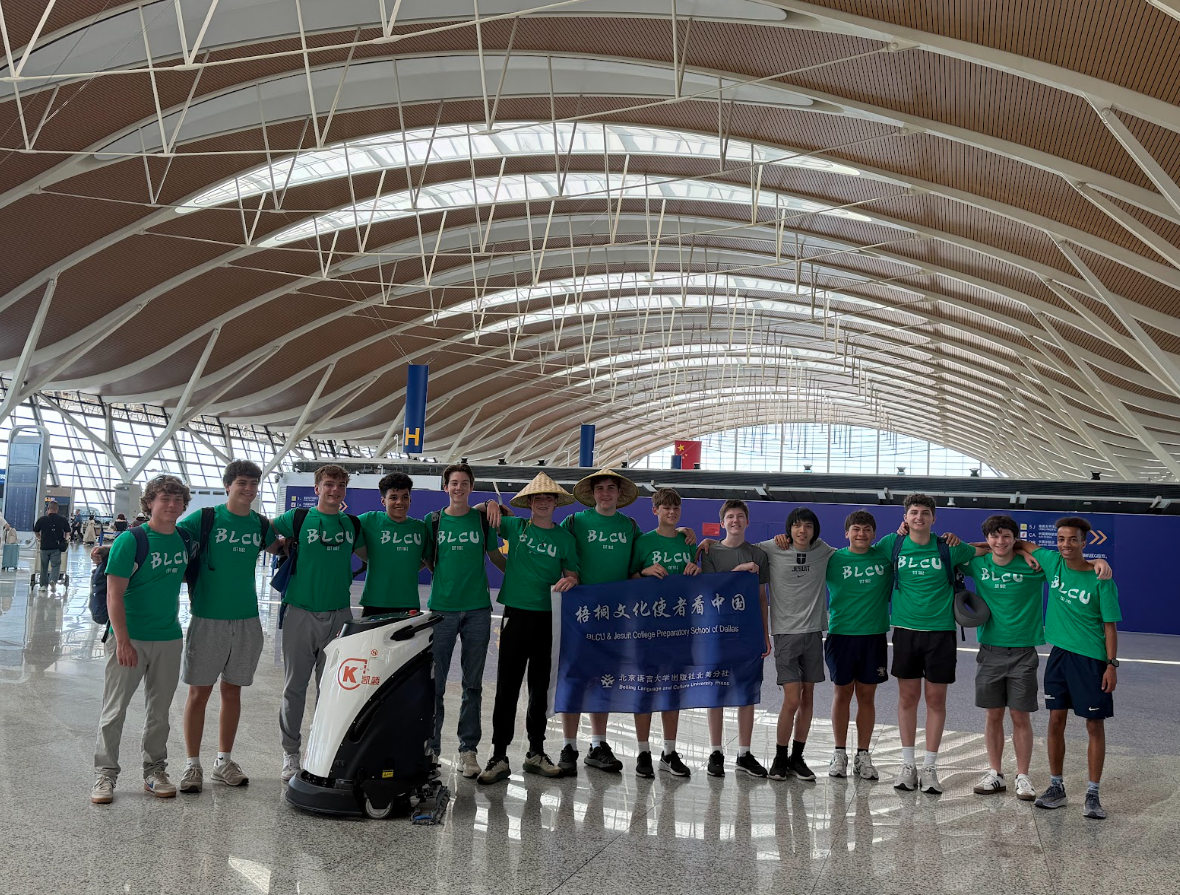
After around 14 hours in the air, the students arrived back at DFW International Airport where they proceeded through customs before being greeted by their family members who had not seen them in nearly two weeks.

Conclusion
Throughout the trip, students enrolled in all levels of Jesuit’s Mandarin classes engaged in conversations with countless locals, allowing the students to strengthen their Mandarin skills and confidence while also learning more about Chinese culture. However, there were also many interactions between the students and locals in which few to no words were spoken, such as the groups joining in with locals during their Taji session on the street. These experiences helped demonstrate a valuable lesson that Mrs. Lu, one of the Jesuit faculty members of the group and Jesuit’s one and only Mandarin teacher, hoped to emphasize to the students: it is still possible for one to form strong connections with another person even if neither person can fully comprehend what the other is saying.
“You can still collaborate and meet new people despite barriers like language. […] If you truly make an effort to include [other people] and share [openly]….You can overcome those…obstacles.”
– Ned Golembeski ’28
Thanks to Mrs. Lu, Mr. Gan and Mr. Pinto for their help making this article.
Tune into The Roundup for more summer immersion trip coverage!
Featured Image Photo Credit: Mrs. Lu