

Saw Shark Summary:
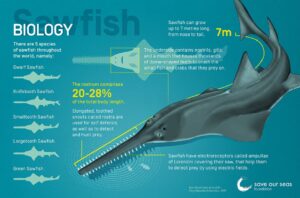
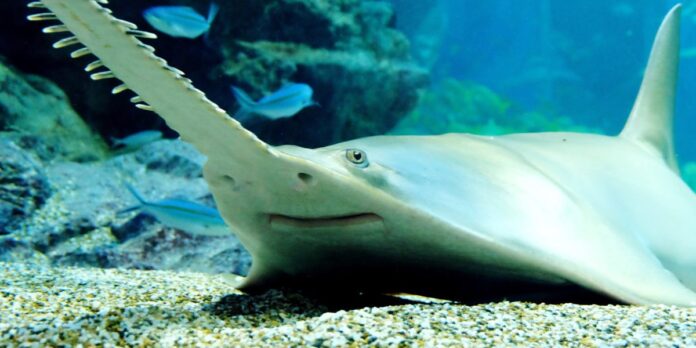
The saw shark, a marine marvel, swims through the ocean depths with a bizarre and captivating feature—its elongated snout adorned with a serrated “saw,” known as a rostrum. This serrated snout isn’t just for show; it serves as a formidable hunting tool. The saw shark deftly swings its rostrum to slash through schools of fish, stunning or injuring its prey before swiftly capturing them. Despite its fearsome appearance, the saw shark is a relatively small and elusive creature, inhabiting deep-sea environments around the world. Its unique adaptations, including specialized sensory organs on the rostrum, contribute to a fascinating evolutionary tale, showcasing the ingenuity of nature in crafting extraordinary solutions for survival in the mysterious realms of the ocean.
Diet of The Saw Shark

Longnose sawsharks feed on bony fish,including cornet fishes (Fistularia), shrimp, small squids, and various crustaceans. Longnose saw sharks uses their barbels and snout to detect prey on the ocean floor, and then immobilize their prey by hitting it with a side-swipe of their snout, which is lined with sharp teeth.
Emerging Conservation Concerns:
The saw shark, despite its extraordinary adaptations for survival, faces a perilous threat in the form of bycatch. The fine, serrated teeth on their rostrums, designed for hunting prey, unfortunately become a liability in encounters with fishing gear.
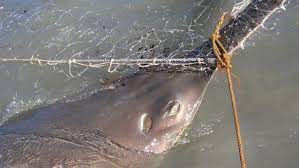
The indiscriminate nature of certain fishing methods, such as trawling and gillnets, significantly increases the likelihood of saw sharks getting entangled and captured unintentionally. This bycatch poses a grave challenge to their populations, pushing these fascinating creatures closer to the brink of endangerment. The IUCN red list of endangerment lists Sawfish in numbers as many as 5000, or as little as 200. Conservation efforts are crucial to address these threats and promote sustainable fishing practices that protect not only the targeted species but also the diverse marine life sharing the same waters.
Interesting Facts about the Saw Shark:
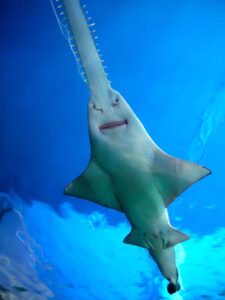
- This animal is actually a ray, a species of elasmobranchs which includes sharks rays and skates
- There are Five species of saw sharks
- Their saw like appendage does not contain teeth, they are a form of specialized hardened scale
- You cannot legally purchase a saw shark rostrum, as it is protected as an endangered animal