

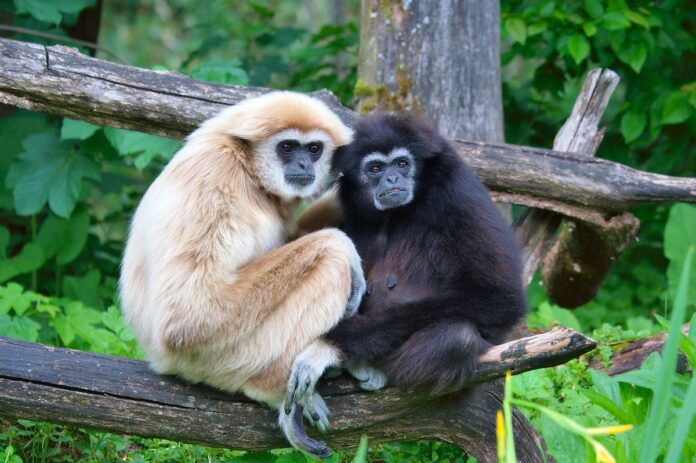

“What’s a good day to see monkeys at the zoo?
Any gibbon day of the week”
Gibbon Overview
Gibbons, a remarkable group of small apes found in Southeast Asia, are known for their extraordinary agility, unique acrobatic prowess, and hauntingly beautiful songs that echo through the treetops. With their slender bodies, long arms, and a distinct lack of a tail, gibbons are well adapted for a life spent swinging from tree to tree. They are often referred to as the “lesser apes” due to their smaller size compared to great apes like gorillas and orangutans.
One of the most captivating aspects of gibbons is their incredible brachiation, a swinging mode of locomotion that allows them to traverse the forest canopy with grace and speed. They have evolved specially adapted arms and shoulders that enable this arboreal lifestyle, and they can cover impressive distances in their treetop realm.
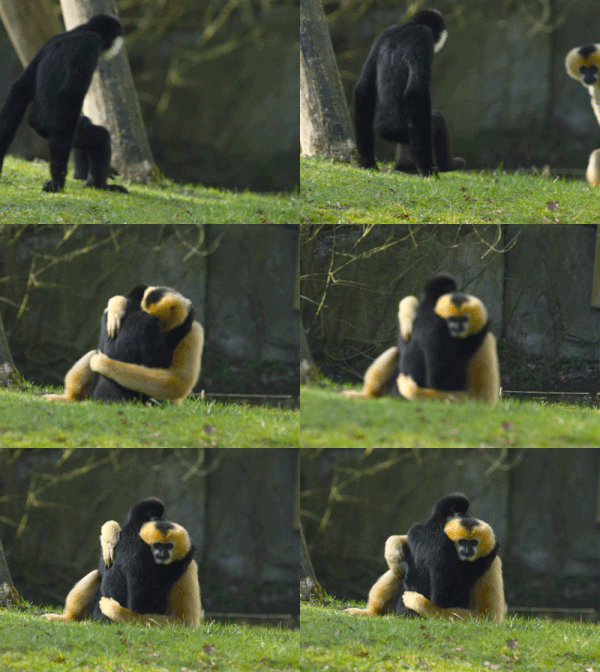
Gibbons are also known for their complex social structures and strong family bonds. These apes typically form monogamous pairs and engage in loud duets with their mates, creating a powerful form of communication that reinforces their pair bonding. These songs, often accompanied by energetic displays of swinging, serve to proclaim territory and maintain family cohesion.

Tragically, gibbons face numerous threats, including habitat loss due to deforestation and the illegal pet trade, which has decimated
their populations. Conservation efforts are crucial to protect these captivating creatures, as they represent not only a unique and charismatic part of the natural world but also a reminder of the fragility of our planet’s biodiversity.
Diet of da Gibbon:
Gibbons are known for their love of fruit, earning them the title of a Frugivore. They are known to eat leaves and even flowers when the quality or number of fruits are lacking. The ideal fruit for a gibbon is medium sized and seedless and yellowish hue
Interesting Gibbon Facts:

- Gibbons aren’t monkeys, they are the world’s smallest ape
- Gibbons teaching their young how to “sing”
- Gibbons can traverse across the tree tops at around 35 miles per
- Gibbons have special shoulder blade joints which can move in any direction