


For years, we have been perpetually bombarded with fear of climate change’s destructive effects on our planet. Many have even claimed that we only have a number of years before Earth is unsalvageable. Because of this, many Western countries have begun to enact policies aiming to end destructive practices such as fossil fuel extraction and usage. One particular shift is seen through the boom of the electric car industry. But let’s take a closer look at what is actually going on. Are the policies we are enacting actually going to effectively fight climate change or are they nothing more than expensive virtue signaling?
Introduction to Climate Change
Climate change as described by the EPA describes the phenomena “since the Industrial Revolution” in which ”human activities have released large amounts of carbon dioxide and other greenhouse gases into the atmosphere, which has changed the earth’s climate (epa.gov).” The scientific consensus is that these stark changes cannot be explained purely by claims of natural processes. In fact, the EPA estimates that “it is extremely likely (> 95%) that human activities have been the dominant cause of that warming (epa.gov).”

A New Wave of Activism
As is common, the radical few make up the majority of the noise. Many people have seen it as just another polarizing political issue because of this. For instance, those on the right see those on the left as crazy climate activists, while the left assumes that those on the right are all climate deniers. However, the majority of people actually lie somewhere more in the middle. As concerns about climate change rise in the public eye though, Republican leaders have been slow to move their position more to the middle, which actually may be worse for their viewpoints. This is because if people find it necessary to make a change, but one side doesn’t even acknowledge the need for said change, they effectively remove themselves from making sound arguments and policy suggestions to compete with the other side. Consequently, Republicans have spent the last decade criticizing figures like Greta Thunberg and things such as the Green New Deal and the Paris Climate Accord as being ridiculous without actually proposing many solutions of their own.
Electric Cars
For many Americans and citizens across the world, electric cars have seemingly been made into the magic solution for climate change. However, if we take a closer look at it, this popular choice really isn’t all that significant. Despite this, many of the proposed climate policies being implemented include essentially banning the production of gasoline cars altogether in favor of this shaky at best solution.
While these electric cars do not require gasoline, a major contributor to carbon emissions, there are still lots of carbon emitters involved that most people overlook. There are two main aspects of this. The carbon cost on the front end and that on the back end.
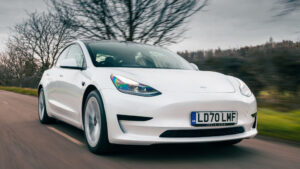
On the front end, the MIT Climate Portal outlines how “building the 80 kWh lithium-ion battery found in a Tesla Model 3 creates between 2.5 and 16 metric tons of CO2 (MIT).”
Consequently, “building a new EV can produce around 80% more emissions than building a comparable gas-powered car (MIT).”
Furthermore, the draw to EVs breaks down even further when looking at the emissions cost after they hit the road. In the United States, gas vehicles generate “11,435 lbs.” of CO2, compared to “6,258” in hybrids, and “3,932” in EVs (MIT). Thus, while they present a significant benefit over pure gasoline cars, their advantage breaks down when compared to hybrids. Just looking at the United States doesn’t give the whole picture though as “countries that get most of their energy from burning dirty coal, the emissions numbers for EVs don’t look nearly as good,” while in countries like Norway, which uses mostly hydropower, EVs have “a minuscule carbon footprint (MIT).” Even in different states in the U.S., an MIT study found that the hydropower-heavy state of Washington had an EV “emit 61% less carbon than the hybrid,” while in “coal-heavy West Virginia, the EV actually created more carbon emissions than the hybrid (MIT).”

Human Rights Violations
It is a fair point that as energy sourcing becomes cleaner, electric cars will become increasingly more carbon efficient. However, what cannot be debated is the truly horrific human rights violations occurring in the lithium mining industry. According to the Business and Human Rights Resource Center, the top 5 companies involved in its extraction all have human rights allegations and only one of these companies even has a human rights policy to begin with. In addition to this, lithium mining has proved disastrous for the surrounding environment as the chemicals drift into the water supplies and create toxic pollution for those in the surrounding areas. Thus, even as the carbon cost of electric vehicles surpasses gasoline cars, at what true cost is this happening?
A Cleaner Solution
As far as a source of truly clean energy, the answer is much easier. The magic solution of nuclear fusion is the ultimate goal, but this marvel is still a long way away from becoming a realistic solution on a massive scale as it is still in its infancy. Windmills and solar farms are great for reducing carbon emissions from the production of energy. That is aside from the massive upfront carbon cost of constructing and transporting these monstrosities, not to mention the large swaths of land that must have the natural ecosystems destroyed to fit them in as well as limitations on where they can be placed to be effective on a consistent basis. Nuclear energy is the solution. It produces almost CO2 emissions, four times less than solar, and is not nearly as disruptive to ecosystems as these “green solutions.” The world must get past the extremely rare occurrences of disasters and realize the true benefits of a nuclear-powered world if we truly want to reduce carbon emissions to the fullest extent. Granted there is the issue of nuclear waste reserves, but one may hope it is merely a temporary solution until nuclear fusion is ready.
https://www.epa.gov/climatechange-science/causes-climate-change
https://climate.mit.edu/ask-mit/are-electric-vehicles-definitely-better-climate-gas-powered-cars