


Ashton James Casey, age 17, lived a life trying his best to embrace the character of a virtuous person. He was born April 18, 2002, at St. Paul’s Medical Center to Benita and Michael Casey. Ashton lived in Frisco, Texas, his entire life and attended Jesuit College Preparatory School of Dallas in Dallas, Texas. Ashton always made sure that everything he pursued somehow and in some way benefited others around him. In his family, Ashton always looked out for his two younger brothers and tried to be the best role model he could. Whether it was helping them with math homework or eating lunch with them at Whataburger, Ashton valued his relationship with his brothers above all others. With his friends, Ashton always made sure that he could help those he was close with and those he barely knew in any way he could. Ashton used his ability to mentor others in academics as his way of helping Jesuit become a better place. He tried his best to listen to others and help them in any way he could. Ashton came to learn that materialistic things are not what is truly valuable. He figured out that the most valuable thing in life is how you treat your neighbors, which serves as a true reflection of one’s character. Ashton took this to heart, especially in his later years. His care for his mother through her painful illness reflected his genuine love for those around him. Ashton told his parents on numerous occasions that he didn’t want to pursue a job in medicine for money or fame, but rather because he saw it as his outlet to save and help others.
I know that from a reader’s perspective this looks like an odd piece of writing. One might be asking himself, why is this guy writing his obituary? It seems like a very gloomy and fatalistic thing to write for a seventeen-year-old. And on the surface it is; however, there is much truth which comes out from writing your obituary.
The Background
A little while back, I came across a video online with Supreme Court Justice Neil Gorsuch. He spoke about something he referred to as the “Obituary Assignment.” During this video, which happened to be from his Supreme Court confirmation hearing, Senator Sasse asked now-Justice Gorsuch how he will gauge if was a good judge after he retires. Gorsuch responded by describing this unique assignment. He stated that he assigns this unorthodox writing project to his students in the ethics class he teaches at the University of Colorado Law School. Justice Gorsuch says that his students “hate it. They think it’s corny” (CSPAN).
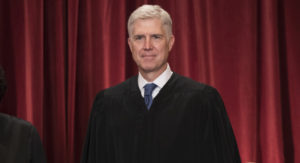
However, he says that when he asks students to volunteer to read their obituary, there are certain things never mentioned: job title, net worth, prestige, awards earned, or money in the bank. Instead, he says that “it’s how they treated other people along the way,” which is the central theme of the essays.
Gorsuch then said that he would hope to be remembered not as the greatest justice of all time but rather as a good dad, a good husband, and a “kind and mild” man in private life. He acknowledges that after he retires from the Court, society will forget him not long after. However, he hopes that what sticks around and what people remember him by are his strong character and firm morals.
Senator Sasse then concludes by arguing that if more ethics classes and universities adopted the “Obituary Assignment,” then “we might live less in the soundbite culture and more in a way about service and duty and calling” (CSPAN).
You can view Gorsuch’s remarks about the assignment from his confirmation hearing here.
My Take
In my opinion, this would be an assignment all Jesuit theology or English classes should adopt at some point in the year. Too often, we as Jesuit students in our quest for the best grades and the most involvement in the school forget about what the most important things about us are. I can personally say I occasionally lose sight of my personal character in a quest for trying to be the “best.”
When I sat down to write this personal obituary, at first, I drew a blank because it had been so long since I had reflected on how I had acted as a person and how I had impacted others around me. This reflective and somewhat melancholic type of writing sets a different mood absent in other forms of reflective writing. I believe that because obituaries are connotative of death, they create a more humble and sympathetic setting for self-reflection.
As Justice Gorsuch stated during his confirmation hearing, in writing my town obituary, I did not once think about mentioning personal accomplishments like my grades, extracurriculars, awards, etc.. Instead, I thought about how I treated my friends, classmates, family, and strangers. I thought not about how all the service I had done had made me a better person, but rather how all the service I had done had changed the lives of others.
Try It
I would challenge everyone to sit down in a quiet space with a pen and paper and write your obituary. It doesn’t have to be a five-page essay. However, by writing down even a half-page reflection, you will notice things about yourself that might have otherwise gone unnoticed in your busy day-to-day life.
There are two ways to interpret this assignment. One is writing your obituary as if you at this present moment you passed away; how would you want your life to be remembered (however short or long it was)? This was the approach I chose since it allowed me to reflect on my past profoundly and to see if the man I am today is what I envisioned. The other way to approach this assignment is by pretending you lived to old age and then reflecting on your life. This way, one can observe their past and also create a hypothetical for how they hope they will be remembered in the future. No matter what approach you use, however, the nature of the designation does not change.
Far too often in modern society, we become trapped in selfish desires and appetites to reach the highest level at whatever we do. In this activity, I came to realize that my character is what matters most.