

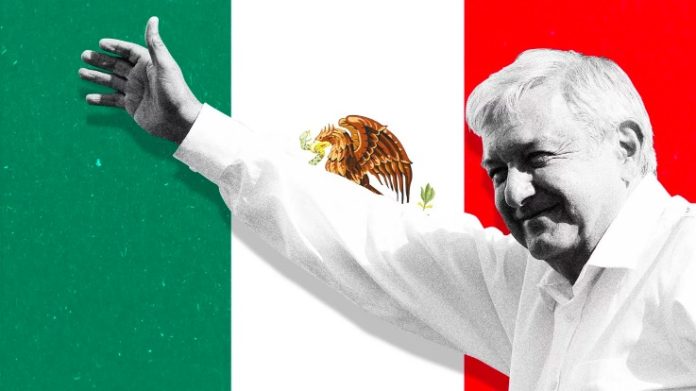
A Brief Introduction to Presidential Elections in Mexico
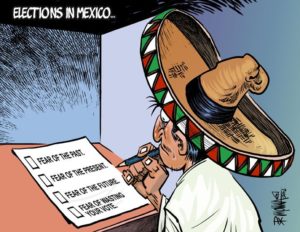
Elections in Mexico take place every 6 years without the possibility of reelection.
With more than 8 political parties that always fight for power and control, at times of election most of them find a way to exist and create alliances that in this year, were one of the most confusing parts of the elections. There are four big parties you need to know about.
Four Main Political Parties
- PRI: The institutional revolutionary party was responsible for the dictatorship that occurred in Mexico after the Mexican revolutionary war (where it got the name from) in 1920 that lasted until 2000. They returned to power in 2012 thanks to incompetent politicians and established maybe one of the worst governments we have ever had since the history of independent Mexico.
- PAN: The national action party was established shortly after the Mexican Revolution and never had the chance to participate in important positions until the year 2000, where they barely beat the PRI. This party is famous for starting a war with the “narco” that has cost just 250,000 lives in 18 years, and in doing such a poor job that they made the Mexican people think that going back to a dictatorship was better than to stay with this party.
- PRD: Party of the democratic revolution was the name of the main rival of PAN who fought for a more liberal side of government. They didn’t have a lot of power until AMLO joined their party and ran for president in 2006. They haven’t had an important role since. Since 2010, the PRD started leaning moderately left, and in last elections made an alliance with PAN, their historic enemies.
- MORENA: MOvement of NAtional REgeneration ( in Spanish morena also refers to people with a Mexican native colored skin) This relatively new party was started by AMLO when he was kicked out of the PRD for being too radical. This party won a lot of momentum by attacking all the points the old government used to stand for.
Candidates From Each Party
Ricardo Anaya, represented by the PAN and the PRI (former right and left parties). He represented the middle to upper class with a conservative point of view.
AMLO, represented by MORENA (his own political party), spoke for the left and extreme left in the country. He had ran for president in the elections of 2006 and 2012, but finished in second place twice.
José Antonio Meade, backed up by the PRI (A party who had Mexico in a nearly 70 year long dictatorship and won the 2012 elections),aimed his policies mainly to young voters and old citizens with more of an extreme right point of view.
Jaime Rodríguez Calderón, or “el bronco”, the first independent candidate, represented the northern part of the country.
AMLO and His Proposals
So after 7 months of political propaganda, AMLO won with more than half of the population voting for him (53%). Thanks to his long political career, this charismatic old man managed to make a great image and impress the masses almost a year before all the other candidates. What makes this character so interesting and yet so controversial is his extreme left political views along with him wanting to change most of the proposals and actions made by the old government (the one under Enrique Peña Nieto).
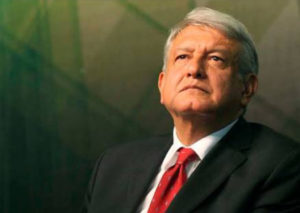
AMLO’s main proposals are:
- Make the police, navy and army one institution
- Amnesty for people involved in petty crimes related with drug dealing
- Attack NATO and protect national products and national businesses (mainly in the agricultural and oil related areas)
- Cut expenses of the government and investigate corruption in state and nation size cases
- Accept the intervention of the UN in cases of violation of human rights
- Raise the minimum wage (that nowadays is 88 pesos daily, essentially four dollars)
Future Topics
So how good are these ideas? Why is AMLO so controversial ? How would they be implemented? Why were the 2018 elections the most important since 1920? How do these elections represent the constant repression of the Mexican population? And more important for you my dear reader, how are this policies going to impact the Mexican-American relationship?
To hear the answers to these questions, check back with the Roundup for more news on Mexican politics!
Meyer Lorenzo, “Nuestra tragedia persistente”, second edition, Mexico City, editorial de bolsillo, 2013. Pg 72-78