

A voice sounds from the loudspeaker: “Please stow all of your carry-on luggage at this time.” A flight attendant interrupts someone on his phone, asking him to place it in airplane mode while assuring him that its radio signals can interfere with the onboard telemetry system. All seats have been filled with droolers, toe-nail-clippers, seat-huggers, and neck-pillow-wearers. “All flight attendants prepare for takeoff.”
T-minus 3…2…1
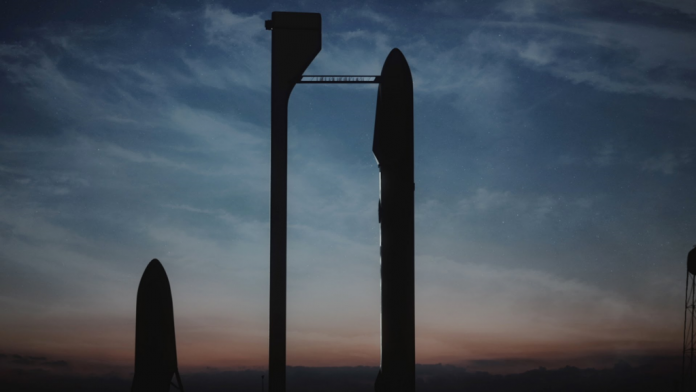
Sparks fly; 42 Raptor engines fire. The largest rocket in history takes off from Cape Canaveral to Mars.
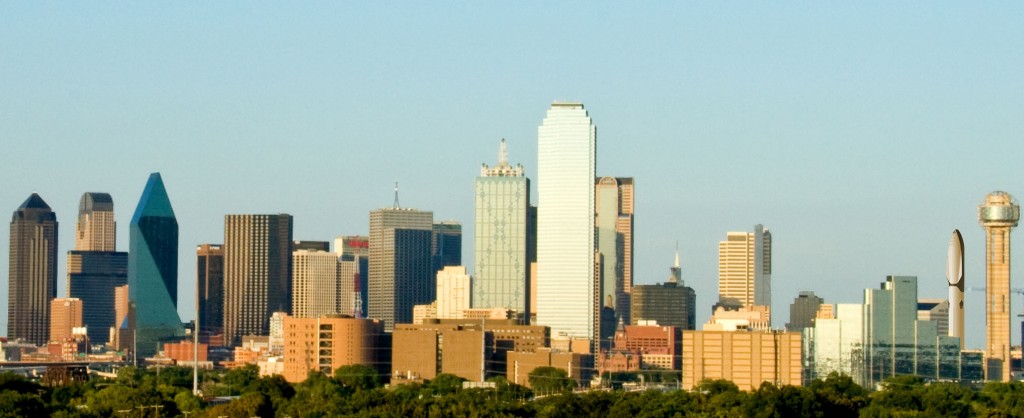
This is Elon Musk’s vision, unveiled September 27th, for the first human flight of the Interplanetary Transport System in 9 years, carrying 100 passengers on board to Mars. This monstrous rocket will be 400-feet tall, weighing in at 10,500 metric tons. To understand the scale of the rocket, see if you can spot it in the Dallas skyline:
But why are Elon and his company SpaceX working on a spacecraft to shuttle hundreds of people to the Red Planet?
SpaceX’s ultimate goal is to create a self-sustaining colony on Mars, not merely an incredible trip for tourists. This massive rocket is meant to transport the 1,000,000 people that Elon predicts will be needed to sustain a colony. Therefore, the daring space company will need to offer a low-cost ticket at a high volume. With more than 1,000 flights within the century needed to shuttle people and cargo, the viability of this enormous project is undoubtably questionable to most. However, SpaceX has a plan in place to fulfill this high demand through efficiency and cost reduction methods.
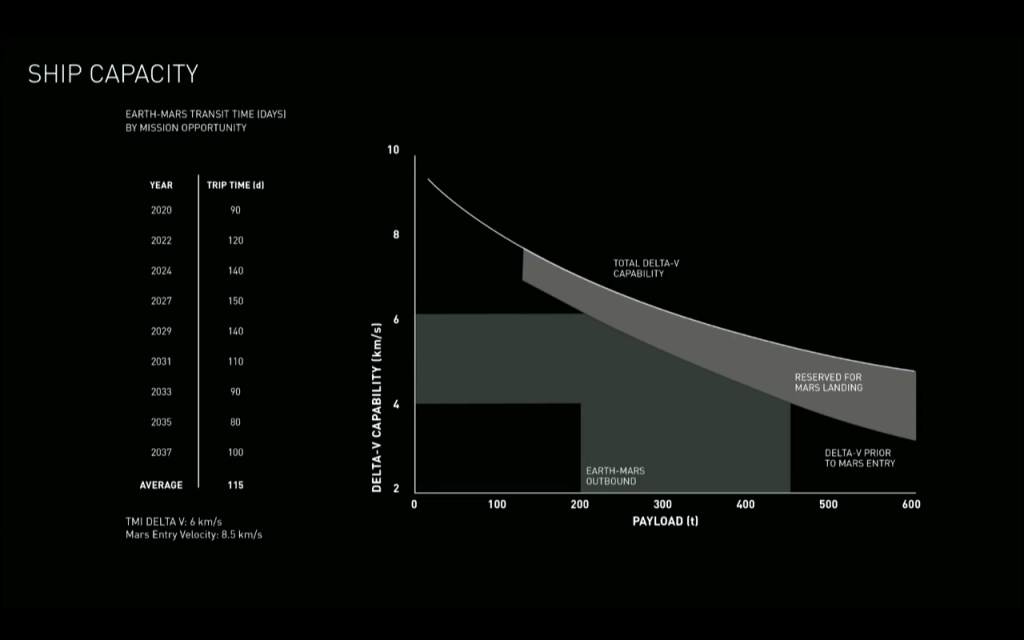
Launching a rocket with a large payload to space can get very complicated because when more mass is carried more fuel is added, and when more fuel is added, the mass of the fuel needs to be compensated by more fuel. Therefore, if a rocket intended to carry 100 passengers and cargo flew directly from Earth to Mars, a ridiculous amount of rocket fuel would be needed. Also, because payloads need to slow down before slamming into Mars’s atmosphere, fuel is also needed to decelerate the rocket. So, the rocket manufacturer needs to determine how quickly they want the payload to reach Mars.
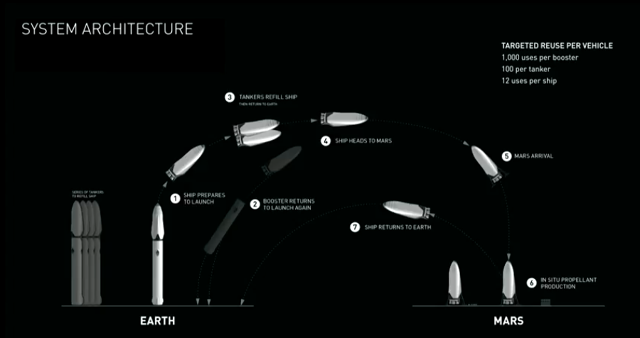
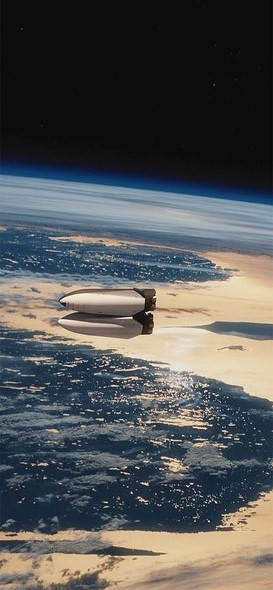 As SpaceX decided how to tackle the problem of fuel, they set out to build a rocket that could deliver 330 tons of cargo in as little as 3 months, a time window never seen in a trip to Mars. As a result, the Interplanetary Transport System uses its booster and spaceship to reach Earth orbit, then multiple other tanker ships meet the spaceship in orbit to dock and transfer fuel. Watch the launch process in SpaceX’s hype video.
The above video details how the entire procedure would be carried out. Look out for my favorite part of SpaceX’s plan: all of the boosters and tankers landing back on Earth.
This awesome feature is what will bring the cost down to about $500,000 per ticket, as opposed to several million without any form of reusability.
This whole effort to save humanity from inevitable extinction on Earth by becoming an interplanetary species would be a waste, though, if no one wanted to go! I am optimistic that there are enough people who are interested and audacious enough to travel into uncharted territory, especially since there will be a method of getting back to Earth included in the cost of the trip.
 Would you dare take a ride on this 10,500 ton controlled bomb for a glimpse of a new world and a place in the history books? Many will discuss this very question as the whole world watches in an Apollo 11 fashion a decade from now.
If you would like to view the full conference where Elon Musk revealed the company’s plans, click here.