

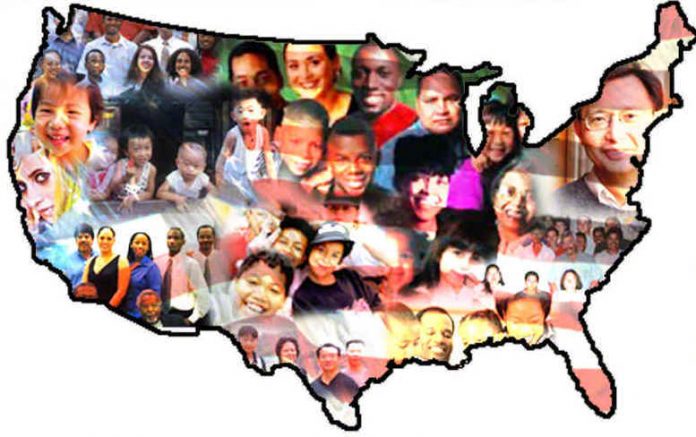
The recent developments in the world such as the Ebola outbreak and the spread of ISIS pose many difficult questions. How can we ensure our safety? How can we ensure the safety of other countries? And, what role should America play in combating these threats? Because they threaten to spread across multiple regions and nationalities, both Ebola and ISIS raise questions about international borders. A few months ago, the issue of immigration and our border with Mexico received extensive media attention, while in recent weeks, Ebola and ISIS have captured that attention as public anger refocused on different targets. However, the immigration policy of the United States remains problematic and deserves coverage that focuses on logical responses rather than reactionary public anger or denial.
In January 2014, I took part in Jesuit’s El Paso Border Awareness trip, a truly transformative experience that exposed me to the legal and social politics surrounding our current immigration structure. I met locals from the U.S. and Mexico sides of the border and heard their stories of immigration, giving me a fresh perspective on the controversial issue. The Jesuit counselors who organized the trip, Mr. Perry, Mr. Fitzsimons, and Mr. Pitts, asked us to consider the many conflicting ideologies and issues surrounding immigration, ranging from the exploitation of undocumented workers in the current system to the complex legal limbo most undocumented immigrants face. Over 60,000 unaccompanied children have been apprehended while crossing the border in 2014 alone. We also heard the viewpoint of Border Patrol agents, who framed the issue not only around immigration, but also around drug trafficking and threats to national security. Border policing problems go well beyond the fragmented immigration system filled with bureaucratic inefficiency and gridlock. National policy revolves around immigration as well.
Despite historically opposing Comprehensive Immigration Reform legislation, the Republican Party sees the CIR bill that has bounced around Congress, currently awaiting a House of Representatives vote, as a way to garner a larger Hispanic voting base, but does so tentatively, apprehensive of losing votes from other sections of their voter base. While historically supporting comprehensive immigration reform, the Democratic Party, headed by President Obama, remains unwilling to take action on the issue of immigration out of fear that sparking controversy could lead to losses during crucial November midterm elections.
However, the Comprehensive Immigration Reform legislation would benefit the whole America, not just the border areas, in many ways. First, immigration supports and spurs economic growth. Historically, immigrants help fill gaps in labor markets, for both high- and low-skill jobs, and increase consumer spending, making immigration reform an issue the business sector tends to support. Additionally, Comprehensive Immigration Reform would benefit border security efforts. Instead of relying on the current methods of undocumented immigration, potential immigrants would be incentivized to gain work visas or eventual citizenship through legal means. This reduces the potential overstretch of security operations and allows the U.S. Border Patrol to focus on larger threats such as terrorism and drug cartel activity. The current CIR bill would provide pathways to citizenship for undocumented immigrants in the United States if certain requirements are met and would improve the employment process for immigrants from low-skill agricultural labor to high-skill STEM jobs.
The current political climate in Washington depicts immigration as an issue that can brushed off, postponed indefinitely until a time of mutual agreement without worry of voter backlash. This is just one microcosm of the larger theme of political inaction that defines contemporary policy-making at the federal level: what should be a bipartisan effort to address one of our nation’s most pressing issues has become another casualty of fractious partisan politics. Exterior threats to national security also contribute to paralysis on immigration since, as mentioned earlier, we tend to see hazards such as the Ebola epidemic and the spread of ISIS’s political and cultural terrorism as border issues. How do we close off America’s boundaries so as to make them safe?
The reality is that borders cannot be closed completely. Despite rhetoric supporting the idea that the border constitutes a place to be “secured” and “contained,” the reality is that the border is a vast region with hundreds of unfenced miles, including recreational areas like the Big Bend National Park and the long, undeveloped tracts of land between border cities. Building fences would require billions of dollars and the annual cost of maintenance and patrol of the border would skyrocket. We can, however, take a cue from the local communities that line our borders with Mexico: learn how to be good neighbors through examples such as the cross-border Masses held annually and the charity work on both sides of the border. This model removes the tension from seeing the situation as “us vs. them,” and recasting our fears to more productive matters.
San Diego’s Mayor Bob Filner has said, “dos cuidades, pero una region” when speaking about the strong economic and social ties between Tijuana and San Diego. He believes in “[making] the border the center, not the end” in the cross-border community. Despite threats of corruption and drug violence, the amount of violence in the cities of Juarez and Tijuana has sharply declined. When I was in El Paso (considered one of the safest cities of its size in the U.S.), the residents stressed that a shift had occurred, a peak had been reached, and this change continues to leave quantifiable, positive effects on the community. These cities are able to recognize the growing good in the midst of their chronic problems and promote localized solutions while federal policy remains stagnant. On my trip to El Paso, the members of the community acknowledged the issues surrounding the border and immigration such as violence and trafficking, but often pointed to our current policies as larger, yet changeable issues. While addressing concerns such as drug violence may require difficult long-term efforts, changing our legislative policies is a fairly straightforward action, an accomplishment that could even resolve the underlying needs for the current human trafficking prevention structures.
Finally, in the context of the legal process, the piecemeal approach to immigration reform (the passing of smaller, more targeted bills) has likewise failed for many of the same reasons CIR legislation has not made much progress. Through this, the necessity of a holistic national policy is revealed: Comprehensive Immigration Reform represents the best, first step towards a rational approach to dealing with issues surrounding immigration, which is something we should all support.