

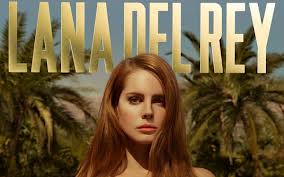
Known for her freshman album, Born to Die, Elizabeth Woodridge Grant, known also by her stage name Lana Del Rey, delivers again with the recent release of her new extended play Paradise, which arrived in stores and online November 9th, 2012. In the album, Del Rey resumes her role as an itinerant femme fatale character, known for her sensual lyrics and countless allusions to 1960s pop culture. The eight retro-hippie-symphonic-pop tracks on Paradise certainly make up for the lack of quantity relative to the 15 tracks on Born to Die, specifically through their uniqueness in regards to theme, lyrics, and genre.
Chronicling the journey of a woman in search of the American Dream, the eight-track album describes the struggle of addiction, heartache, greed, and a discomforting Electra complex (think Lolita). Del Rey lays her somewhat cheeky indie-pop lyrics over soothing hip-hop tracks that are complemented with booming orchestral instruments.
In comparison to her first album, Paradise contains no filler tracks or weak compositions, which is extremely evident in the exceptional production and mastering of the album.
The extended play opens with Lana’s chillingly dreamy vocals in the ballad ‘Ride’, which quickly continues where Born to Die left off: characterizing a vulnerable woman who struggles with alcohol and loneliness. Rather quickly though, the mood of the album shifts towards optimism with the arrival of the sublime second track ‘American’. Referencing her idols Elvis and Bruce Springsteen, the song depicts an overall positive love experience nostalgic of her adolescence: “Just like a baby / Spin me ‘round like a child.”
Lana Del Rey’s breathtaking contralto voice appears in the fourth track of the album, ‘Body Electric.’ The abstruse lyrics differentiate Lana, who once hoped to be a poet, from other artists as she pays homage to Walt Whitman’s poem “I Sing the Body Electric,” and references Elvis, Marilyn Monroe, and Jesus as her “daddy…mother…and bestest [sic] friend.” The song’s heart-stopping drumbeats and eerie acoustics combine beautifully with Del Rey’s smoky jazz vocals, distinguishing the track from others on the album.
‘Yayo’ and ‘Blue Velvet’ bring back early Lana Del Rey, the solemn blues singer covering hypnotic tunes from the early 1960s. Paradise experiences the more humorous side of Lana in “Cola,” as she explicitly compares her own genitals to Pepsi-Cola. “Gods & Monsters”, the album’s pop style song ironically contains the darkest meaning on the album as she questions her own mortality and the plausibility of a god.
Paradise comes to a close with the blissful eighth track ‘Bel Air’. Singing over a simple chord progression on a piano, Del Rey finishes the album with her own interpretation of paradise, a land of freedom and forgiveness. “I don’t wanna [sic] be bad / I won’t cheat you no more.” Her varying notions of beauty, “roses; palm trees; Grenadine, [and] sunshine,” and the audible sounds of children playing in the beginning and end of the song have a numbing effect. The overall nature of ‘Bel Air’ leaves the listener with a blissful sense of reality.
Lana Del Rey has truly outdone herself this time around with Paradise, an album so distinct yet so meaningfully enchanting. After listening to the album multiple times, it has become more obvious that Del Rey made the record surprisingly outlandish on purpose. Rather than appealing to the emotions of the listener, likes Adele’s 21 or the works of Taylor Swift, this record draws its audience in by presenting a truly disturbing image of a lost woman struggling to survive. In Paradise, Lana Del Rey presents an image so intense that one cannot help but listen with stark curiosity, and eventually become enveloped by her smoky jazz vocals, poetic lyrics, and orchestral melodies.