

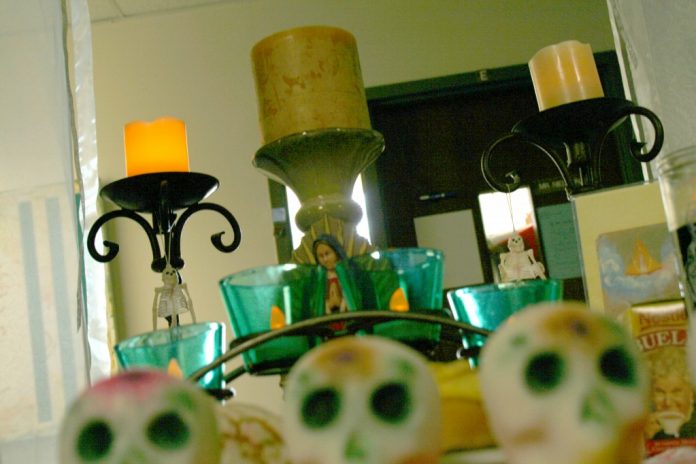
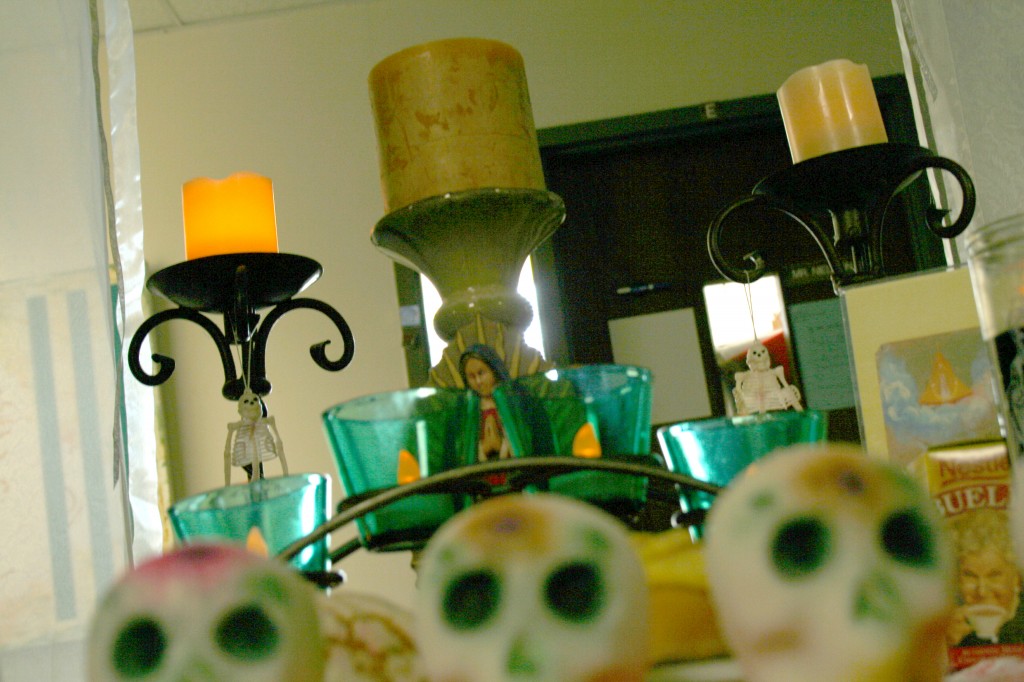
 If you happened to pass by the foreign language commons a couple of weeks ago, you might have noticed the colorful and elaborate altar celebrating Dia de los Muertos or “Day of the Dead.”
 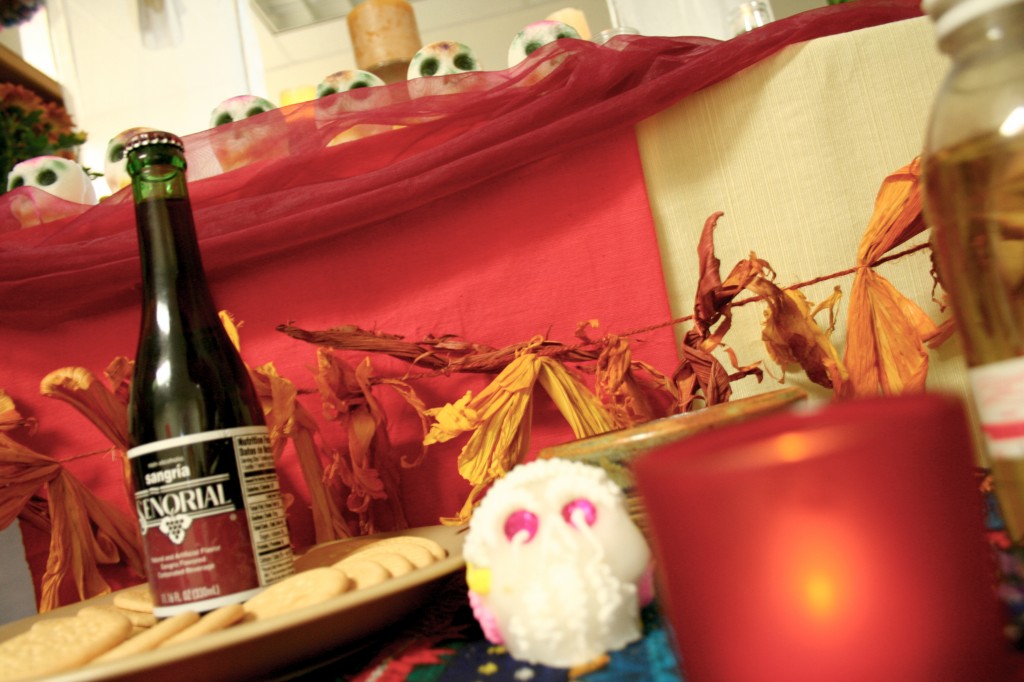 For those of you unsure about what that is, it can best be summed up as a holiday that occurs on the second of November and that is mainly celebrated in Mexico and other Latin American countries where families gather to remember and pay respects to their deceased loved ones. Sophomore Nathan Krog, who contributed mums to the display, notes, “I like the colorful flowers that honor the deceased loved ones who have died.”
The holiday itself dates back almost 3000 years to pre-Hispanic cultures of the indigenous peoples of Central and South America and takes place one day after All Saints Day and on All Souls Day, two Roman Catholic holidays that share similarities with Day of the Dead and are also commonly celebrated alongside it. Spanish teacher Greg Nielson, who spearheads the shrine’s creation, says, “I love how Day of the Dead is celebratory and not morbid. Death is viewed as a necessary tradition rather than a tragic finality.” Many people consider the holiday to be equivalent to the popular holiday Halloween due to certain similarities between the two which include depictions of spirits and skeletons, consumption of candy and other sweet treats, wearing costumes, and the relative closeness of when they are celebrated. The truth is that they are in fact very different as Halloween is centered around spooky imagery that is meant to appeal to our fears where as Day of the Dead is all about remembering people who were close to us and honoring their memory. But junior Andrew Bain admits that the altar looked “cool with the skulls in it.” Karen Lahey, chair of the Foreign Language department, believes the altar is important because “it teaches both the students and faculty about the culture, and culture is important to learning a language.”
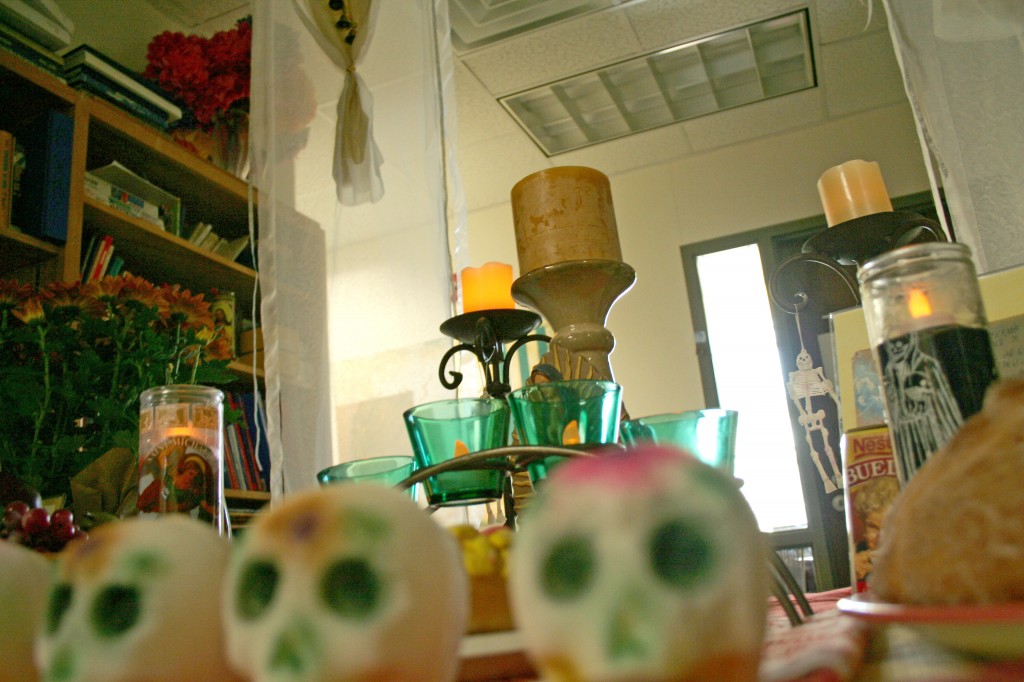 A common symbol associated with Day of the Dead is the Mexican marigold, a flower found in Mexico around the time of year and which is thought to attract the spirits of the dead to altars and offerings. Other common symbols include depictions of skulls and skeletons which are meant to represent the dead. They are usually in a somewhat cartoon-like form and sometimes are incorporated into masks and costumes. Often times highly decorated candy skulls are made from sugar or chocolate and are given as gifts to both the living and the dead.
Traditionally, altars or shrines are set up to honor the dead. They are decorated by the families of the deceased and are adorned with offerings, candles, religious symbols, flowers, pictures of the deceased, and colorful fabrics. These altars are usually set up in homes or around the graves of the departed. Offerings may include toys for deceased children, objects that belonged to the departed, and certain foods and beverages which can be the deceased’s favorites, or more traditional treats such as Pan de Muerto, sugary bread that is usually eaten around the holiday. Food is a significant ofrenda or offering because it is believed that the souls of the departed feed upon its spiritual essence. Aside from making altars and honoring the dead, participants of Day of the Dead often gather in graveyards to eat, dance, listen to music, and spend time with friends and family, not unlike the holidays that we celebrate here in the United States. Nielson especially likes “the introspective and reflective atmosphere the altar creates” in the Foreign Language department window.