
On Wednesday, April 1st, 2026, Jesuit sophomores attended a field trip to the Dallas Holocaust and Human Rights Museum in Dallas following an introduction to the Holocaust in both their New Testament & Christian Discipleship and World History classes.
The Day’s Schedule
First, the sophomore class was split into two groups. One group boarded buses to go to the museum in the morning while the other attended talks by museum employees and supplemental breakout sessions on the Jesuit campus before eating lunch. About half-way through the day, the groups switched.
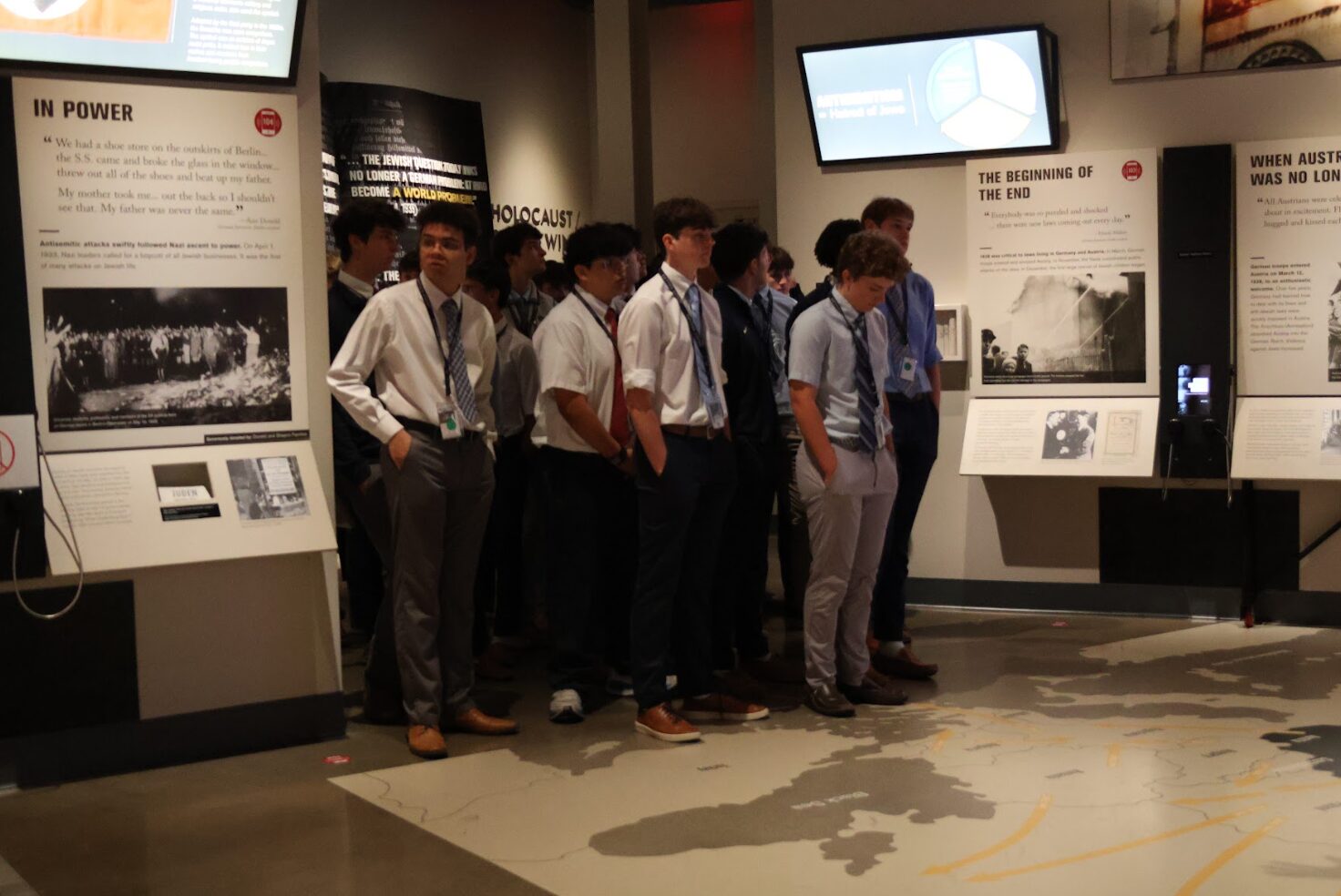
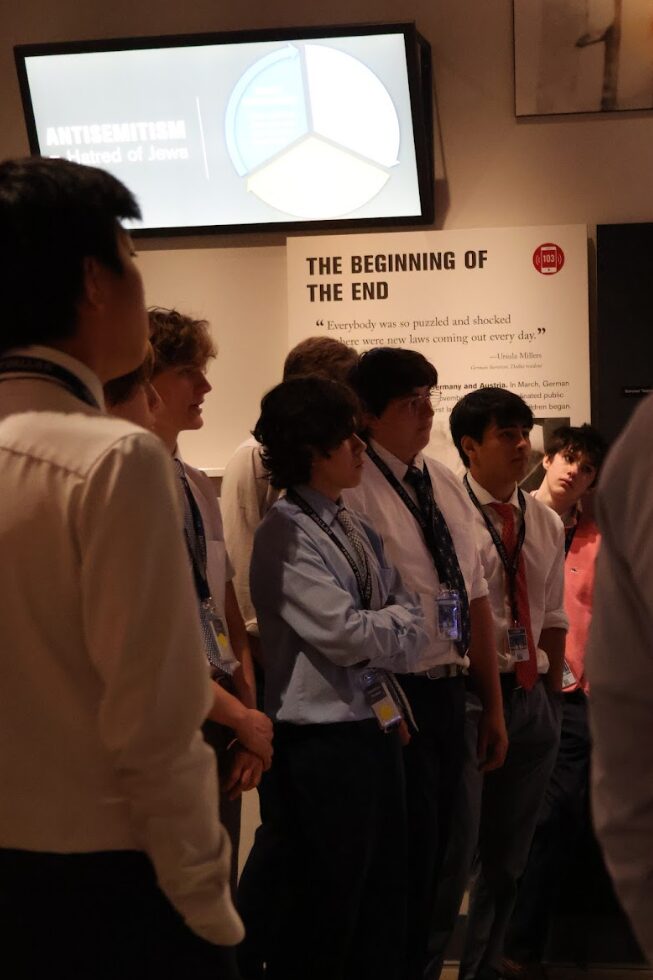
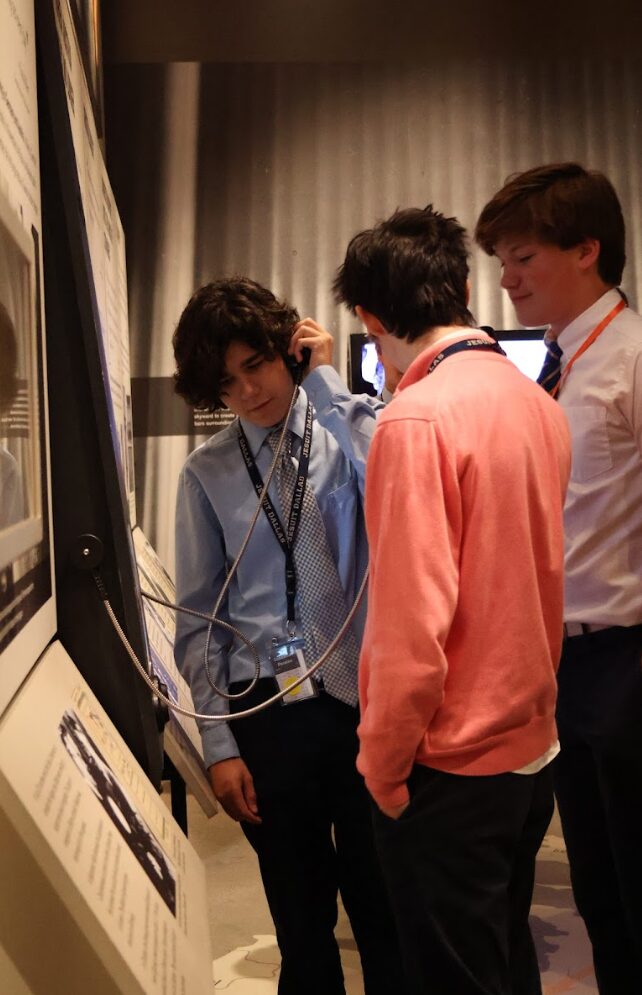
The Museum
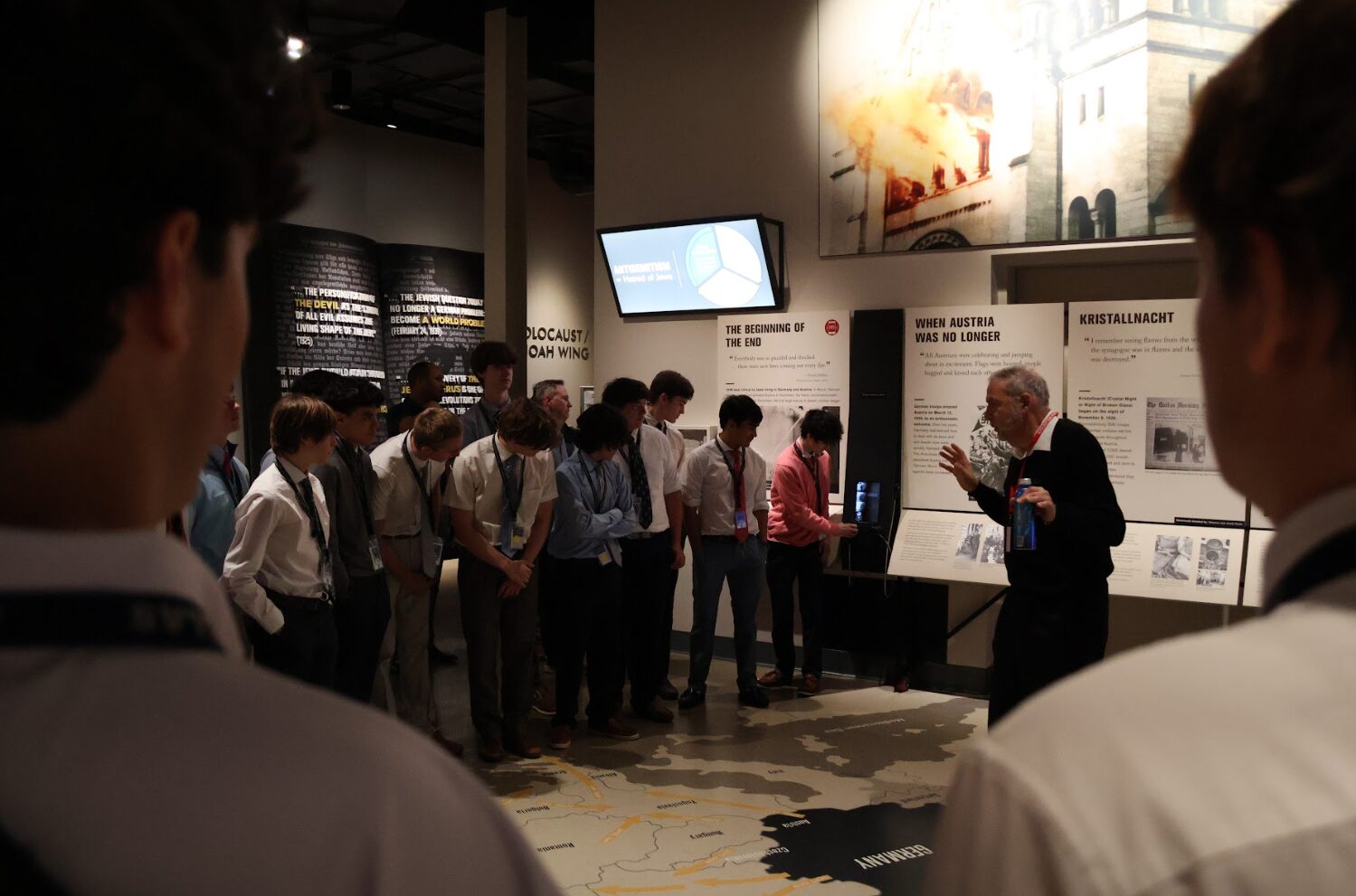
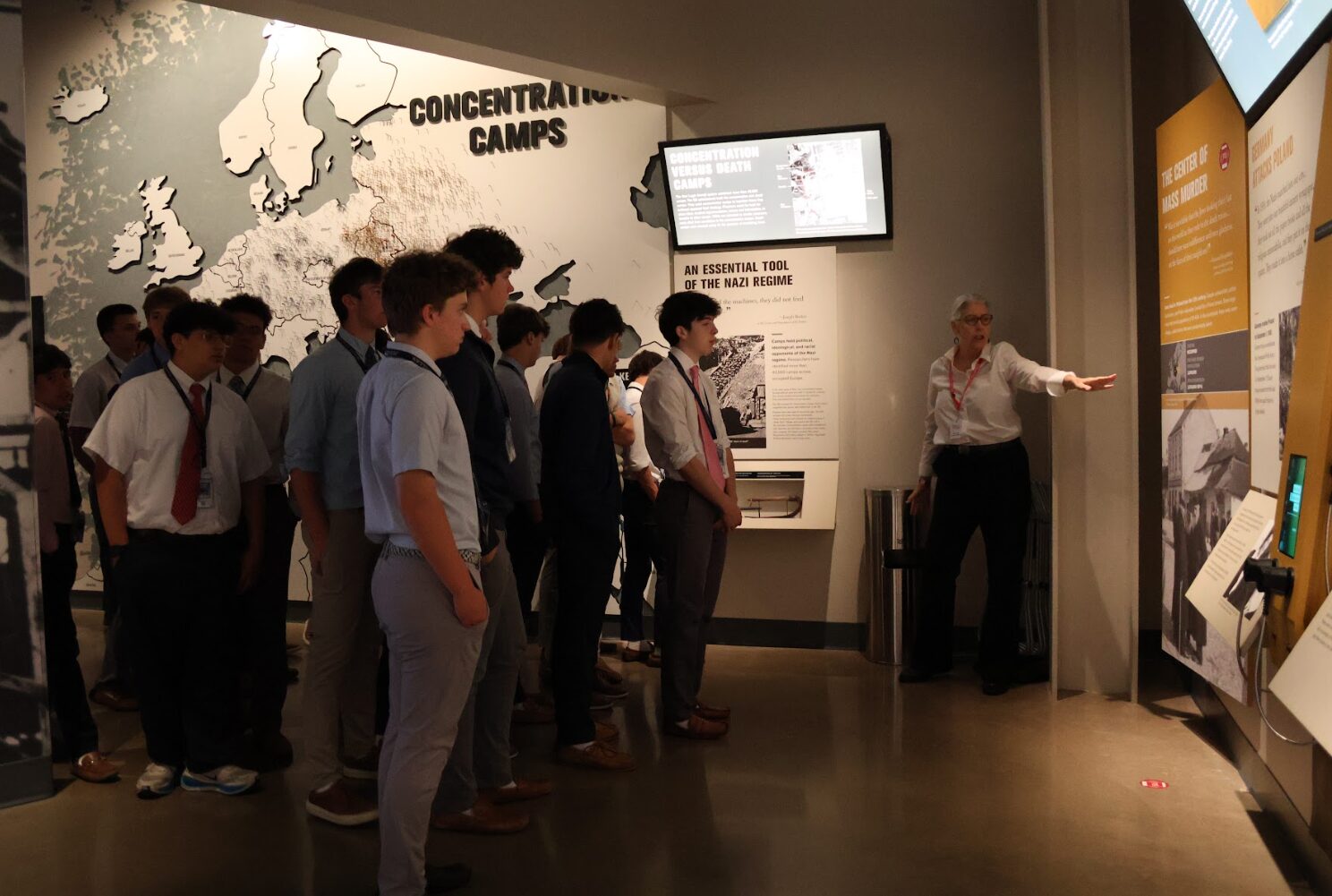
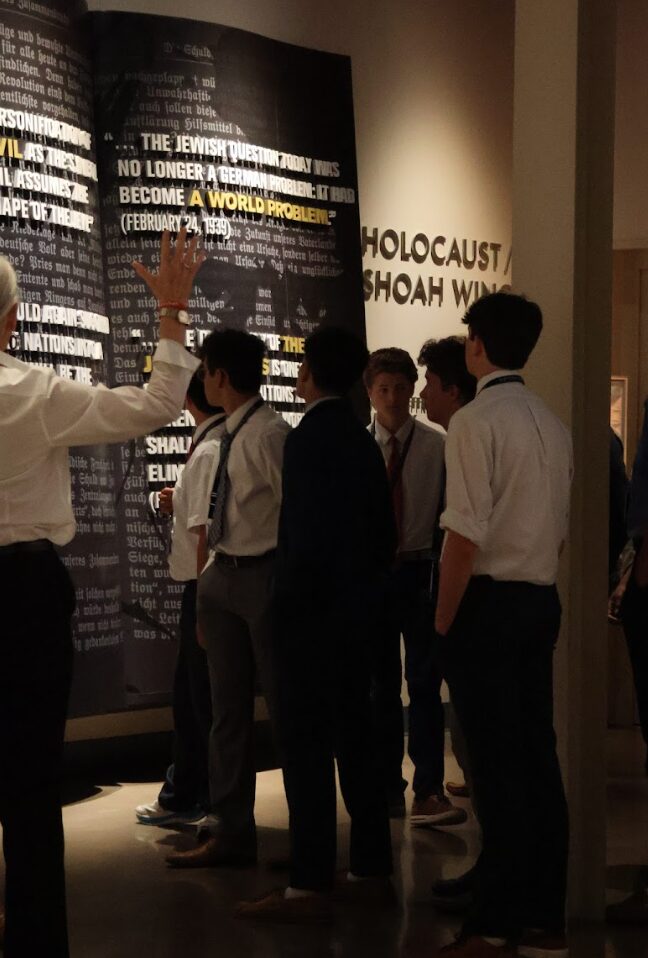
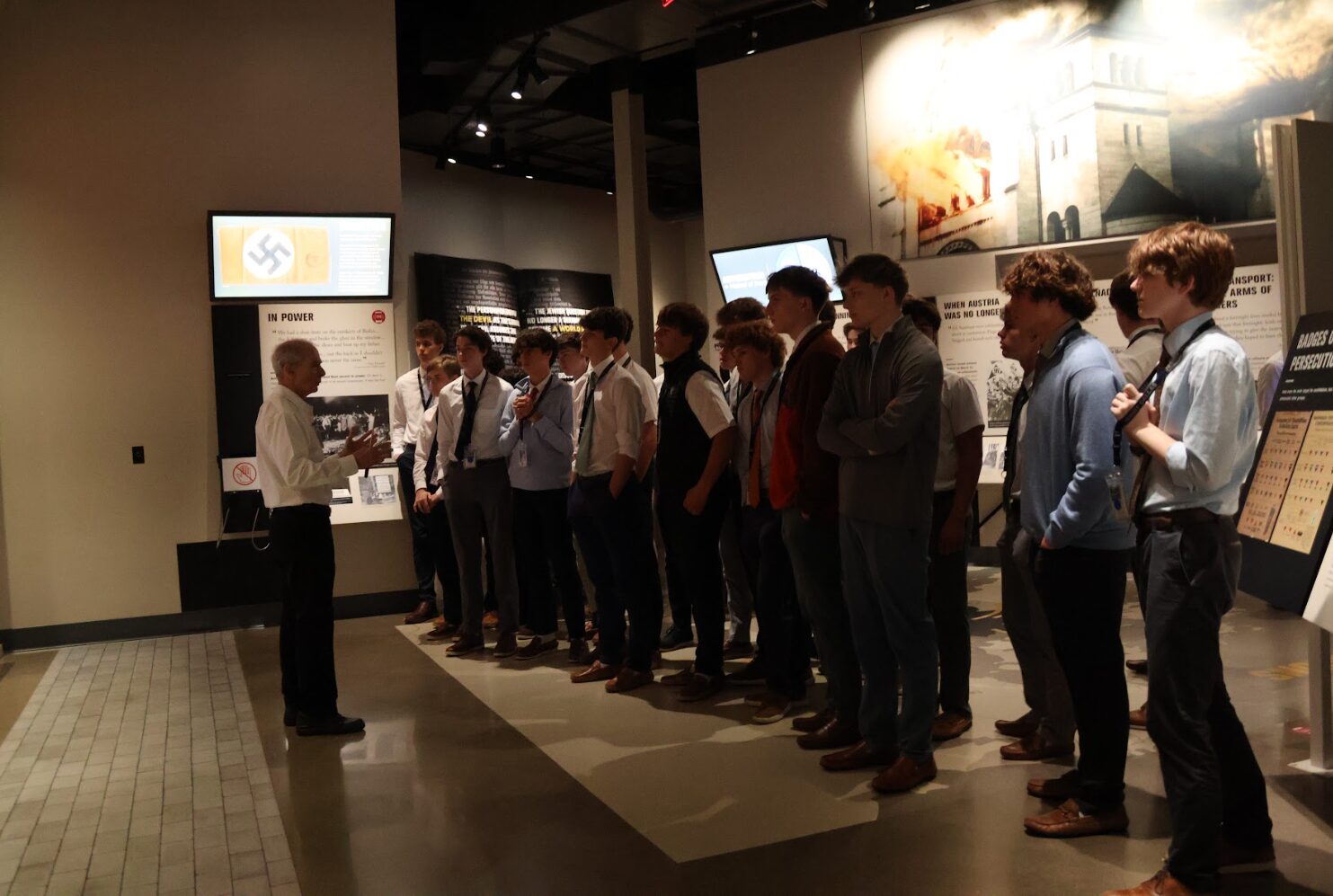
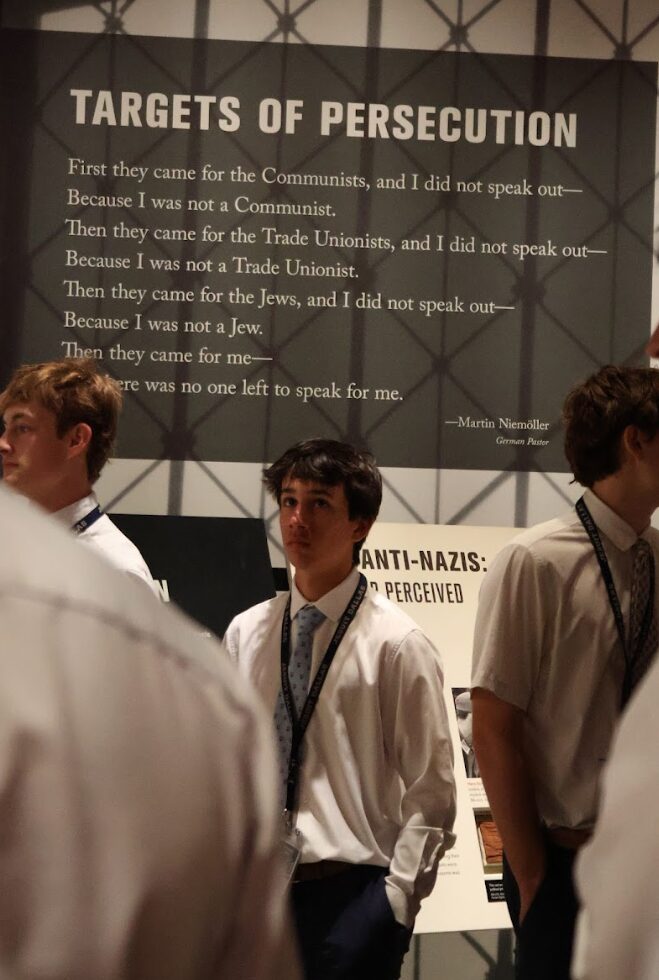
While at the museum, the group was split into four smaller ones, each of which having their own guide to walk them through the exhibits. The museum is laid out so that before entering the main exhibit area guests watch multiple introductory videos and audio recordings that introduce them to the Holocaust as well as explaining the history of how the Jewish people came to be so highly ridiculed.
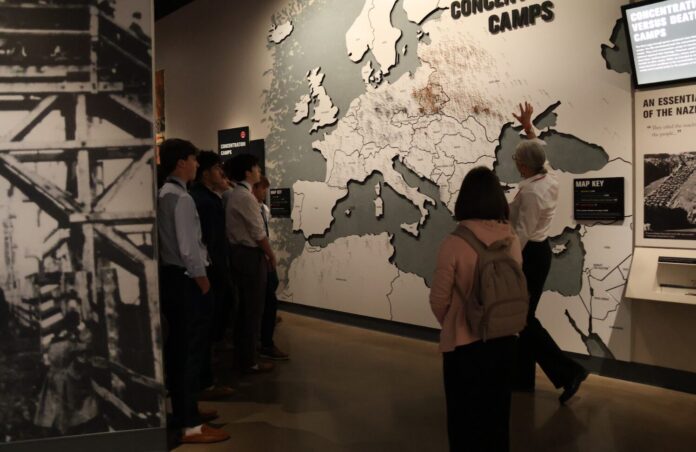
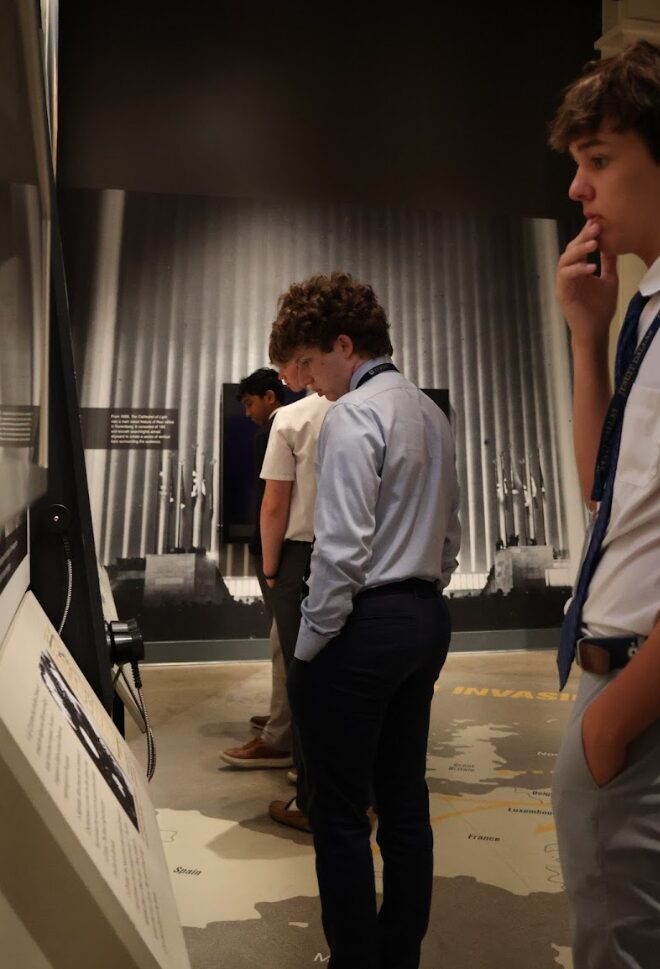
Upon entering the main exhibit area, students were able to explore the first area which explained the Nazi Patry’s rise to power in Germany and their policies towards Jewish people following an overview given by their guide. Students continued moving through the various rooms, receiving overviews and special highlights from their tour guides about notable people and events. Images shown to the sophomores included a large map of Europe covered with pins that represent 6% of all Nazi camps, as well as various artifacts from the many concentration camps such as the blue and white striped uniforms given to prisoners.
Following their walkthrough of the Holocaust wing, sophomores gathered in a meeting space in which they were greeted with a video screen of a Holocaust survivor. Students learned that the survivor was in fact a real person but that they had been asked a large series of questions in order to create an AI-powered experience that replicated an actual interview with the person. Students were able to ask various questions to learn about the survivor’s personal Holocaust experience and his feelings about the event.
Although the sophomore class’ tour of the museum did not include a tour of the Human Rights wing of the museum which focuses on the aftermath of the Holocaust and how people have tried to prevent similar events from happening again, students were given the opportunity to explore the limited time exhibit which was centered around the Walt Disney Company’s production of propaganda, art, training films, and more during WWII. While exploring the exhibit, students were encouraged to complete a scavenger hunt with questions about different parts of the exhibit.
On-Campus Talks & Breakout Sessions
During their time in the on-campus portion of the day, sophomores gathered in the theatre to listen to a talk given by an employee of the museum about various upstanders throughout history such as Nelson Mandela. Following the presentation, students went to their homerooms to reflect on what had been said. In addition, students created lists of qualities of both bystanders and upstanders.
Students then returned to the theatre for one last activity in which an art piece was shown. Students were then asked to write down what they saw and how it made them felt. They then returned to their homerooms once again to discuss how they interpreted the image and their own circumstances may have affected their interpretation of it.
The Impact
Throughout both portions of the day, students were hammered with the concept of upstanders and the importance of standing up for other people’s rights. Sophomores were also challenged to reflect on whether or not they themselves are upstanders in their own lives.
“When you first learn about the Holocaust, it’s really just stats. […] The way that some people fought back [was] just really empowering.” – Neil Lad ’28
“There was…a big map with all of the camps. […] When you’re learning about the Holocaust normally you only hear about Aushwitz and maybe a few others. I didn’t realize there were that many.” – Miguel Alvarez ’28
“It…makes you wonder how many things like this have happened, but they…get swept under the rug. […] I think that’s really moving.” – Layton Wolf ’28
“I think what I found most interesting is learning the complexity behind such [a] catastrophic event. Just seeing it’s not as black and white as it seems.” – Jacob Guyette ’28
Stay tuned into The Roundup for more Jesuit news!