


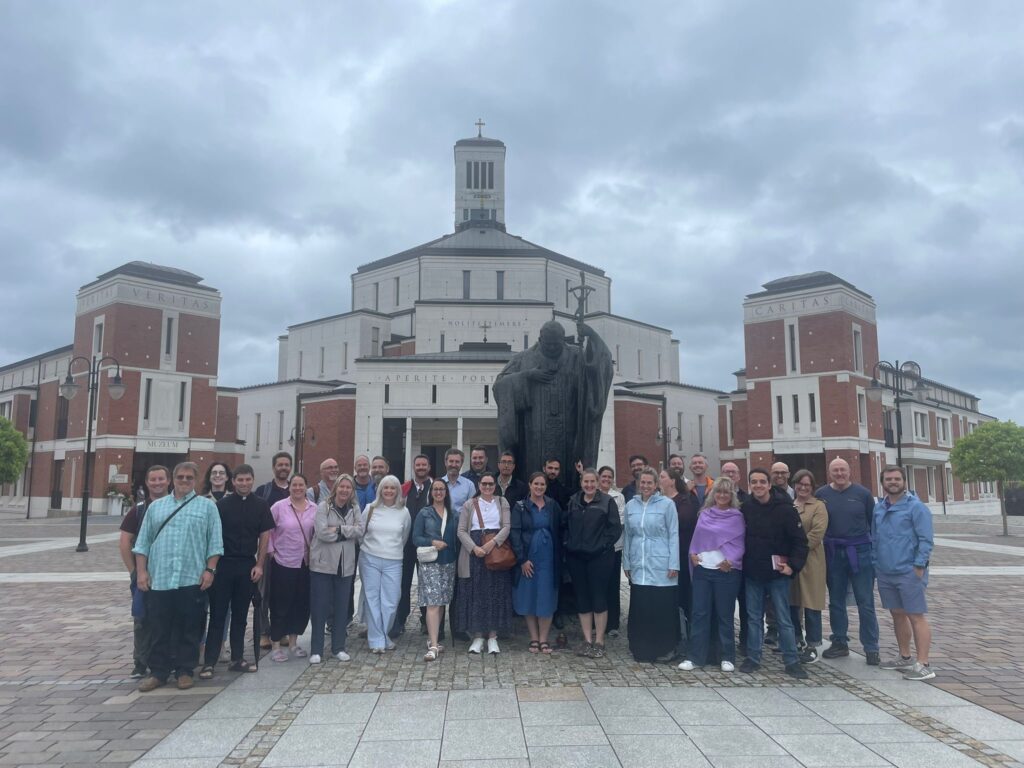
Over the summer, many faculty and students travel internationally, either for service immersion trips or to learn more about who God is. One of these trips was undertaken by Fr. Polce, Mr. Boyle, and Ms. Progar, from July 2nd to July 11th, to explore the intersection between Science and Faith in Krakow, Poland.
Schedule and Program
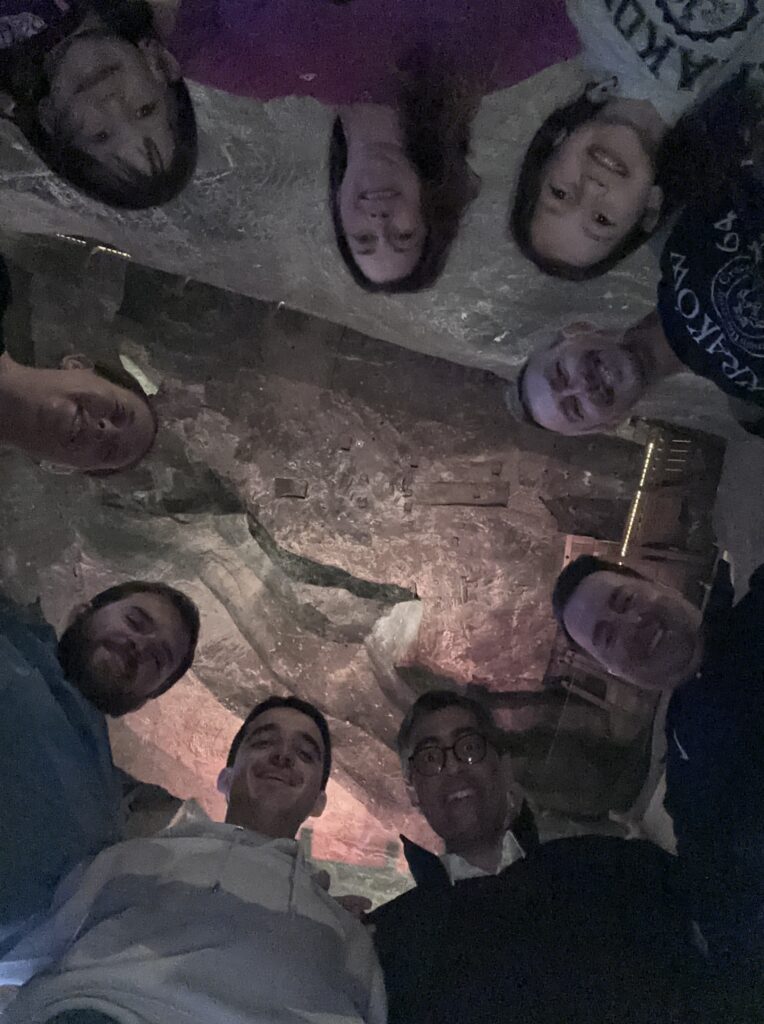
Most of the days throughout the trip consisted of breakfast in the morning, a morning lecture about something relating to the intersection of science and faith, lunch, and a trip to the city where they encountered Poland’s famous salt mines and churches. In the evening, a lecture concluding with reflection and dinner would take place. The trip was made possible through the McGrath Institute for Church Life, part of the University of Notre Dame, specifically the “Science and Religion Initiative”, one of the many “capstone” programs they offer for teachers across different disciplines.
Faith and Science
One of the lectures during the program was about the intersection between Faith and Science. It’s been established that the idea of theology is a focus on the immaterial while science is the focus on the material, but another way to approach and view this is that theology is the study of the world made by the immaterial, however science is the ability to find the connection of the material to the divine. During the Poland Trip, 3 teachers, Mr. Boyle, Fr. Polce, and Ms. Progar came to the same conclusion after listening to lectures and participating on the trip. It was the age-old question, that even with this approach, why do scientists try and disprove theologians and vice versa? The heart of this problem is pride, not actual science. One of the examples that was used during a lecture they attended was how Copernicus’ idea of a heliocentric model (sun at the center) was endorsed by the Church, but Copernicus’ accusation that the Church was wrong was a display of pride that people misinterpreted as a reason for why science and faith contradicted. Father Polce labeled this as:
“A false Dichotomy, and Scientist[s] Must remember that their discoveries come from God,”
An idea that is practiced by all science teachers at Jesuit, especially Mr. Boyle, who asserted how this experience reinforced his belief on science and faith, specifically his view on how biology and study of how things live and operate are,
“2 completely different sides of the same existence, without both of them, missing out on The full human experience.”
The trip to Poland highlighted how science and faith are two sides of the same coin, and without one of them, the other cannot be revealed in a certain way.
Problem of Evil
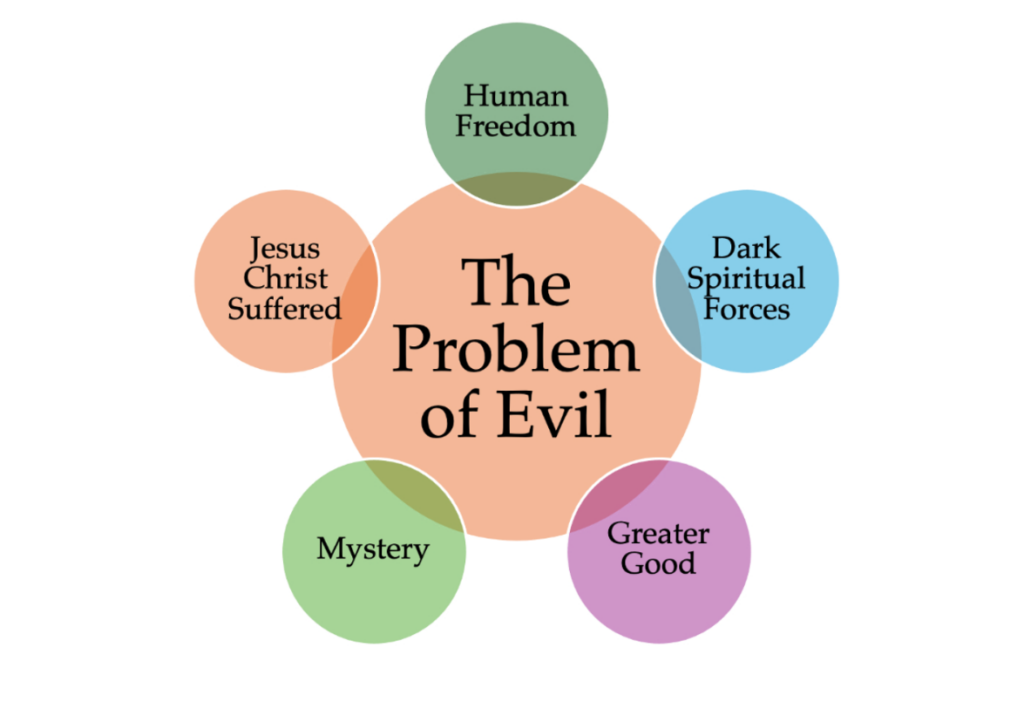
Another question during the trip that applies to specifically Christianity was the Problem of Evil. Simply, it is the idea that an omnibenevolent (all-loving) God, would still allow for suffering in his creation. Most Christians will respond with the idea of “free will,” which wouldn’t make theological sense because of the fact that an omniscient (all-knowing) would knowingly allow for that to happen despite being fully loving of his creation, however according to Fr. Polce, the response to this problem is Jesus’ death on the cross, and how that gave meaning to suffering, since death, according to Jesus, is the greatest act of love. One of the professors, Dr. Heather Foucalt, remarked how this allowed:
“Love to Conquer Evil, even if it takes your life.”
This feeds into the proper theological solution to the problem of evil, that suffering comes as a rejection of God’s love. Most people view the problem of evil as a “God Problem” and not viewing it as a human problem, and how people don’t shine love and care on this evil. This idea is also shown in Genesis, with the idea of humanity’s original sin and how they ruined the Garden of Eden, which was what an omni-benevolent God would have created. It’s not a question on whether God’s omni-benevolence existed and extended to humanity, since that idea is already proved by the creation of the Garden of Eden, it’s the idea that when God invites us to love, we reject it. When visiting the Birkenau Concentration Camp, which was one of the historical sites of arguably one of humanity’s greatest display of sins and suffering, the Holocaust, Ms. Progar remarked how:
“previous slow buildup causes these things to happen, and not Being [able to] analyze those actions, and not being able to see evil, and especiall not taking ACTION, THAT’S the cause of suffering.”
This goes to show how even when experiencing one of humanity’s greatest atrocities, in a world that should have been free from suffering, pain and misery, that the root cause of things like this was an inaction on evil that manifested from original sin. In summary, the response to the problem of evil is that it’s a human-induced problem rather than a problem coming from God, since it’s a rejection of his omnibenevolence.
Auschwitz
One of the darkest parts of trip, and a first-hand witness at the “epitome” of suffering, was Auschwitz, which is infamously known as one the largest collection of concentration camps (of which there were 40) that were operated by Nazi Germany that killed over 1.3 million Jews during the Holocaust. The teachers had the opportunity to tour the concentration camp, as well as hear from a survivor of Auschwitz, who told grueling stories of the absolute evil that was present at the camp. All 3 teachers shared the same sentiment, that it was an experience to take in, hard to truly recount into words since you were literally standing upon the ashes of people on the ground, in an area that while mostly destroyed, is completely deserted and standing. However, Fr. Polce saw something poetic in this moment, specifically how around 40 miles away from Auschwtiz, he saw the “Shrine of the Divine Mercy”, evidence of the dichotomy of one the greatest rejections of God’s love and one of the greatest offerings of love of Jesus existing in the same area, which further answers this question of the Problem of Evil, and also was one of Fr. Polce’s most fulfilling parts of the trip theologically.
Social Teachings from Poland
Another lesson learnt, separate from theology, was the understanding of brotherhood and kindness. Both Ms. Progar and Mr. Boyle observed, especially in areas like the City Square, a sense of community and “brotherhood.” People were naturally kind to each other, you could strike up a conversation with someone random at any point, and it was that space of communal gathering that was a major cultural difference, and something emphasized here at Jesuit that was observed in Poland. This idea of “brotherhood” also pushed the teachers to get to know each other better, whether it was through games like Mao (Ms. Progar recounted was super frustrating for Mr. Boyle especially), or with an opportunity to partake in an activity that emphasized a sense of friendly conversation as well as a sense of kindness and sympathy towards others.
Takeaways in Teachings at Jesuit
Mr. Boyle, Fr. Polce, and Ms. Progar, all agreed that the trip had a profound experience both theologically, but also in terms of tangible, material takeaways to be applied when they teach. Mr. Boyle and Ms. Progar both want to start a bioethics class, heavily influenced by the teachings of the Church in relations to science, since as proclaimed by the church:
“IF the DISCOVERY of TRUTH HAS A COMMON ORIGIN, it CAN’T be CONTRADICTORY.”
It would focus on observing how those teachings interact with actions regarding the dignity and respect of the human person in regard to medicinal and biological practices. Both Ms. Progar and Mr. Boyle plan to implement these ideas of community and kindness towards each other in their classroom teachings, and to also help them form a better relationship with others and God.
Summary
The Poland Trip was a trip that was a catalyst for self-reflection, theological answers, and a first-hand view of the intersection between disciplines, like science and faith, as a means to further our understanding of ourselves, others, and God. All 3 teachers learnt at a deeper level, what it means to be not just a teacher, but a Jesuit Teacher, and how to use each of their unique gifts to further understand the complicated identity of God.
Stay Tuned to The Roundup for more news about Jesuit Faculty and Staff!
Thanks to Fr. Polce, Mr. Boyle, and Ms. Progar for their help with gathering info for this article.
Their full schedule can be found here: Capstone Krakow – Schedule – Feb 2025
