


On December 22nd of 2025, the Trump Administration announced for the first time since World War II, a new battleship class for the United States Navy, dubbed the “Trump-class battleship.” It has been proclaimed that this will be “an unambiguous statement of American commitment to maritime superiority with capability to distribute more firepower across the fleet than any other class of ship, for any navy, in history.” The class represents the first steps of President Trump’s so-called “Golden Fleet” initiative and will initially consist of two ships before expanding into over 20. Only the name of the first ship has been announced, that being USS “Defiant” (Someone at the Armed Forces is clearly a Star Trek fan given this and the Space Force symbol.)
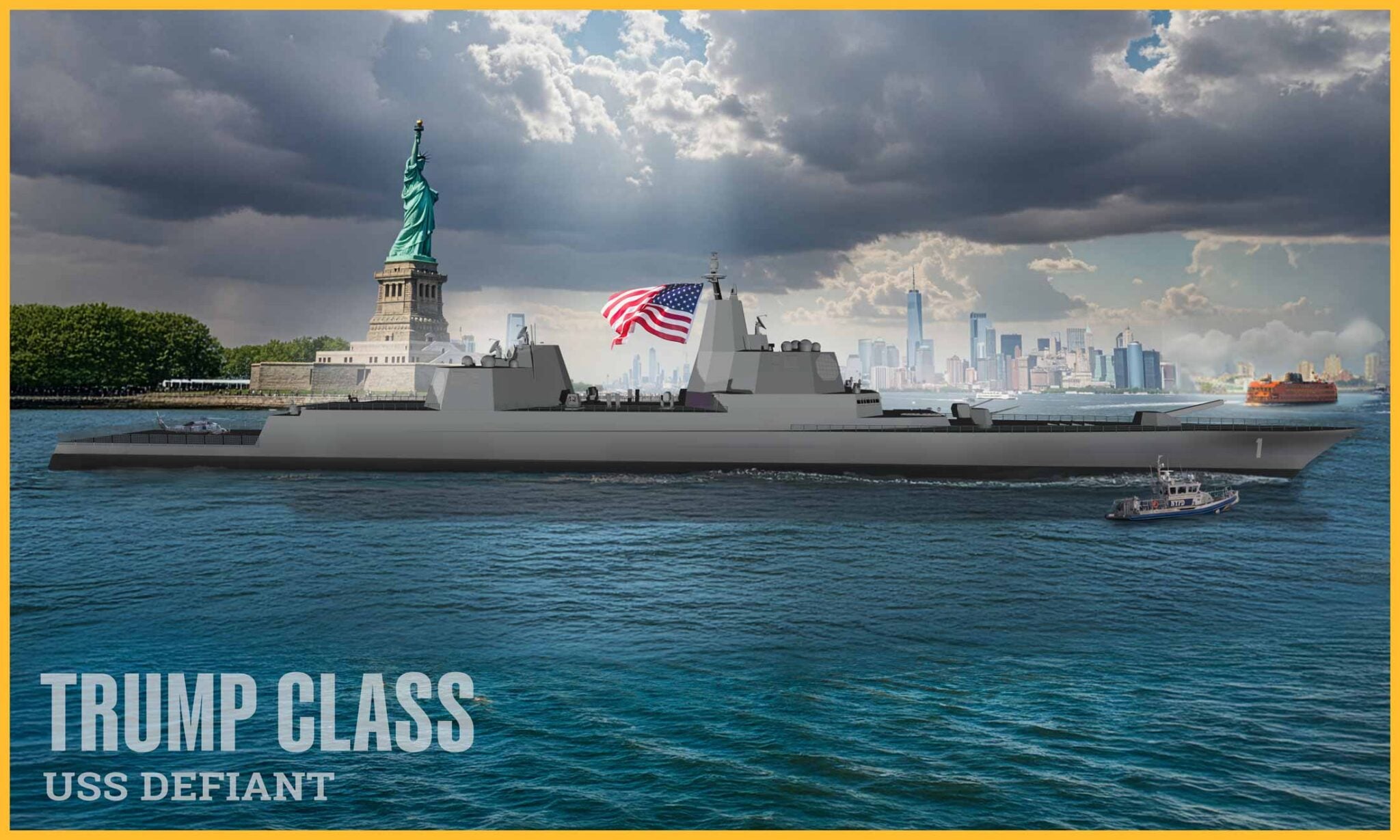
Many in naval enthusiast and history circles have said that the Trump-class represents a catastrophic mistake by the USN and does not even count as a battleship, will likely not even be built, and if it does, it will be obsolete before it even hits the water. But what makes them so? How can a ship said to be so powerful be perhaps the worst mistake in recent naval history? And is it even a battleship to begin with?
Defining a Battleship
The term “battleship” comes from the longer term “line of battle ship”, also known as a “ship of the line”, mainly because in the Age of Sail from the 1500s-1850s ships would fight in organized lines at close range, trading hundreds upon hundreds of cannon blows before the other was finally destroyed in what was referred to as the “line of battle.” Naturally, a ship partaking in this must be designed to soak up all this damage, bringing forth the battleship. Even after the dawn of steam propulsion and the ironclad with France’s revolutionary “Gloire” the idea of the line of battle and the term “ship of the line” did not die out even as naval technology progressed, in fact as ships evolved and the ironclad became the pre-dreadnought and the pre-dreadnought became the dreadnought, the line of battle did not die. From the Battle of Tsushima in 1905 between Russia and Japan to the Battle of Jutland between Britain and Germany, ships continued to fight in organized lines of battle. As a matter of fact, as late as World War I Germany still referred to their battleships as “linienschiff” or “ship of the line” due to their role having not actually changed. From this, we gather that a battleship is a ship designed to fight in a line of battle against other warships.
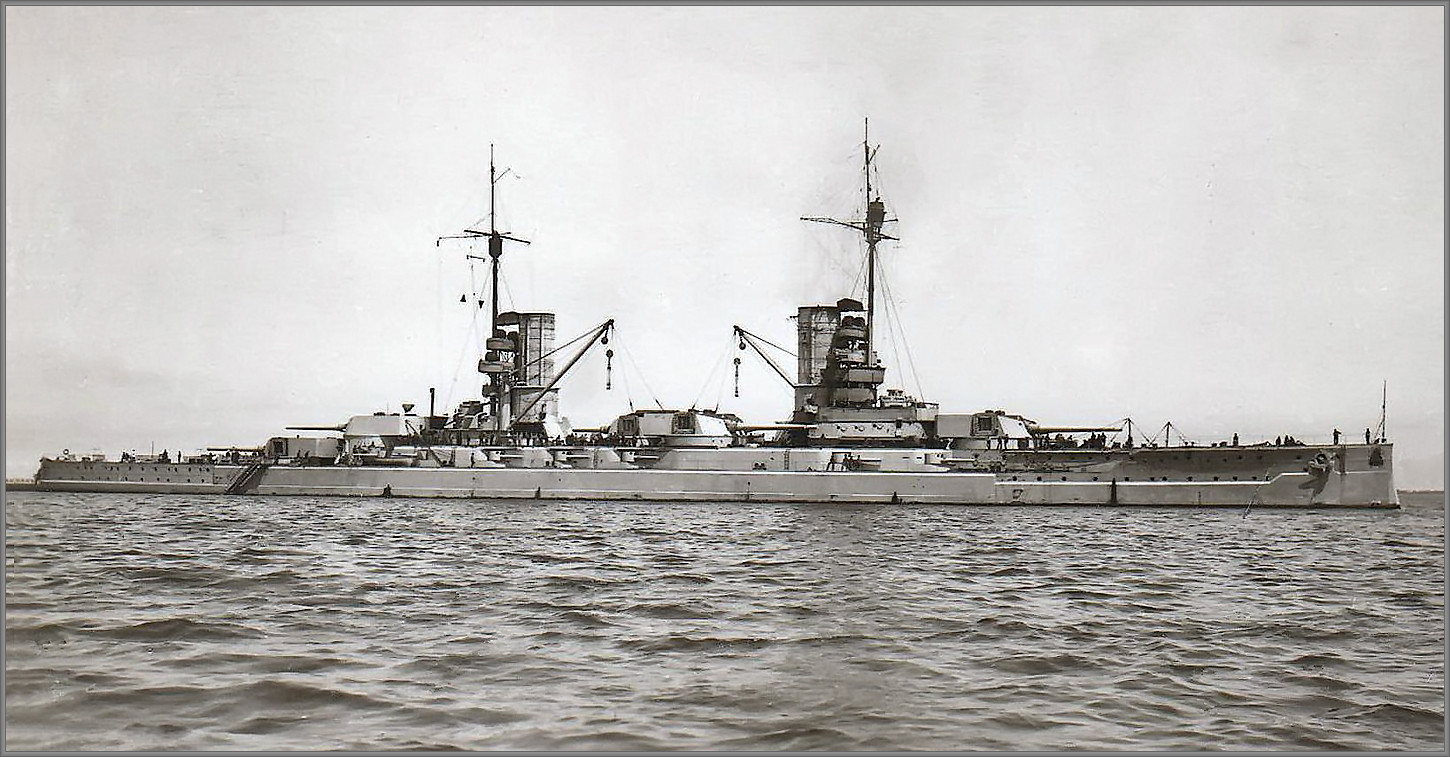
At the same time, a line of battle can also be formed by other smaller ships, such as cruisers or destroyers. In fact it has often been the case that cruisers or destroyers form their own lines. So why aren’t they battleships? The reason comes down to role. A cruiser’s role is to cruise long distances and project power at long-range and offer well-balanced firepower. A destroyer’s role is to destroy smaller craft, submarines, protect larger ships from sea and air threats, or strike at land targets. Meanwhile, a battleship is designed with the explicit purpose of fighting in the line of battle against other ships.

The Trump-class however is not designed with this in mind, as the line of battle no longer exists. Today, aircraft carriers have completely replaced the battleship as the most important ship in the fleet as aircraft carriers can launch aircraft that deliver strikes with greater range and effectiveness than a battleship can. Battleships were once the centerpiece of the fleet, but now that is no longer the case. While it is true that ship classifications can change, for example modern US Navy destroyers which sail globally to project power actually fit the definition of cruiser more than destroyer, this is mainly done for political reasons. For example, during the Cold War, the US Navy re-designated many of their frigates as cruisers after learning that the Soviet Union had exceeded them in cruiser numbers.
In essence, that is what the Trump-class is. It is being called a “BBG” or “guided missile battleship” not due to its role, but for political reasons. This is further supported by the mission profile according to the US Navy, which is described as “Power projection, offensive strike, integrated air/missile defence.” Notably going toe-to-toe with other enemy capital ships is not a part of its mission profile. Therefore the Trump-class is not a battleship, but rather a cruiser being called a battleship for political purposes.
Unfortunately, this being a cruiser and not a battleship is the least of its problems.
The Design
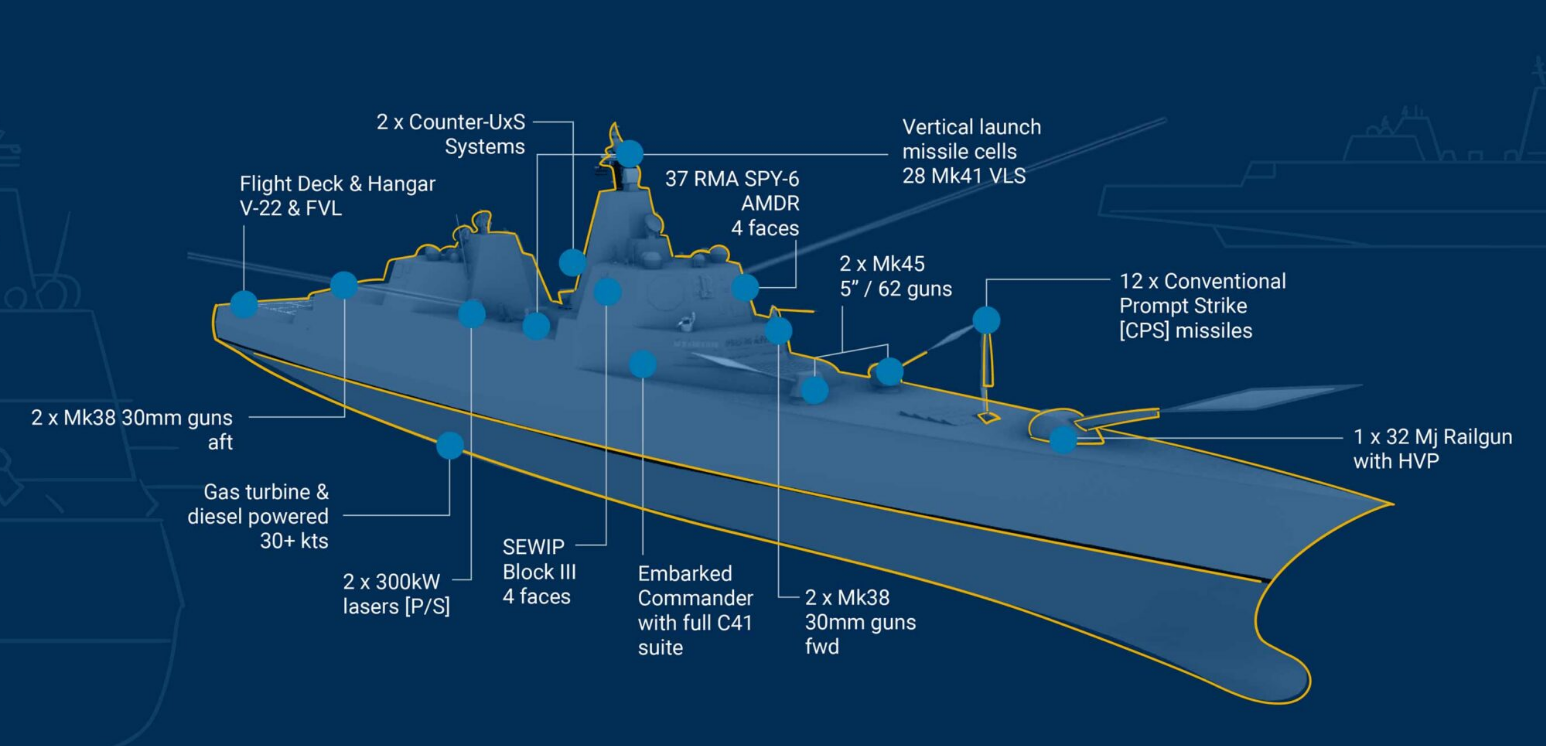
As a design, it is not necessarily bad. In terms of missile capacity, it exceeds that of the current mainstream US Navy design, the Arleigh Burke-class destroyers, with 128 cells as opposed to the Arleigh Burke’s 90-96 missiles. The vessel also notably maintains a rail gun and two side-by-side 5-inch guns as a secondary armament, and a good array of active defense systems such as lasers and CIWS. It will also maintain two hangars capable of launching V-22 Ospreys or helicopters. As for things such as size, the Trump-class is expected to displace about 35,000 tons, making it nearly four times larger than the Arleigh Burke at around 9,700 tons depending on how much it is loaded and which variant.

As for the railgun and side-by-side 5-inch guns, these are somewhat questionable. For those who may not be aware, a railgun relies simply on pure kinetic energy rather than an explosive shell in order to destroy a target. As far as the public is aware, the current American railgun program has lagged behind nations such as China and Japan, although it is entirely possible that Japanese assistance was used with the Trump-class’ railgun. The issue at its core however is that railguns require power, a lot of power. To do this, the Trump-class would need to be nuclear powered, but so far it appears that it will be diesel powered, which as far as it is known, cannot produce enough power to sufficiently give a railgun the energy it needs to be truly devastating. As for the side-by-side 5-inch guns, there is simply just no need for more than one in the missile age, especially when the Trump-class would operate amongst Arleigh Burke-class ships armed with the same gun. This appears to have just been done for pure aesthetics to give it a “battleship” look.
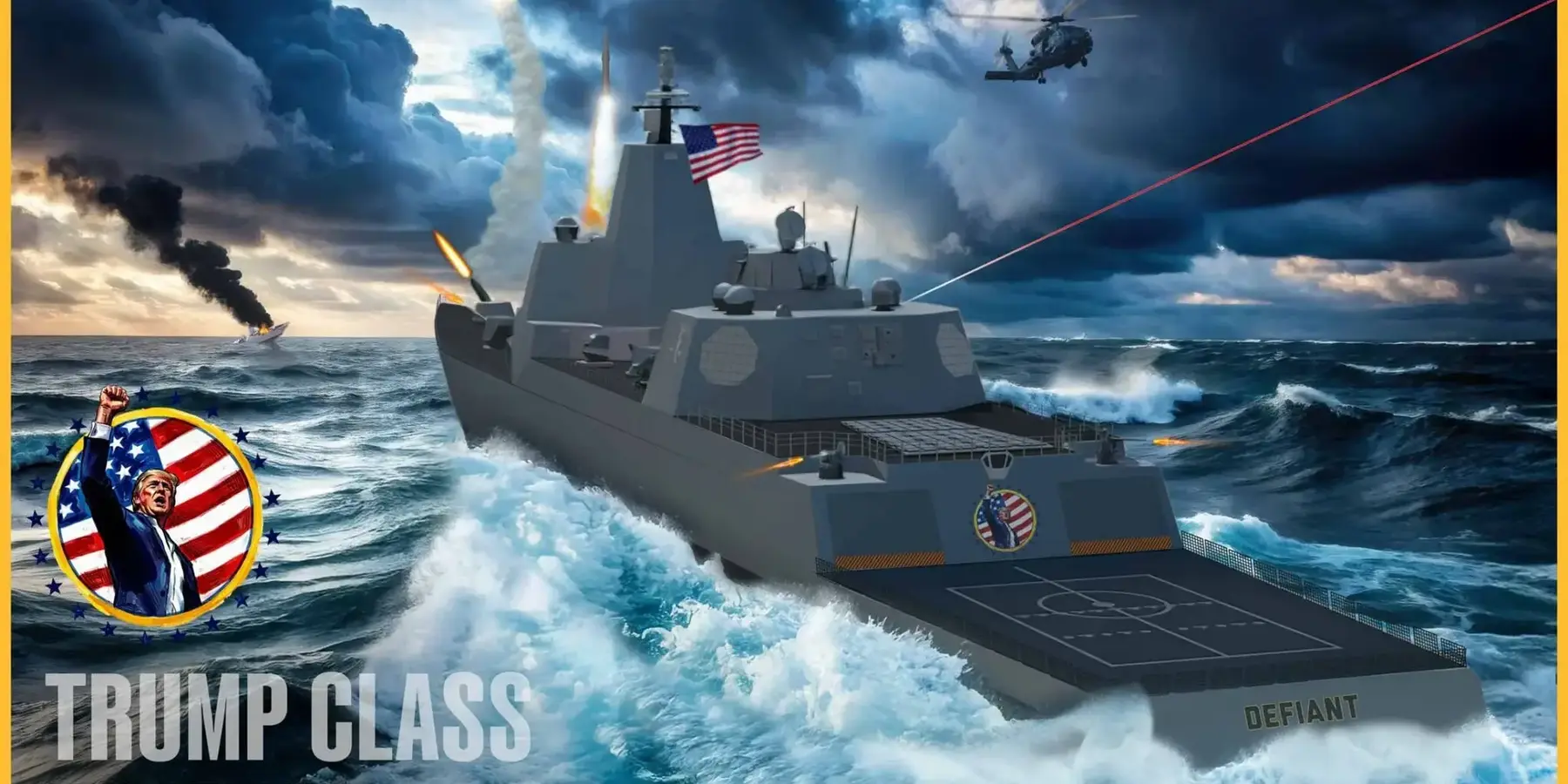
In fact in terms of aesthetics, it is genuinely a very sleek and futuristic appearing vessel, although the giant print of Trump’s face on the back does feel in poor taste considering the trend of putting a face on the back of the ship began with North Korea. The name also keeps up with Trump’s recent tendency to very humbly name things after himself. In fact speaking of the name, if built, the Trump-class will be the first ever class of “battleship” to not be named after a state since the USS Kearsarge of 1900. Typically, warships named after presidents are not named after sitting presidents, which adds another naval tradition this ship breaks away from.
What we have here isn’t a bad ship. It’s just not what is needed or desirable. Just two Arleigh Burke’s can field 180-192 missiles at likely a much lower price than the Trump-class. The navy also does not have an actual need for large surface combatants, what it truly needs is smaller ships like frigates that can support destroyers and fulfill a variety of roles at a cheap cost, along with a replacement for the Arleigh Burkes. The Trump-class is too expensive with too few ships to accomplish this. The navy had a replacement program for the Arleigh Burke-class, that being the DDG(X) program, but the Trump-class’ announcement has resulted in that being at risk of being cancelled if Congress approves the Trump-class, therefore delaying any replacement to the Arleigh Burkes. Although the Arleigh Burkes remain capable, no matter how many variants or modernizations are made, a late 1980s design is still a late 1980s design.

It’s Probably Never Happening
Many are pessimistic that the Trump-class will even be put into the water. Apart from the fact Congress has not approved the ships, in recent years the US Navy has suffered from terrible procurement problems. This is most apparent in the Constellation-class frigate. The Constellation-class is based on the Italian Navy’s variant of the European FREMM (Fregata Europea Multi-Misione) frigate utilized by multiple countries. It is beyond doubt a very capable ship, and twenty were ordered in order as part of the modernization of the US Navy’s smaller ship fleet. The ships had been announced in 2017, a builder selected in 2020, but it was not until 2024 that the first two of twenty ships began construction. In November of 2025, all other eighteen ships were cancelled and instead a Coast Guard cutter design will be modified to suit the role. This had been caused by extensive design changes that brought forth extreme cost overruns and delays. The Trump-class shown by the Administration is likely not the final design, meaning the changes that doomed the Constellation-class are entirely possible for the Trump-class. Given the amount of design alterations asked of the Coast Guard cutter that will replace the Constellation-class, the odds that the navy has learnt from the Constellation class’ failure are unlikely.

Making matters even more bleak, the Trump-class is not expected to even begin construction until the 2030s, by which point the Trump Administration will no longer be in office and the government’s makeup will likely look very different. The odds of a non-MAGA aligned administration, be it Democrat or Republican cancelling the ships if they balloon in cost or time is not unlikely.
Final Thoughts
The Trump-class is a half-hearted attempt at ensuring US naval supremacy and is based in nostalgia for the golden age of the battleship and to market it better to the public and to Congress. With no doubt a greater price-tag than the Constellation-class frigate, and more ships planned, if they are cancelled it may go down as the 21st century’s greatest blunder, an attempt to build a wannabe battleship that would blow sky high if a dreadnought battleship’s guns ever faced it down.