


In the early morning of January 3rd, on the refreshing break of a clean-slated new year, Donald Trump’s animosity culminated in an order to carry out the Delta Force’s long-planned invasion of Venezuela and kidnapping of Venezuela’s dictator in essence, Nicolás Maduro.
Operation Absolute Resolve, as the invasion was named, emerged from months of building tension. In October 2025, Trump established the dedicated Joint Task Force Southern Spear, bypassing prior oversight of the Caribbean and Central America by the Southern Command so Trump could properly coordinate the mission and establish U.S. dominance over the region.
From October 2025 to the kidnapping of Nicolás Maduro, Operation Southern Spear sought to disrupt transnational criminal and illicit maritime networks, namely by striking boats and seizing sanctioned tankers. In an interview with Vanity Fair, White House chief of staff Susie Wiles claimed that Trump “wants to keep on blowing up boats until Maduro ‘cries uncle’,” seeking surrender from the Venezuelan regime.
Trump began hinting at full-on invasion as he threatened airstrikes on their land territory: “We’re going to start doing those strikes on land, too,” he said. “You know, the land is much easier, much easier. And we know the routes they take. We know everything about them. We know where they live. We know where the bad ones live, and we’re going to start that very soon too,” Trump continued, alluding to the U.S.’s abundant intelligence on Venezuela.
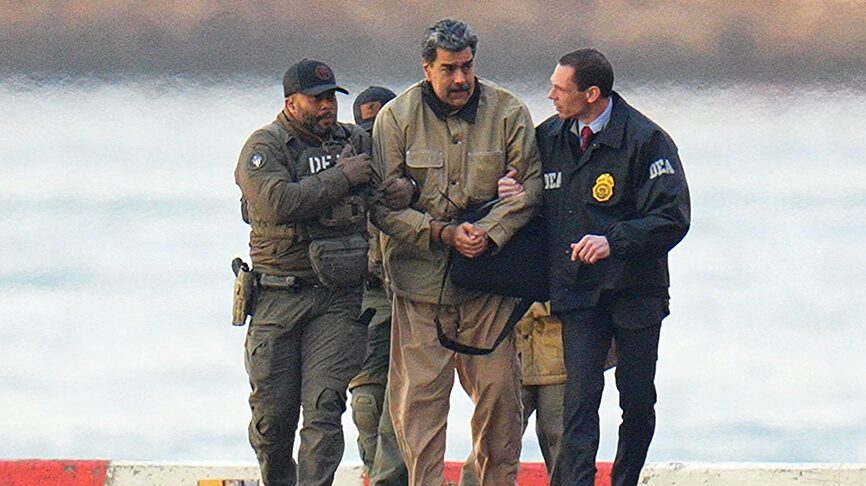
At 2:00 am on January 3rd, Trump launched this unprecedented operation to capture Maduro so he could be tried in New York, killing over 100 Cubans and Venezuelans as of now, 2 identified as civilians. Trump first carried out an air assault on the Venezuelan capital Caracas as a proclaimed “distraction,” a fleet of 150 aircraft. As aircraft entered Venezuelan airspace, the U.S. managed to cut power to all of Caracas through unknown means, and U.S. forces made their way into the city. Forces arrived at Maduro’s residence, described by Trump as a military “fortress” that “knew [U.S. troops] were coming,” and the heavily armed troops immediately began firing. “The apprehension force descended into Maduro’s compound and moved with speed, precision and discipline,” General Caine remarked.
The forces made easy work of Venezuelan security measures: “they just broke in, and they broke into places that were not really able to be broken into, you know, steel doors that were put there for just this reason,” Trump described. Dozens of Maduro’s bodyguards traded fire with U.S. troops, but by some miracle, or terrifyingly powerful technology, the U.S. troops faced no casualties in the clearance of Venezuelan and Cuban guards.
Forces then entered Maduro’s safe room that he fled to, ultimately forcing him out of the compound and into a U.S. military helicopter. All of this, Trump saw cross-legged from a television in the comfort of Mar-a-Lago.
It is safe to say that this was an incredibly successful demonstration of U.S. military might; to so seamlessly dismantle a regime with such an iron fist will worry our adversaries. But, there are of course some conspicuous questions on how the president of the United States can legally, singlehandedly orchestrate the kidnapping of a sovereign state’s leader to be charged in the United States on questionable charges, and whether U.S. intervention and nation-building will really ameliorate Venezuela’s ruined institutions, or if it will foment further political instability and drive the fragmented nation into total chaos.
A Venezuelan Renewal?
Venezuela in the mid-20th century was an economic powerhouse. In the 1950s, Venezuela was ranked the fourth richest country in the world, thriving off fossil fuel and mineral-based economic activity. Venezuela has the world’s largest proven crude oil reserves at 303.22 billion barrels, far surpassing Saudi Arabia’s 267.19 billion, and exceeding more than 5 times the U.S.’s 55.2 billion. The government estimates that more than a billion carats of diamonds exist underneath Venezuelan soil, surpassing Russia, the number one producer of diamonds in the world.
This prosperity continued for the nation’s economy, though as time progressed, the common Venezuelan’s wage decreased. This decline resulted from Venezuela’s drift towards “crony capitalism” where politicians and private companies worked in tandem to increase their own wealth at the diminishment of the working class. Literacy rates decreased and malnourishment increased, and the two dominant political parties (the Democratic Action and COPEI) remained unresponsive to the people’s needs. This led the people to view capitalism as incapable of solving economic backwardness, and the poor and working class began to look towards socialism’s promises of shared wealth.

Hugo Chávez quickly emerged as a leader of the workers’ movement after his failed coup in 1992, attempting to overthrow the ruling government. He campaigned in 1998, charismatically pledging economic reform and a “socialism for the twenty-first century” (which like any other century’s socialism, was a disaster). He promised to end the power-sharing system, and to fund the “misiones” system with the nation’s oil wealth rather than leaving it in the hands of multi-billion-dollar corporations, giving education to children and adults, food security in the form of state-owned grocery stores, cheap social housing, and free healthcare to the common Venezuelan. Understandably, this rhetoric was extremely appealing to the poor and working class who were facing nearly unlivable conditions by the very late 20th century.
Socialism for the Twenty-First Century
Venezuelans elected Hugo Chávez, and he immediately reconstructed the constitution of Venezuela to strengthen presidential power and reduce checks and balances, framing it as an attempt to implement his unprecedented socialist policies. The Bolivarian Revolution had begun. From there, he systematically undermined the independent media, courts, and his opposition, seeing Venezuela’s first shift towards authoritarianism. His promises of socialism struggled to function in bureaucratic inefficiency and corruption despite having access to the world’s largest oil reserves; the government’s seizure of the oil industry produced incredible inefficiencies in incentive and calculation problems, typical failures of socialism. Chávez paid for these programs by printing money, creating hyperinflation and ruining the economy.
Hugo Chávez died in 2013, and Maduro narrowly won the new election, inheriting Venezuela’s socialism-plagued economy. Mismanagement, bureaucratic inefficiency continued to lead to a lack of oil production, fueling food and medicine scarcity far worse than what it was in the late 20th century. Maduro in a pinch consolidated power further, completely eliminating opposition, holding fraudulent elections, murdering and arresting peaceful protestors en masse, and siding with Venezuelan drug cartels. Living standards were unbearable for Venezuelans, and the result was one of the world’s worst migration crises in history. Crucial trade partners like the United States sanctioned Venezuela under the nation’s oppressive regime, further decreasing import wealth and deepening the affordability crisis.
Donald Trump’s Future for Venezuela
It is fairly safe to say that Venezuela has seriously blundered their economy, politics, and the well-being of Venezuelans. And this is where Trump inserts himself. Whether the motivation is out of good morality, taking the murderous regime out of power with a blueprint for long-term prosperity, or out of interest in Venezuela’s vast natural resources, or even to send a message to U.S. adversaries about our military might, or possibly all of these reasons, Trump led the destruction of the Bolivarian Regime.
Trump declared that Venezuela would be run by the United States: “We’re going to run the country until such time as we can do a safe, proper and judicious transition,” and that Marco Rubio would lead the transition. The Vice President of Venezuela under Maduro’s rule was made the acting president, Delcy Rodriguez, under the agreement that she would fulfill the United States checklist of actions: oversee an economic opening enabling U.S. companies’ private investment, stabilize the economy, scale down relationships with United States adversaries, and help in cooperating in anti-narcotic operations.
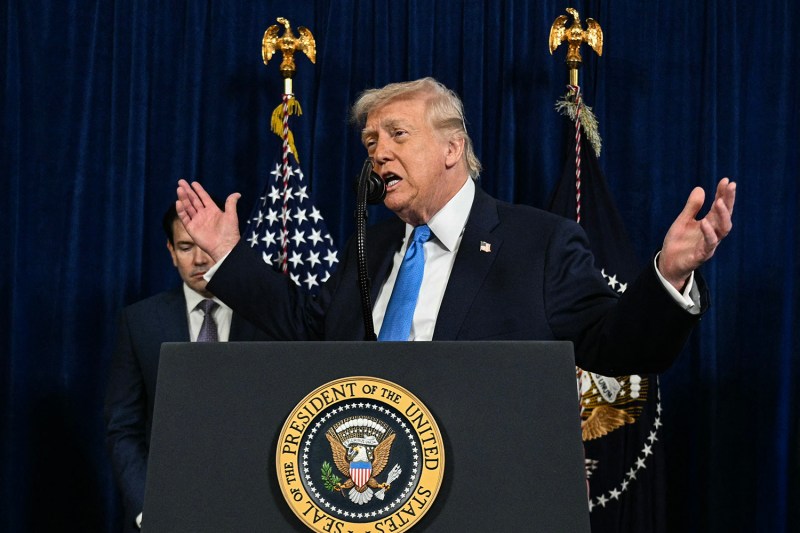
Trump announced that the U.S. would collect between 30 million and 50 million of high-quality “reimbursement oil” that would be sold at market price. The proceeds of the oil would be used to “benefit the people of Venezuela and the United States,” and the oil would be transported to U.S. unloading docks via storage ships.
As a part of the takeover, U.S. companies (like Schlumberger or Chevron) would heavily invest in refurbishing poor oil infrastructure, an operation that would hopefully fully enable Venezuela’s huge economic potential.
The United States’ Nation-Building Dilemma
But as we’ve seen time and time again, the U.S. has a poor record in nation-building, so how can Venezuela differ from failed nation-building in Iraq, Afghanistan, Somalia, or Vietnam, and reflect more successful examples like in Germany or Japan? First, we must understand where nation-building succeeds, and where it breaks.
In the case of Iraq, namely from 2003-2011, the U.S. military muddily dismantled the existing Ba’athist government without a viable leadership replacement. This created a power vacuum that was violently filled with militant sectarian divisions in an ethnic and religious conflict between the Sunni Muslims, Shia Muslims, and the Kurds. The United States’ myopia manifested long-term instability in the region and the rise of ISIS, making further investment and support extremely unattractive. Despite our interest in Iraq’s substantial oil reserves, development of oil infrastructure was impossible in the midst of the conflict we facilitated.
In Afghanistan, the United States attempted to implement the foreign ideology of democracy in a deeply decentralized, tribal society. Power existed in a presidential system centralized in Kabul, lacking consolidation over ever-separatist local societies. Democracy deteriorated amongst fraud, weakening Afghan trust in the newly introduced system, and massive cash influxes overwhelmed weak institutions. Corruption thrived in the U.S.-backed government and soon, many Afghans began siding with the more predictable Taliban, periphery societies rejecting the government’s legitimacy. U.S. presence and strategy fluctuated until a final withdrawal from military support and funding under president Joe Biden, leading to the immediate collapse of the dependent government to the Taliban.
Now let’s pan over to Japan. After World War II, Japan was in ruins politically, the Emperor having forfeited his legitimacy. The U.S. entered Japan with a clear plan: demilitarize Japan to prevent aggression, democratize political institutions, and rebuild the economy. U.S. smoothly integrated western ideals into Japanese society, preserving a symbolic emperor, civil service, and local governance structures, mitigating resistance from the Japanese people. A new parliament and constitution engendered equality and balanced institutions, but aligned with Japanese hierarchy, and security threats from external forces like China more closely aligned common Japanese and U.S. interests. Peace and stability enabled heavy, consistent United States investment in the Japanese economy and support, and eventually a graceful transition from a 7-year occupation to Japanese sovereignty, a nation allied with the United States to this day.
So from these examples, we can conclude that successful U.S. nation building involves far-sighted, comprehensive methodology, the painstaking integration of western institutions into local ideology and customs to undermine chaos and resistance, and the long-term investment and support until the nation can function independently.
History Repeats?
It’s impossible to know the full extent of the Trump administration’s blueprint for nation-building in Venezuela, though we do have a rough sketch: to eliminate the trade of narcotics, reinvigorate the oil industry through private investment, reform the socialist disaster of an economy, and align Venezuela with U.S. diplomatic interests. Integration of U.S. economic and political institutions in Venezuela holds prospect in that, unlike Afghanistan, Venezuela has seen democracy and capitalism; it’s not a foreign idea. In order for these to succeed, though, we must facilitate constitutional reform in prevention of power-sharing and authoritarian finesse witnessed in the latter-20th century. Unlike Iraq, there is not a religious, ethnic conflict-dynamic that could bottomlessly destabilize the nation.
The United States’ geographic proximity to Venezuela allows for easier, cheaper, and thus more attractive support and investment, and a refurbishment of Venezuela’s oil infrastructure by private means could greatly re-stimulate the economy and reduce U.S. economic dependency. Assuming the continuous occupation of Venezuela until the enactment of ideal, stabilizing political institutions, the ousting of militant cartels, and consistency in economic brace, this instance of U.S. nation-building can produce long-term prosperity. These exact United States efforts transformed the politically and economically unstable oligarchy of Panama into the richest country in Central America.
Domestic and International Legality
If the United States follows the nation-building practices we outlined, Venezuela will likely benefit from this intervention. But, it’s not often that a nation abducts another’s ruler in this ambushing approach and motivation; the last, closest parallel is Napoleon Bonaparte’s capture of the Spanish King in 1808 to rebuild Spain as a Napoleonic client state. So what do international and domestic laws assert about such an unprecedented operation in this global climate?
The United Nations’ Article 2(4) declares that all states must refrain from the threat or use of force against the political independence or territorial integrity of the state, unless the state is 1) in danger an armed attack or facing an armed attack, or 2) has approval from the Security Council Authorization. Since Venezuela did not threaten nor pose an armed attack, and drug trafficking is not considered an “armed attack” under international law, Trump’s invasion of Venezuela was likely unlawful on the international level.
Trump’s attack on Venezuela, however, like many historical United States operations that graze legality on the international level, may fall into a grey area under the United Nations’ lack of strict parameters. Humanitarian intervention, law enforcement abroad, and counterterrorism are labels that could easily palliate international ramifications. Virtually every president of the United States in recent history has invaded a foreign country under questionable international legality: Joe Biden invaded Syria, Iraq, and Yemen without permission from the U.N. Security Council or formal consent of the targeted states, and Barack Obama launched a plethora of attacks against various adversaries without U.N. Security approval or consent of the targeted states.
Even if Trump was held legally responsible for this attack under “crime of aggression,” absolutely nothing would happen. These charges only apply if the International Criminal Court has a jurisdiction, and the United States does not recognize ICC jurisdiction. Aside from domestic policy, law enforcement against international criminals is nonexistent. The worst punishment the United States could realistically face from the U.N. is a strongly worded letter.
Domestic Legal Implications
Once more, Trump’s actions fall into a legal grey zone. According to article 1 of the U.S. Constitution, Congress has the exclusive authority to declare war, barring the president from such actions. Trump’s military actions in Venezuela are arguably offensive actions akin to an act of war, requiring congressional oversight. The War Powers Resolution of 1973 declares that the president of the United States must notify congress within 48 hours of deploying U.S. forces into hostile regions, and that involvement in hostility for 60 days must end without an act of war.
The problem is, Trump did not have congressional approval, and he did not notify congress within the time period required by the War Powers Resolution. Instead, the administration has framed the raid as an attempt to enforce an arrest warrant, essentially sidestepping the WPR. Additionally, courts rarely ever pursue deciding war power pursuits, leaving questions unanswered about presidential authority in this context.
The legality is further obscured in the repetition of presidential raids and uses of force without congressional approval. Barack Obama launched invasions and deadly attacks on Pakistan, Somalia, Yemen, and Syria all without congressional permission, as did prior administrations in Afghanistan, Iraq, and Panama.
Final Thoughts
Operation Absolute Resolve was undoubtedly a huge development and thew beginning of a new American project. Whether or not Venezuela will be conditioned into a prosperous state under our occupation will ultimately depend on the detail of the Trump administration’s blueprint, and the willingness to commit to improving the economic and political environment of Venezuela, learning from mistakes and successes in our history of nation-building.
Stay tuned into The Roundup for more geopolitics coverage!
