


On July 1st, 2025, the self-identified democratic socialist Zohran Mamdani overtook the well-favored Andrew Cuomo in the NYC Democratic mayoral primary, winning with 56% of the ranked-choice vote to Cuomo’s 44%. Since then, further polling has suggested that he’s not just the Democratic favorite, but the overall favorite. The AARP New York-Gotham Polling and Analytics Poll surveyed a pool of 1376 likely voters and found that a stunning 41.8% of respondents would vote for Mamdani, while only 23.4% of respondents would vote for Cuomo, the second place candidate.
So how did this failed hip-hop musician become a clear favorite for one of America’s most important cities in a matter of days? Well, it can be explained as a lopsided mix of excellent political advertising through social media and, much more significantly, rebellious policies aimed to advocate for the working class of New York City.
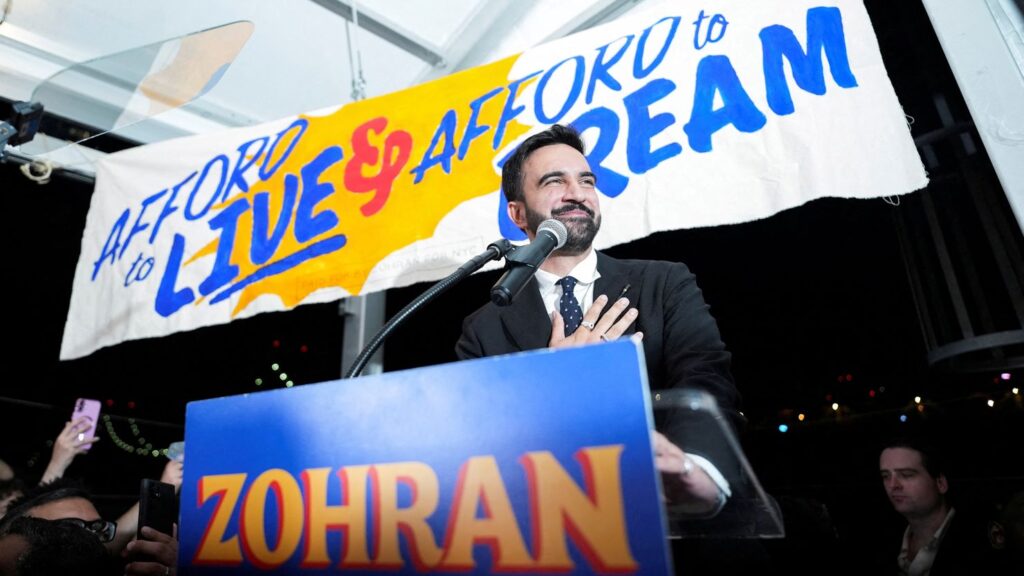
Zohran Mamdani’s policies repeatedly reflect his socialist ideologies, aggressively implementing safety nets and equality through artificially lowered prices. Some of these policies are city-owned grocery stores to supply low-income areas, massive government-owned housing projects to provide cheap housing, free-public transit, and creating a Department of Community Safety to deploy social workers during moments of unrest.
These policies sound warm, fuzzy, moral, and appealing to struggling New Yorkers who are tired of high prices, but are entirely unrealistic and inapplicable to New York City. Mamdani offers policies that sound comforting, but ignore real-world trade-offs and obstacles.
City-Owned Grocery Stores Without a Purpose
For a long time now, private grocery chains have avoided low-income neighborhoods because they cannot make the profits they would elsewhere. As a result, these low-income areas become “food deserts” where residents are left with little to no affordable, healthy options. Mamdani’s solution is to build a lineup of city-owned grocery stores across all 5 boroughs, eventually normalizing them to be essential public infrastructure.
Unfortunately, this “solution” would only reflect the same issues as a normal supermarket; The chains avoid these areas for a reason. Residents in these neighborhoods often have less spending power, cheap, calorie-filled food sells quicker leading fresh food to spoil, and in general, resident spending patterns do not align with a supermarket’s business model. If a grocery store charges more to satisfy their already small margins, people will just go to the corner stores. Low-income areas in big cities are only suitable for small, ultra slim-margin, low-staff stores like we already see, not supermarkets.
Mamdani’s proposed city-owned grocery stores operate in the same manner as a private chain, and could not make a profit in these low-income areas. These stores’ losses would ultimately end up continuously subsidized by taxpayer money. The 2-5% of revenue gained back from not having to pay rent is not enough to offset losses in the slightest.
Even assuming that Mamdani is aware and willing to allocate funds towards paying off subsidies, these city-owned grocery stores would do little to nothing to improve public health. A 2011, New York City-based study in South Bronx analyzed the two demographically similar communities, Morrisania and Highbridge, to “assess the impact of a new government-subsidized supermarket in a high-need area on household food availability and dietary habits in children.” The study, conducted by the FRESH (Food Retail Expansion to Support Health) program found that the introduction of a government-subsidized supermarket “did not result in significant changes in household food availability or children’s dietary intake,” suggesting that affordable, available food does not impact public health.
Mamdani’s city-owned grocery stores would have no meaningful impact on the “food desert,” but would only act as yet another worthless tax vacuum. A better allocation of funds would be to expand initiatives like the NYC Health Department’s Shop Healthy NYC, which brings subsidized fresh produce to bodegas, or offer tax incentives to small-lot companies like Aldi or Trader Joe’s, encouraging local hiring.
Idealist Housing
Since the 1990s, New York City has been in an affordability crisis, illustrated by high rents and a housing shortage. Thus, almost half of present New York households spend more than 30% of their income on housing, the HUD considering anything greater than 30% to be rent-burdened. A Community Service Society report found that 1 in 3 tenants spend over 50% of their income on rent. As a result, Mamdani promises to “freeze the rent,” protecting tenants from rent hikes for an unspecified amount of time, saving tenants up to 6.8 billion USD. He plans to do this by
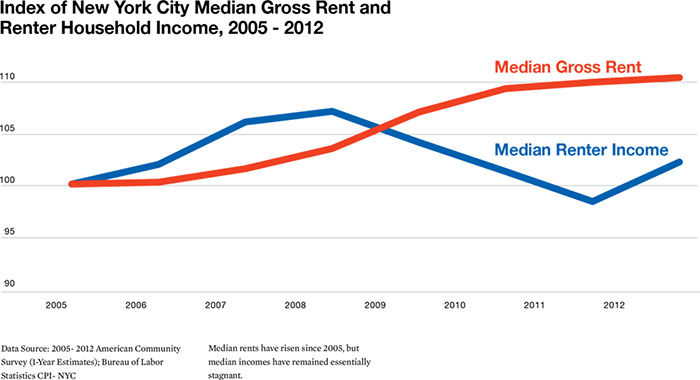
appointing likeminded RGB (Rent Guidelines Board) members to produce 0% allowed increases. Mamdani also plans to build 200,000 permanent new permanently affordable units over 10 years, a “long-term fix.” He plans to use rent freezing as a bridge to prevent displacement until the housing project is completed.
Unfortunately, this approach carries extremely heavy risks, threatening to almost completely crash the New York City housing market if not for a complication-free road to success. The rent-freeze must seamlessly transition into the public housing project.
A rent-freeze in NYC would significantly reduce landlord revenue, squeezing margins and leading to cutbacks in areas like maintenance. Rent-freezes also push landlords to abandon the markets completely. Studying San Francisco’s 1994 rent control expansion, Diamond, McQuade, and Qian (2019, Stanford/NYU) found that landlords reduced housing supply by 15%, often by condo-conversions or demolition to escape regulations. This lead to a 5.1% city-wide rent increase, entirely counterproductive to the initiative. Similarly, in New York City during the 1970s, rent-control caused many landlords to leave properties to deteriorate; Over 300,000 properties were abandoned and more taken by the city in foreclosure.
For a more recent example, in 2020, the Mietendeckel capped rents around Berlin. A study by the Institute of German Research found that the policy reduced available rental listings by 25-30% as landlords pulled from the market. This only strained housing further.
Now, we move onto the housing project. Public housing construction often begins with sufficient funding, but maintenance lags behind promises and buildings deteriorate. New York City Housing Authority currently faces more than 40 billion USD in repair backlogs as
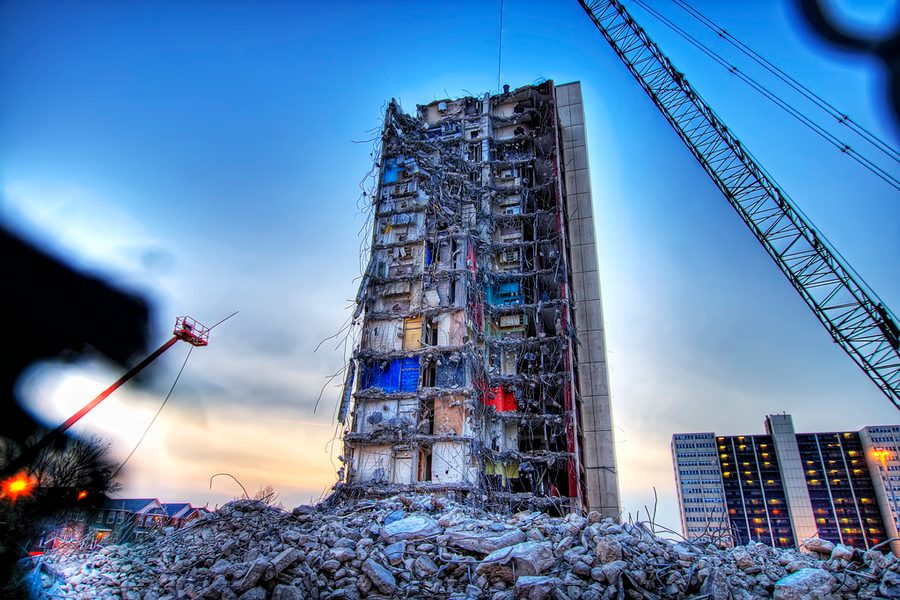
residents endure mold, heat outages, and further complications. Cabrini-Green and Robert Taylor homes in 1970s Chicago promised similar results to Mamdani, but quickly became the crime-infested slums of Chicago and later uninhabitable due to maintenance underfunding and inefficiency.
Large public housing projects also tend to throw low-income individuals in the same developments, increasing poverty and crime. This can be seen in the aforementioned Cabrini-Green and Robert Taylor Homes, and other projects like the Pruitt-Igoe in Saint Louis.
This is not to mention construction costs and overall bureaucratic inefficiency. Government-built housing tends to cost more than private due to bureaucracy, union requirements, and lack of incentive. In 2019, NYU Furman Center found that building affordable units through public programs can cost 500,000 to 1 million USD per unit, almost five-fold that of private initiatives.
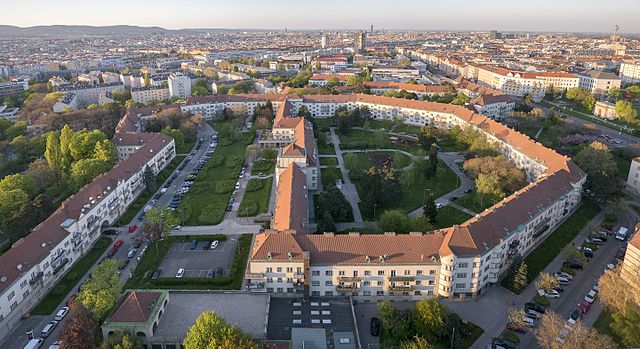
Some may point out that this project is based on public housing models in Vienna, one of the most successful examples. The parallel breaks when you consider that Vienna public housing has been built over nearly a century of Social Democrat rule providing consistent funding. Vienna spends $700,000,000 annually on housing subsidies, a significant portion of its GDP, and over 60% of the population lives in this housing. This is in contrast to the massively underfunded NYCHA who cannot succeed no matter what tax breaks they can get. Vienna’s entire system rests around public housing, a NYC isolated project doesn’t replicate that system.
If Mamdani’s plans can fly through all obstacles untouched, and remain untouched for years to come, this would be an unbelievable feat of city planning. But we live in an imperfect, practical world where risks of this scale should not be taken. Housing affordability should be addressed safely and practically through relaxed zoning (like Tokyo), using private developers, and providing targeted rental assistance, shown by HUD studies to increase stability and decrease homelessness. This is not to say that rent freezes do not work; Historical examples show that a rent freeze can give relief to tenants in NYC. Though these freezes were very temporary, not multi-year freezes bridging massive social housing developments.
Unfair Fare-Free Buses
In New York City, the standard subway and local bus fare cost $2.90 per ride, discouraging many from consistently using public transportation or squeezing resident budgets further. Mamdani, in hopes of massively increasing public transportation usage, proposes subsidizing specifically the bus fees with taxes. This approach however is impractical and raises a multitude of issues.
By removing fares, Mamdani deepens the MTA’s(Metropolitan Transportation Authority) chronic deficits. In 2023, the MTA fell short of $600 million only to be patched by state subsidies and COVID aid. This hole would only be deepened considering that 35% of the MTA’s offering budget (as recorded in 2019) comes from fares, meaning that free buses would eliminate an estimated $1.2 billion annually. With many shifting from the subway to buses, this deficit would skyrocket even further.
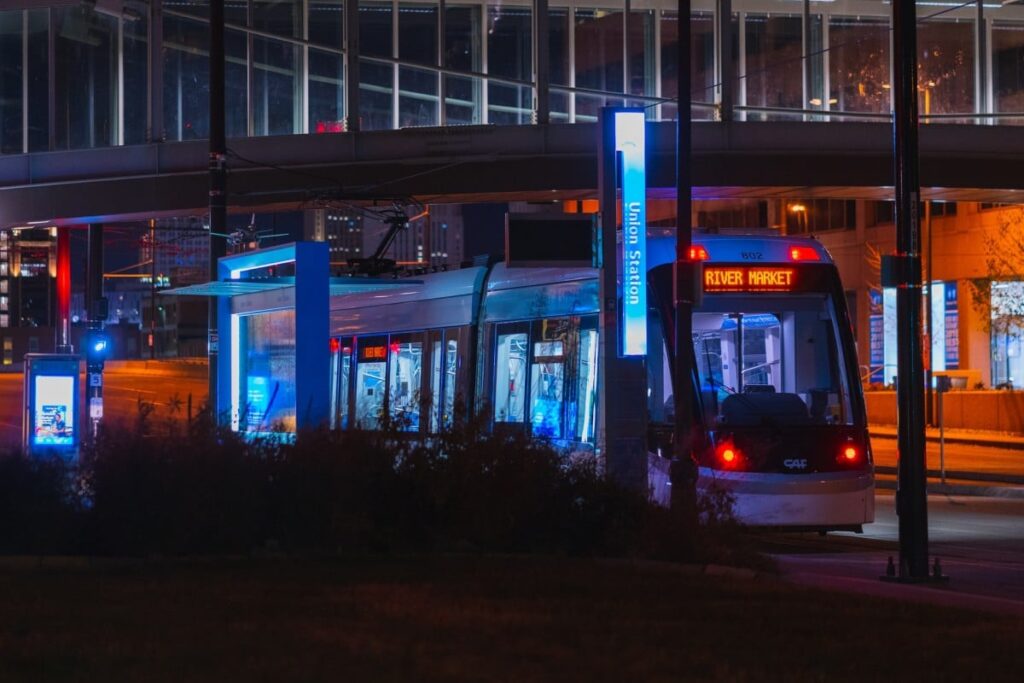
Additionally, making buses fair-free while keeping the subway system as is will create class-segregation. The people who can freely afford the subway fares will have efficient, uncrowded transportation, while most New Yorkers will flock to the free bus system, including NYC’s colossal homeless population of nearly half a million, not filtered out by a financial barrier. As you can imagine, this will cause safety concerns, undesirable conditions, and extreme bus inefficiency that negates the time saved from avoiding fare booths. After Kansas-City implemented fare-free transportation in 2020, bus ridership increased, but so did crime, vandalism, and maintenance costs.
A $1 billion subsidy could instead better public transportation and target those who truly cannot afford it. We should improve reliability and efficiency, expand routes and eliminate “transit deserts,” and expand programs like Fair Fare that target discounts for seniors, disabled riders, and low-income families.
Funding an Extravaganza
So now we must ask the question, where is all of this money coming from? Zohran Mamdani plans to fund his many initiatives through “taxing corporations and the 1%,” explicitly listed on his campaigning website. Reporting says he’s proposed an additional 2% on NYC residents who earn more than $1 million a year, and a near double in the corporate tax rate from 6.5% to 11.5%.
Unfortunately, this approach has many legal hurdles and cannot be done unilaterally as mayor. Big rate changes on cooperate taxes and individuals need approval by both the Governor and Legislate, a difficult barrier to pass. Even recent, small hikes proposed by the chamber couldn’t pass.
Even if the hikes do pass, capital gains cycles will create great volatility in tax-collections, impairing the ability to consistently fund projects like city-owned grocery stores, housing developments, and free transport. Upon nearly doubling corporate taxes and raising that on wealthy individuals, you also risk a minor exodus and behavioral responses like income shifting and realizing less capital gains.
Finally, a commonly cited study by Ljungqvist & Smolyansky finds that corporate tax increases reduce employment and wage income in affected counties, revealing an indirect harm of Zohran’s policies on the working class of NYC.
Mamdani cannot reliably fund his financially draining policies through the methods he’s proposed; They’re burdened by legal restraints to which none of his policies could be accomplished, and should they pass, taxation volatility can put strain on consistent subsidization.
In Conclusion
Zohran’s surge in the polls reveal a deep hunger from New Yorkers for financial relief and equality. Yet his policies, from city-owned grocery stores to rent-freezes and social housing to fare-free buses illustrate a gap between political messaging and reality. Mamdani’s polices are not suitable for New York City because they can only succeed in an idealist, perfect world, ignoring administrative and historical constraints in provisions of comfort.
New York City deserves solutions that don’t waste subsidies and jeopardize stability. That means stimulating private investment in food deserts, relaxing zonings and providing rental-assistance, and reforming public transportation before eliminating fares. We must recognize the progress built on practicality and trade-offs, not slogans.
After all, New York City isn’t Sesame Street where all live in harmony, where optimal outcomes are a constant; New York City is a city of 8.5 million people where we must accept practicality and consequences.
Stay tuned to the Roundup for more Viewpoint articles!
