

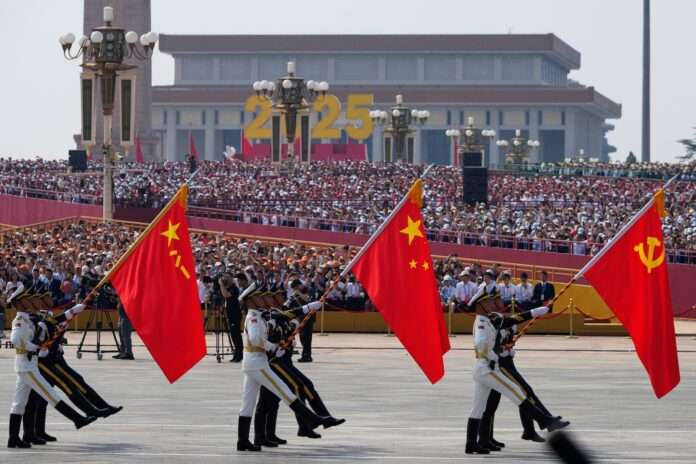
China in recent years has embarked on a breakneck modernization of its military, and they aren’t hiding the ball about it. They parade their new systems every year on Tiananmen Square. Their newly-commissioned carrier Fujian is the first non-American supercarrier in history. Another is under construction, featuring a nuclear reactor that gives it unlimited range and puts it on par with the supercarriers of the U.S. Navy. Their tanks are increasingly modern, as are their missiles, as are their stealth aircraft. It’s clear that the Chinese military isn’t content to dominate Asia. You don’t build nuclear supercarriers with unlimited range for regional hegemony. No. They are gearing up for a new Cold War with the United States.
Nobody wants to admit it, but we are facing a resurgent Cold War, freshly unfrozen from its 1991 slumber. So several questions arise: what are we currently doing about it? Why even bother? And what should we be doing about it? All this and more will be answered here.
Business as Usual

Our politicians have been content to sit on their hands and largely do nothing about the rising red tide. The Navy still can’t build a frigate, Chinese companies like Chengdu and Shenyang continue to close the gap with Lockheed Martin in stealth fighter production. So what are the fine folks in Congress doing about that? Some, but not enough.
The Big Beautiful Bill secured some pretty hefty military spending hikes to, among other things, increase the output of shipyards and high-end munitions lines. They’ve also taken some steps in the microchip department and forced the sale of TikTok. They banned Chinese state-owned companies like Huawei from setting up network infrastructure in the U.S.. These are all a start, but ultimately band-aids in a tourniquet-appropriate situation.
More needs to be done, and it will require sweeping actions by both Congress and the President to put the U.S. on the proper footing for a new Cold War.
Prescriptions
We’ve covered what we are doing about China. But what about what we ought to be doing? Well, a cold war must be waged on a variety of different fronts, including in the military, economic, and cultural realms, and there are concrete steps in each area that America must take.
Military Might
There are numerous ways in which the American military industrial complex has fallen from the heady days of the Reagan-era peacetime buildup.
The American shipbuilding industry has been rendered a joke since the 1990s. Once the Navy’s contracts stopped coming in, companies downsized. They couldn’t afford to keep so many high-skill workers on the payroll without a steady source of income, and over the next 30 years that entire sector of the economy has withered. South Korea now builds vastly more shipping than we do. Only a sustained naval buildup and, more importantly, a streamlined acquisition process can fix that.
Companies work based on predictions. When they predict that, even if the Navy does award them a big contract, the process will take 20 years and become a bureaucratic hellscape, they won’t put many resources into beefing up production capacity. The disastrous Constellation, Freedom, and Independence Class programs drive that point home. The delays and catastrophic cost overruns in that lineage of ships has left the U.S. Navy without a proper frigate capability– something that would be useful for securing shipping lanes in the Pacific should that become necessary. If push comes to shove, the Sino-American War will be a naval one. We can’t neglect the seas.

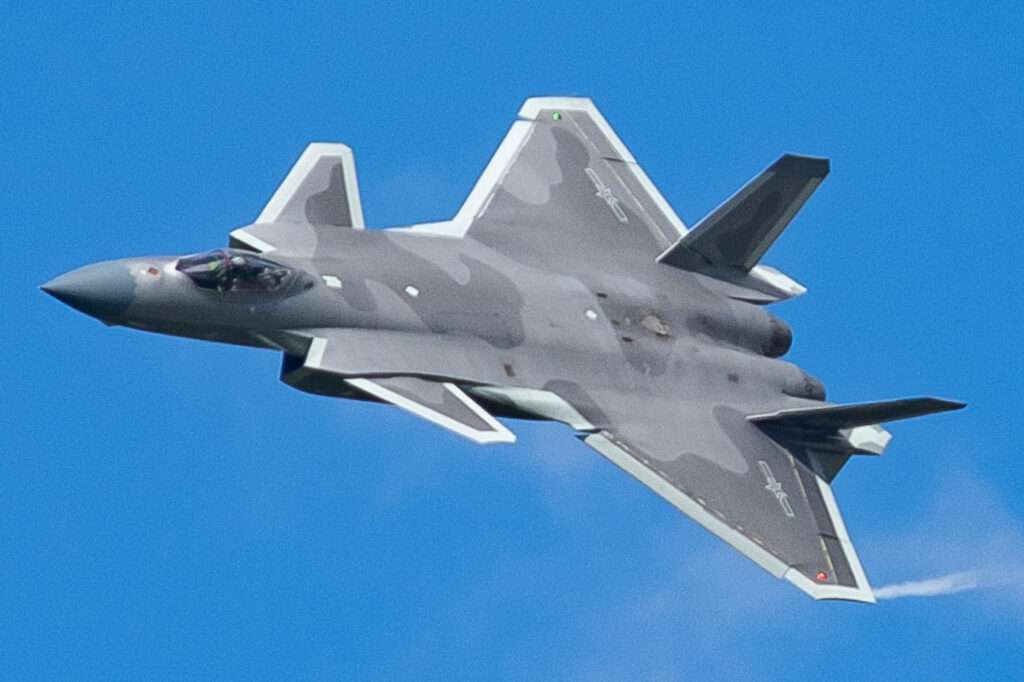
The future of aerial warfare is stealth. But as the Chinese catch up to us in the production of such stealth aircraft, America seemingly sits idle. There are other platforms like the F-22 and J-35, but we’ll focus on two platforms for simplicity’s sake: the F-35 and the J-20. The F-35 forms the backbone of the Pentagon’s aerial modernization effort, with around 1,300 built and over 600 in American service since 2015. The J-20 is the Chinese answer, with around 300 built since 2017. Chinese production rates are increasing rapidly, and their yearly numbers are beginning to look comparable to ours.
We had a head-start worth about a half-decade of production, in addition to the 180-ish F-22s in service. But the gap in annual production is closing, and the problem is that Lockheed Martin can’t push past their current average 150-170 per year without some significant investment in new facilities and stable long-term funding. It’s time we coughed up the money. If this country insists on fiscal annihilation and 2 trillion-dollar deficits (which it evidently does), I’d at least like the money to be used on the defense of the free world.
Economic Endeavors
I have been a vocal critic of the Trump Administration’s tariff policy these last several months. I believe trade is a good thing, and helps Americans more than it hurts them. I believe that tariffs are an excellent way to ruin a lot of alliances in not a lot of time. But if there is any country deserving of aggressive American trade-hawkism, it’s China. Trump actually lists some reasonable grievances when speaking on Chinese trade policy, highlighting their underhanded devaluation of their own currency for the sake of their export sector, for example. Tariffs on Chinese goods might be a worthwhile economic endeavor, even if there is some harm to the American consumer’s wallet.
But when I say that, keep in mind these tariffs have to be balanced out by more free trade with other countries. If we’re going to play the trade war game, we need to sign trade deals with Vietnam, Japan, South Korea, the Philippines, and other nations threatened by the expansionist policies of Communist China. In doing that, we bring those nations closer to us and further from China. We can also minimize the inflationary effects of Chinese tariffs and keep the American voter on board with a Sino-American trade war by insulating his wallet from the effects of such an effort. Seeking alternate trade partners doesn’t automatically fix inflation because it takes time for supply chains to shift and adapt. But it does help, and could help reduce the costs of a trade war to a worthwhile level.
Cultural Combat
Arguably the most important aspect of this conflict is the cultural front. None of the other policy proposals can go ahead without the political and cultural will to back them.
The good news is that the Federal Government has made more progress on the cultural issue than other areas. The forced sale of TikTok to an American customer was a big win in this regard. Already, we have seen the immense influence TikTok can have on young Americans, and almost always the messages promoted by the platform advantage the CCP in some way. Promoting political extremism, anti-American misinformation, and other fun things serves to destabilize and divide the United States. These are all things TikTok has done, and it will no longer be able to do so (at least not at the behest of the Chinese).
But more action is needed. Chinese investment in cultural institutions like universities and media companies must be regulated and curtailed, lest we cede our next generation to people who wish to use it as a tool. They have dumped billions of dollars into everything from colleges to news networks to videogame studios, and those tentacles pose a threat to our national security. None of the other actions proposed here can be taken if the American voter is convinced to fight against them by those who stand to benefit from inaction.
A Civilizational Battle
I am not exaggerating when I say the communist China is an existential threat to every single value we hold dear as Americans. The Chinese Communist Party advances ideas that fly counter to the sensibilities of every kind of American, so here I’ll show three lenses through which you can view this conflict.
The Libertarian Lean
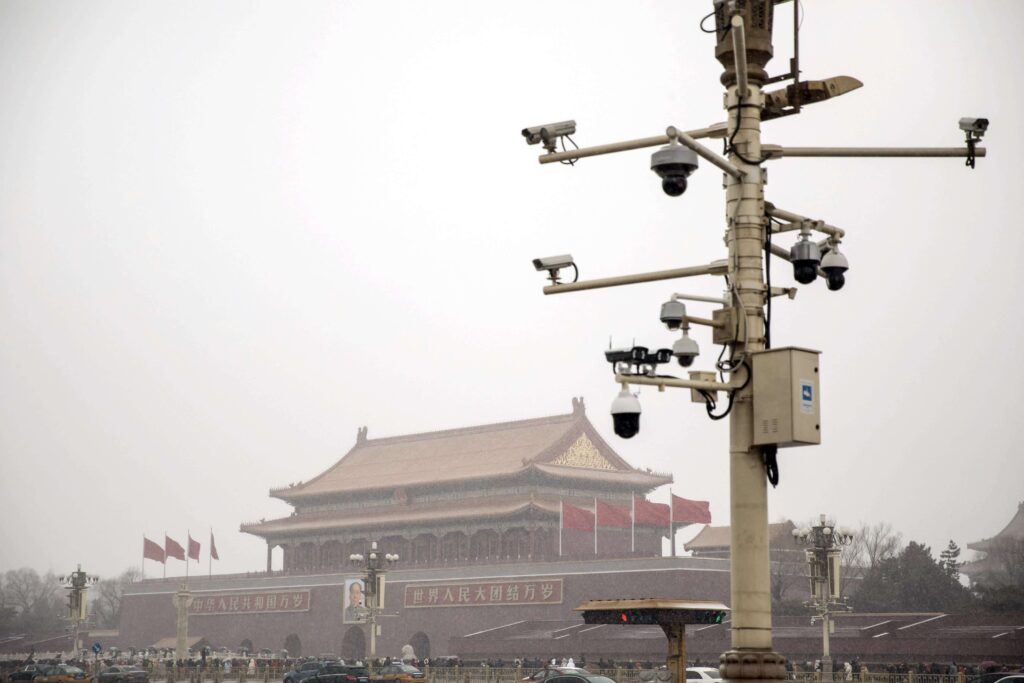
Americans are a relatively libertarian-inclined people. We don’t like interference in our lives or paternalistic “I can run your life better than you can” governance. So when the Chinese government rolls out a surveillance camera program against their own citizens called “Skynet”, we might want to take note. They named the thing Skynet. Some Chinese bureaucrat saw The Terminator and thought, “I want that“. China now has one camera for every two citizens, and their government now clearly wants to surveil every single public space in the country. I doubt they’ll have qualms about spying within people’s private homes within the next few years, either.
So it’s not hard to see how cartoonishly evil the CCP is. From their Skynet surveillance cameras to their internet censorship, the CCP is using 1984 as a guidebook. George Orwell predicted the reality they work toward in 1949. Any freedom-minded American ought to be calling for a national effort to counter this crushingly authoritarian system.
The Religious Angle
This is a Catholic newspaper, so it may be helpful to view this from a religious perspective. In short, religious people ought to view this as a battle for the preservation of religion itself. Chinese Christians have been forced to replace pictures of Jesus Christ with photos of Xi Jinping. Uighur Muslims have been horrifically repressed for their faith, to the point of blatant cultural genocide, all under the guise of “anti-terror operations”. Buddhists have been forced under the jackboot for 80 years now. CCP members are banned from practicing any religion at all. The Chinese Communists despise religion and those who partake in it.
Christians, Jews, Muslims, Buddhists, Hindus, and all religious people must recognize that this is a fight for God. It is a showdown between those who seek the follow God’s laws, and those who seek to either destroy those laws, or corrupt them into instruments of state control. Just as the West, with the help of people like Billy Graham, recognized the USSR as the grave threat to religion that it was in the 1950s, we must also realize that the CCP is a cancerous influence seeking to erase any religion that places a human leader below God.

The Innovator’s Outlook
The Chinese Communist Party, as the name suggests, isn’t fond of Capitalism as a concept. Many make excuses for the CCP, saying things like “they aren’t real communists”, and that is true. Yes, for 30 years the CCP allowed limited capitalism as a method to boost their backwater economy. But that spirit of capitalist entrepreneurship is now dying. The government is now reining in control of the economy, and Chinese innovators find themselves once more under the increasingly heavy hand of the Party. Initiative is at the discretion of the government once again, and China is moving back to a time when the government’s say in the economy was absolute.
The Chinese government used the free market as a method to catch up to the rest of the world. But now that they are in economic striking range, they are returning to their core goal: total control. That will hurt them economically, but the fact stands: the innovators and free-marketeers of this nation ought to recognize that China is no longer just a potential new market with some regulatory hurdles. It is now a threat to the system that made both you and them successful in the first place.
Conclusion
America has overcome every geopolitical challenger in its history. King George III, Santa Anna, Kaiser Wilhelm II, Hitler, Hirohito, and multiple Soviet leaders all failed in their goal to unseat America from a position of strength on the world stage. They failed because they went up against the most innovative superpower on the planet. America isn’t in the best shape as it approaches 250 years of age, but the American drive to rise and meet whatever problem confronts us is still undeniably there. Innovation is something communist countries, or even hybrid regimes like China, have never excelled at.
That means we can rise to meet this challenge, like previous ones. It’s just a matter of political mobilization. A matter of willpower. Shifting budgets is never fun. Marketing yet more defense hikes to an American public skeptical of foreign intervention isn’t going to be popular. Nor are cuts to social programs, which are unfortunately probably necessary to finance those defense spending hikes. But Americans, as I’ve said, have never backed down from a challenge, even if it may inconvenience them personally. When a nation or group makes clear they wish to destroy or replace America, Americans don’t take kindly to that. We didn’t with Al-Qaeda, the Soviets, the Japanese, or the Germans. So we shouldn’t now.
Apart from my farewell article, this has been my final piece at the Jesuit Roundup. I do hope I changed a few minds over my years here, and I sincerely thank you for reading.