
The Society of St. Pius the Tenth, often referred to as the SSPX or simply “the Society,” is the largest traditional Catholic society serving the Traditional Latin Mass (TLM) in chapels across the globe. Yet, even among more traditional Catholics, the mention of the SSPX brings to mind sixty years of scandal, confusion, and even alleged excommunication. Today, I will attempt to dissect this issue and come to the conclusion on one of the most divisive issues in modern Catholicism: is the SSPX truly Catholic or is it a schismatic offshoot spreading dangerous teachings among the Church’s faithful?
Why All of the Controversy?
On June 30, 1988, Archbishop Marcel Lefebvre consecrated 4 bishops in what he famously dubbed “Operation Survival.” While Lefebvre had once been a highly esteemed bishop within the Vatican, his traditionalist tendencies and disobedience of the Holy Father in the years following Vatican II had brought him under much scrutiny and ostracization. Lefebvre believed that his actions were necessary for the preservation of his religious congregation, the Society of St. Pius X (the SSPX). Following in line with this somewhat rebellious spirit, these consecrations were done without the express approval of the Vatican, a violation of Cannon Law that led the current Pope, St. John Paul the Second, to declare both Lefebvre and the four Bishops to have been automatically excommunicated by their disobedience. With this excommunication, most Catholics came to believe that the SSPX was acting in schism.

However, many traditional Catholics believe that this excommunication is not only an incorrect judgment by the Holy Father, but they also believe that the SSPX are still fully in communion with the Catholic Church and fully within their canonical right to have performed the consecrations. Recently, discussion sounding the SSPX has once again hit the mainstream, as the current superior of the SSPX, Fr. Davide Pagliarani, has called for more consecrations this July, and seems willing to go forward even if he must act in direct contradiction to Rome.
With all of the confusion in the Church today, I will try my best to navigate the canonical nightmare that has haunted the SSPX since those first consecrations, as well as the novel theological opinions that have often put them at odds with the Vatican. I will be the first to admit that I am neither a cannon lawyer, nor a priest or bishop with any canonical or ecclesiastical authority. However, I will try my best to make sense of this situation in a way that an average lay person would be able to understand.
Who Are the SSPX and What do They Believe?
It seems fitting to make a critical distinction between those who are members of the SSPX and those who attend their chapels. The only individuals who are “members” of the SSPX are those priests who were ordained to say the TLM and participate in the life of the Society or any laity who involves themselves in their Franciscan Third Order. While some radical traditionalists refuse to attend any mass except those said by the SSPX, this does not make them “members” of the SSPX. The Society is very clear about what it is and what it believes, stating that “its main objective is the formation of holy priests using the methods that the Church always used: the Holy Sacrifice of the Mass, “The Mass of All Time”; the preaching of the Catholic Faith and Catholic morals.” (sspx.org) While this seems sound on paper, questions begin to arise upon closer examination. The magnum opus of the Society is The Immaculata, an absolutely stunning church located in St. Mary’s, Kansas. (The Immaculata Church Project) The specific wording of the “methods that the Church always used,” hits at the deeper reality. The Society is, at its core, a resistance movement, seeing itself as the sole true protector of the “original” Catholic faith in the face of modernizations of the Second Vatican Council.

They are openly critical of both the new mass implemented after Vatican II, the “Novus Ordo,” and many of the councils’ teachings on collegiality, ecumenism, and religious liberty. In fact, the society actively recommends avoiding the Novus Ordo at all costs in a video titled: “no obligation to attend New Mass.” (sspx.org) This video details the Societies’ grievances with the Nous Ordo and recommends that Catholics avoid it. Because of this suspicion surrounding the new mass, the SSPX exclusively celebrates the Traditional Latin Mass of 1962. Even still, the SSPX does not deny the legitimacy of the sacrifice of the mass as presented in the Novus ordo, nor do they claim that the priest that celebrate the Novus Ordo are invalidly consecrated. Still, they openly claim that the Novus Ordo is a liturgy intended to please Protestants rather than support the Catholic faith.
It seems that some of the SSPX’s criticism are true in this regard. In my personal conversation with individuals and research into this area, the liturgical upheaval in the wake of Vatican II would be the grounds for concern for any serious Catholic. While I do not agree with the viewpoints of the poster (they appear to be a sedevcantist), videos such as “Novus Ordo Cringe Compilation No. 666” do expose many of the serious liturgical abuses that plagued the Church in the fallout of Vatican II. You can find that video here.
However, one must remember that the council itself was very conservative in regard to the protection of sacred liturgy, thus, any errors taken in the wake of the council would be directly caused by it, but in spite of it. For example, the council states that “The Church acknowledges Gregorian chant as especially suited to the Roman liturgy: therefore, other things being equal, it should be given pride of place in liturgical services” (Sacrosanctum Concilium). Also, “articular law remaining in force, the use of the Latin language is to be preserved in the Latin rites. 2. But since the use of the mother tongue, whether in the Mass, the administration of the sacraments, or other parts of the liturgy, frequently may be of great advantage to the people, the limits of its employment may be extended. This will apply in the first place to the readings and directives, and to some of the prayers and chants, according to the regulations on this matter to be laid down separately in subsequent chapters” (Sacrosanctum Concilium). Most importantly: “21. In order that the Christian people may more certainly derive an abundance of graces from the sacred liturgy, holy Mother Church desires to undertake with great care a general restoration of the liturgy itself. For the liturgy is made up of immutable elements divinely instituted, and of elements subject to change. These not only may but ought to be changed with the passage of time if they have suffered from the intrusion of anything out of harmony with the inner nature of the liturgy or have become unsuited to it. In this restoration, both texts and rites should be drawn up so that they express more clearly the holy things which they signify; the Christian people, so far as possible, should be enabled to understand them with ease and to take part in them fully, actively, and as befits a community” (Sacrosanctum Concilium). It is clear from this that the council documents of were not the issue plaguing the church, but some fringe interpretations of relatively conservative documents.
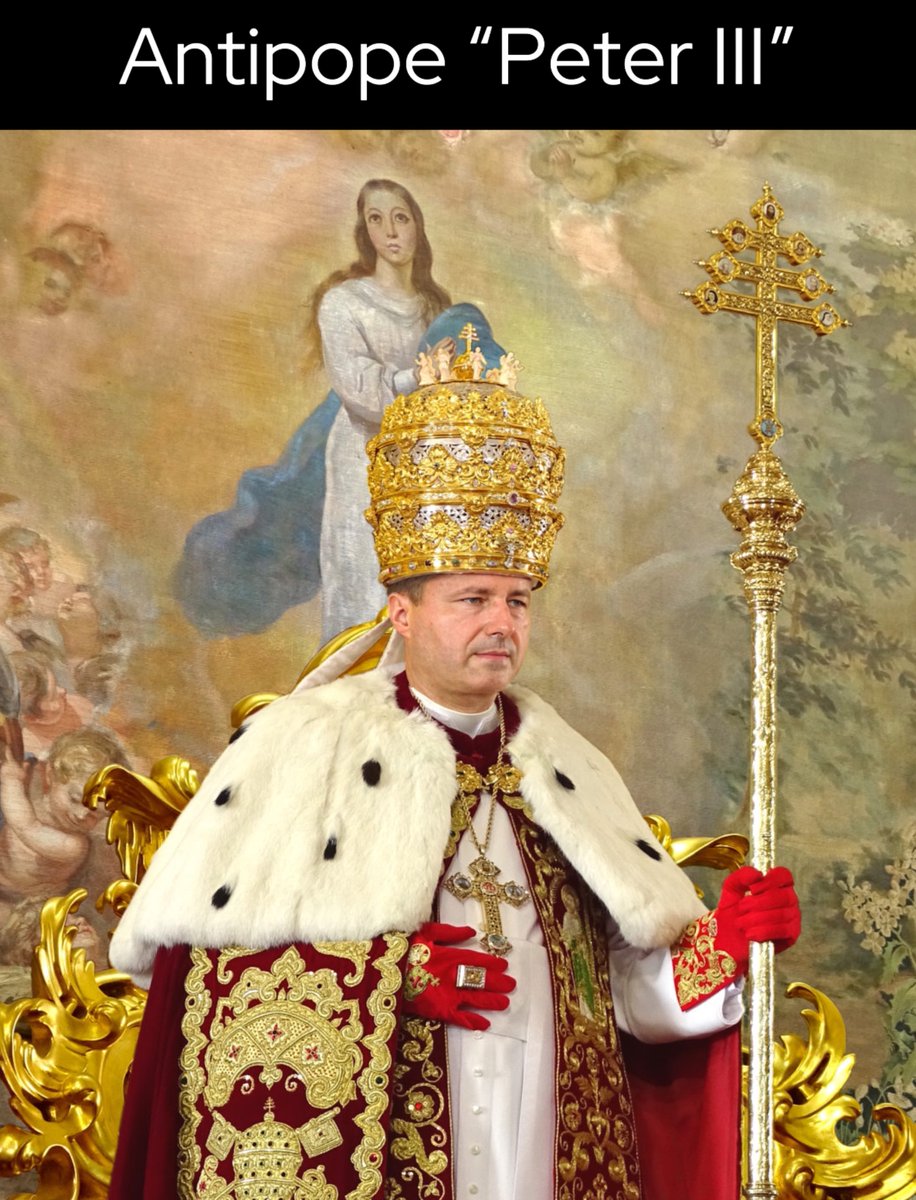
Many Catholics have grouped the SSPX together with two other types of traditionalist groups: sedevcantist and conclavist groups. Sedevcantist groups are those that at some point in time (typically believed to be following the pontificate of Pius II or Benedict XVI) the chain of Popes was broken due to the outside influence of Freemasons and Enlightenment thinkers. Conclavist groups are that were at one-point sedevcantist, but then attempted to elect a “pope” of their own. Out of these anti-popes the most famous are Michael II (based out of Kansas) and the chain of anti-popes to come out of the so called “Palmarian Catholic Church” (palmarianchurch.org, allthatsinteresting.com). While this evaluation makes them sound similar to conclavist or sedevacantist groups, there is one key distinction: they do recognize that Pope Leo the 14th, the current Roman Pontiff, to be the true successor of St. Peter. Yet, the SSPX has often acted against the will of the Pope as seen in their current declarations that they will go forward with the illicit consecrations.
The SSPX is also skeptical of or even outright rejects any canonizations after Vatican II. This means that many SSPX priests and their congregations are either uncertain of the canonization of Padre Pio, Maximilian Kolbe, and Faustina Kowalska or even go so far as to reject their canonization. As recent as February of 2026, SSPX apologist Kennedy Hall has posted a video tiled “Why the SSPX Doubts Modern Saints” to the YouTube channel Pelican Plus. While the entire video is blocked behind a paywall, the short preview that is available seems to claim that the SSPX rejects modern canonizations due to a “changing concept in what defines sanctity” after Vatican II.
On another equally disturbing note, in one video on YouTube, a SSPX Priest dissents with the Catholic Church against the Divine Mercy Devotion which originated with St. Faustina Kowalska openly from the pulpit. (Fr Burfitt (SSPX): the Divine Mercy, Nothing Supernatural nor does it come from God.) While I could write an entirely different article debunking the claims of this priest, suffice it to say, it should be troubling that a member of the SSPX actually goes against a private devotion, especially when that devotion has been approved by the Vatican and led many to Christ. As a Catholic with a great devotion to the Divine Mercy, this troubles me specifically. While this does not necessarily prove that the SSPX as a whole disapproves of the Divine Mercy, it is troubling to see one of their priests openly decent against a church approved private appetition. This evidence together suggests a movement among so called “trad-cats” (traditional Catholics), of rejecting the divine mercy devotion. I would recommend reading the article “Answering Radical Traditionalist Critiques of the Divine Mercy Message and Devotion | The Divine Mercy” which responds to many of Fr. Burfitt’s claims.
It is also important to remember that no Catholic is required to accept the Divine Mercy devotion or any other private revelation. However, its dissent against them at best can lead many to question their faith and at worst bring into question the authority of the church as a whole to guide their sheep into theologically sound and efficacious devotions. Overall, the SSPX seems like it’s trying to have its cake and eat it too, going against modern Popes and councils while also claiming to act in full communion with the Vatican.
What is the Vatican’s Current Position on the Canonical Status of the SSPX?
While it is relatively easy to find the stance of the SSPX, it is much more difficult to deduce what the Church’s official stance on the Society is in 2026 because whether or not the Vatican recognizes them as a legitimate, canonical body is not emphasized by the Church. It is important to note that SSPX priests do in fact have real apostolic succession and thus have the ability to consecrate the Eucharist and perform other sacraments of the Church. However, the Church makes a distinction between sacraments that are “valid,” those that are done within the bound of the church, and those that are “illicit.” While illicit sacraments have the proper matter, form, and intention and can convey grace to the recipient, they are administered by an uncanonical authority. Thus, they may be associated by a penalty of sin on the minister and possibly on the recipient.
This distinction may be confusing, so I will provide a brief example to try and illustrate this concept. When Fr. Polce traveled to DC for the March for Life, he had to receive permission from the local Bishop before performing the sacraments, called “faculties.” Hypothetically, if Fr. Polce was to travel to Washington DC and celebrate mass without receiving the proper “faculties” then his sacrament would be “illicit,” the bread and wine would become the body and blood of Christ, but Fr. Polce may be under a penalty of sin. Furthermore, any students who knew of this canonical irregularity and did not abstain from the Eucharist may also be under a penalty of sin themselves. However, if, for example, a student was gravely injured, and Fr. Polce was then forced to consecrate the Eucharist to preform last rites, then Fr. Polce would be under no penalty, as there were a grave need and Cannon Law allowed for “supplied” jurisdiction for any priest in the event that a member of the faithful is dying and is in need of the sacraments. The question about the nature of the SSPX’s sacraments is currently up in the air. The Society claims that the current “crisis” is that the Church requires that they perform their sacraments, utilizing supplied jurisdiction to justify their case. However, their opponents reject this claim, stating that this is an illogical stretch of this exceptionally rare outlier. This has led to mass confusion, both among the laity and even across different Popes.
Currently, many of the faithful are confused by what appears to be conflicting messages coming from the Vatican. While Pope St. John Paul II did say that the group was automatically excommunicated by their illicit consecrations, this penalty was lifted by Pope Benedict the XVI in 2009. In fact, Pope Francis famously gave the SSPX faculties to hear valid confession and administer marriages licitly during the Jubilee Year of Mercy in 2015. This led many of the defenders of the Society to rejoice, believing that this justified their claims to canonical legitimacy. However, this does not mean that the lifting of the excommunication brought the SSPX back into full communion. Instead, it indicated that the Society was “canonically irregular,” meaning it doesn’t really fit into the greater hierarchy of the Church. This status is sometimes also referred to as “partial communion.” Still, this gave many hope for a full reconciliation to occur soon between the SSPX and the Catholic Church. Unfortunately, this sign of progress has been greatly undermined due to the current consecration announcements, and the following dialog with Papal representatives and clergy seem to indicate that the SSPX is once again threatens to isolate the Society from the rest of Christ’s church.
Personal Opinion
I will start this section by stating that there are aspects of the SSPX I very much admire. I have a deep appreciation for the TLM and understand why many faithful Catholics would prefer to attend this liturgy, especially in a time following Vatican II where liturgical abuse was infecting many local parishes with novel ideas. In addition, the SSPX’s support of sacred architecture is also very much appreciated in the Church since many parishes have been built in a strange and “modern” style following Vatican II. I have even enjoyed many of the SSPX’s materials, such as their podcasts and publication of traditional Catholic media.
However, I believe it would be a mistake to completely write off the Novus Ordo or Vatican II just because a group of rogue clerics, no matter how large, decided to follow a somewhat modernist interpretation of the ecumenical council. Vatican II fulfills all the requirements for an ecumenical council, no matter how many alleged contradictions critics assert. If Vatican II is an ecumenical council, the members of the holy Church must submit and show due reverence to it. While one can publicly point out false interpretations of the council, especially those which lead to dangerous new teachings, Catholics must submit to the documents themselves and any other official teachings which serve to interpret the council and its cannons.
From the perspective of both tradition and reason, it would seem that the SSPX is not and cannot be considered justified in its assertion and actions. The Catholic Church is one built on authority and rejection. To not submit to this authority can hold dire consequences. Even when the Great St. Padre Pio was suppressed by the Vatican, he himself did not disobey the Church, instead turning to prayer and trusting in Divine Providence to correct the Vatican. Furthermore, it seems that even the somewhat ambiguous teachings indicate that the SSPX is, at best, canonically strange and, at worst, completely schismatic. Regardless, the SSPX seems to foster a rebellious and insubordinate spirit which it spreads in its sermons and videos. One cannot simultaneously claim to obey the Pope and resist his authoritative teachings, even when those teachings are not infallible.
Another Way: The FFSP, ICKSB, and Ecclesia Dei Communities
In July 1988, 12 priests left the SSPX in response to the illicit concertation performed by Archbishop Marcel Lefebvre. Under the auspices of St. John Paul II’s motu proprio Ecclesia Dei, the Priestly Fraternity of Sain Peter (FFSP) was fully incorporated into the body of the Church (ewtnnews.com). Unlike the SSPX, the FFSP is fully in communion with the Holy Roman See. At the same time, the FFSP celebrates the Traditional Latin Mass with full approval from the Pope. Other groups established via St. John Paul II’s Motu Proprio Ecclesia Dei (the so called “Ecclesia Dei communities”) also celebrate the TLM within full communion with the Bishop of Rome. Along with the FFSP, the Institute of Christ the King Sovereign Priest (ICKSB) also celebrates the TLM and states that “the mission of the Institute of Christ the King Sovereign Priest is to spread the reign of Christ in all spheres of human life by drawing from the millennial treasury of the Roman Catholic Church, particularly her liturgical tradition, the unbroken line of spiritual thought and practice of her saints, and her cultural patrimony in music, art and architecture” (institute-christ-king.org). Not too far from Dallas, Mater Dei Latin Mass Parish is a thriving traditional Catholic Community served by FFSP priest that any Catholic looking to experience the beauty of the TLM can attend (materdeiparish.com).
Conclusion
I believe that it is best that any Catholic should exercise extreme caution before engaging with the Society in any substantial way. Even if one is to attend one of the chapels, it seems to be the general consensus from both clergy and the Church’s magisterium that one should not take communion if they are to attend an SSPX chapel or risk engaging in the grave sin of schism. Almost all of the clergy I have spoken to recommended that any faithful Catholic avoid the SSPX if there is another option for mass.
Stay tuned into The Roundup for more Student Viewpoints!