
For a decade and a half now, The Roundup has brought you only the finest online media. Far have we come from the days of a bi-annual physically printed newspaper! The Jesuit school newspaper is well and truly “with it.” But this journey of ours has been a marathon, not a sprint, and steady improvement is the name of the game. So, with the help of some former leadership, allow me to tell the story of The Roundup‘s 21st Century Odyssey.
The Transition
Before we were an online publication, we were an offline publication. We printed the news on physical paper with physical ink. In the early days, back in the 40’s and 50’s, the paper was published weekly. You may have even seen, in a display case next to the Computer Science commons, our coverage of General Patton’s victory at the Battle of the Bulge in 1944. As the years went on, the turnaround time increased, with print editions published monthly or bi-monthly. By the time of printing, the news was outdated. But in 1989, some guys at CERN invented the Internet, and by 2010 it had become kind of a big deal. The fateful decision was made that year to switch The Roundup to an online newspaper, with Dr. Michael Degen as its moderator, Robert Uhl ’11 as its Editor-in-Chief, and Mr. Joe Nava ’02 in charge of the technical side.
The Uhl Years
In the early 2010s, as some may remember, the Internet had not yet permeated every single part of life. iPhones existed, but only for a couple of years by that point. Not everybody had one. And before laptops became mandatory, many people’s access to the internet during the school day came exclusively from desktops. Why inconvenience yourself by walking to a school computer and logging on just to read the school newspaper? Robert Uhl ’11 was in charge of fixing that.
“One [challenge] was convincing people to actually visit the website….this was before everyone had laptops or iPads—and really before everyone had smartphones.” -Robert Uhl ’11
The Roundup also had to contend with a new problem. With the print edition, editors had months to curate a select few articles for publication and focus their efforts on keeping a couple writers on track. That changed with the website’s arrival. The need for constant content drove a push for more coverage and an urgency the paper had never dealt with before. The newspaper now had to stay ahead of the news.
“…we were begging our friends to write anything, take pictures, and just get content up in real time to capture attention.” -Robert Uhl ’11
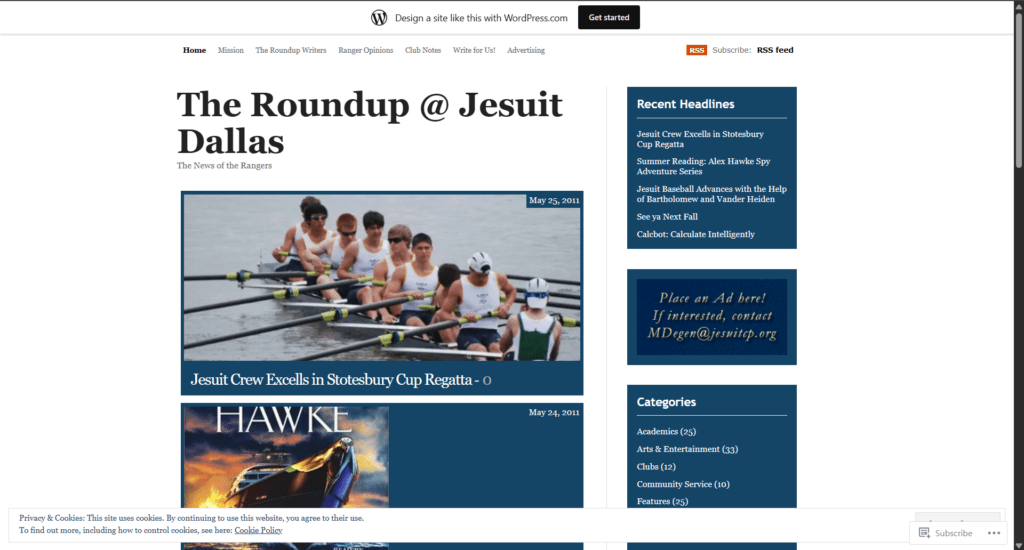
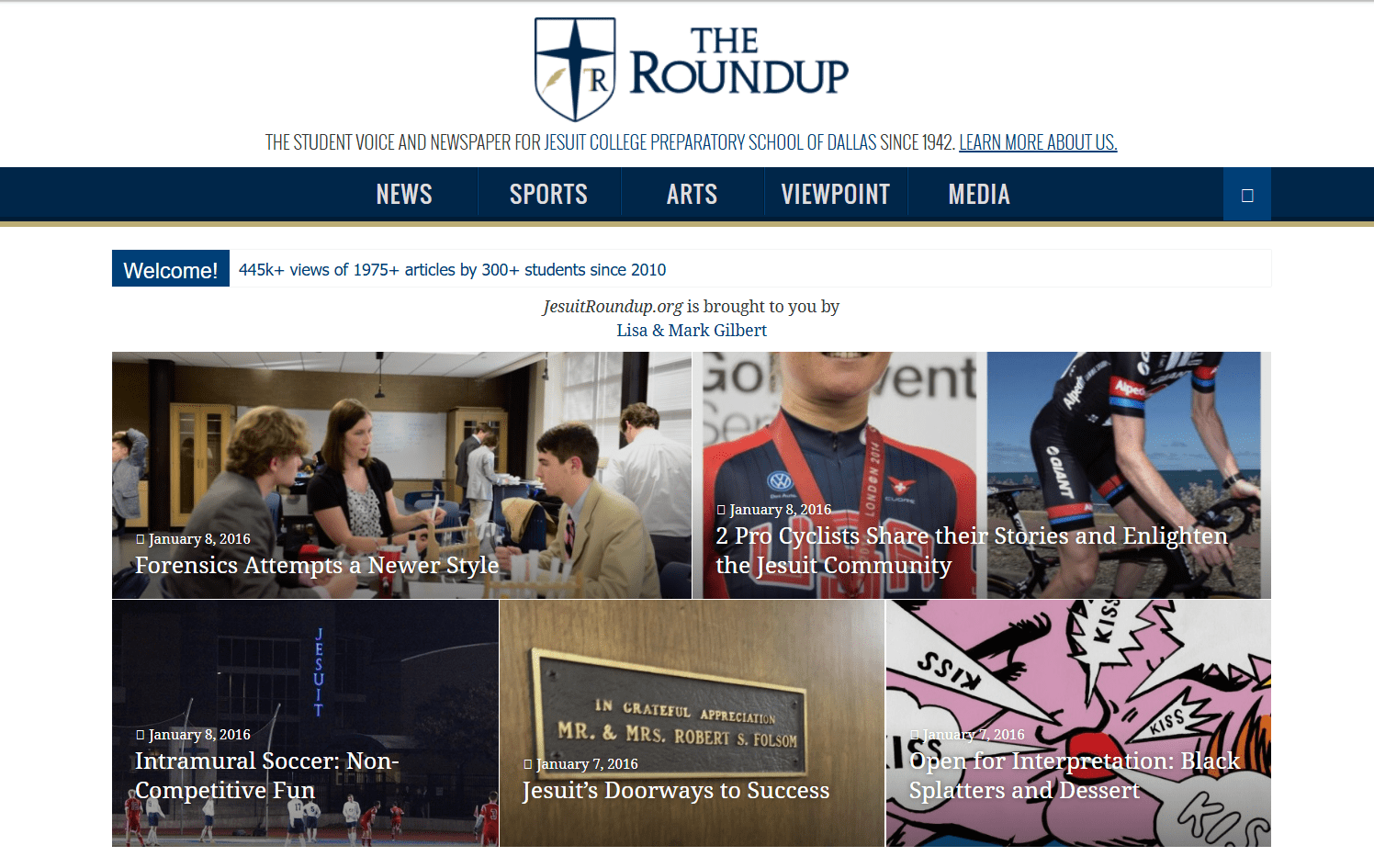
But these hurdles were gradually being overcome, and The Roundup was officially online. Articles were written by Jesuit students, published by Dr. Degen, and put on a website designed by Mr. Nava. With the most 2010-era webpage in the history of 2010-era webpages, The Roundup had entered the digital age.
Among The Roundup‘s early articles, several memorable pieces stood out. 2011 was a big year for Jesuit, and pieces on incoming President Michael Earsing and Principal Tom Garrison were early examples of notable faculty profiles. Uhl highlighted his interview with President Earsing, saying it was particularly significant: “He was a legend even back then, so it was special to be reminded of his incredible legacy as he prepares to step down this year.”
Durham’s Direction
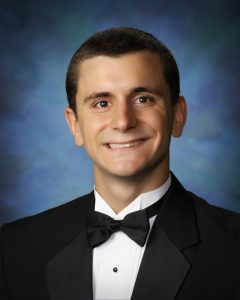
As Robert Uhl graduated, Clark Durham Jr. ’12 stepped in to lead The Roundup. By this point, the website was fully up and running. Durham recalled, “We had worked out the kinks by the end of 2012.” But there was more than just technical progress being made. For one, there was now a Managing Editor, in charge of getting the minutiae of the paper done. For another, The Roundup was engaged in more journalistic enterprise than ever before.
Under Durham’s leadership, a series on Charles Edmond ’58, the first black student at Jesuit, was created. As part of this story on desegregation, Durham, Managing Editor Payton Maher ’13, and Dr. Degen travelled to Saint Louis, Missouri to interview Mr. Edmond. Durham recalled this as the most significant set of articles under his leadership. The trio was able to unearth moments from Mr. Edmond’s past that would otherwise have been lost to history.
“Several times during our long conversation, Mr. Edmond calmly mentioned difficult moments during his Jesuit tenure that surprised his wife—he had never mentioned them before.” -Clark Durham ’12
Clark Durham stated that, to accomplish these things and keep the paper moving day-to-day, it took an inspiring kind of leadership. He said, “Lead by example: show that no one will work harder than you to achieve the team’s collective goals.” In his book, only by embodying excellence can you expect your team to follow. Consistently high expectations are also critical:
“If you tolerate mediocrity, it becomes the standard.” -Clark Durham ’12
Faculty Facilitation
At the time, Mrs. Sheryl Row was heavily involved in The Roundup. In her words, “The structure of the paper was the same as now. A faculty member supervised a student editor and the student reporters. The sections were comparable.” Some things were different, though. Genres such as creative writing were featured, but have since been spun off into the Jesuit Journal, for example.
“In the early history of the paper, student creative writing was prominently featured.” -Mrs. Sheryl Row
There was more faculty guidance in those early days. Mrs. Row described her job as being “to help the students write clearly and to proofread their content,” a function Dr. Degen still performs but is now more heavily done by student editors. Describing the transition to a website, Mrs. Row said there was something of a learning curve: “Frankly, the moderators learned on the job since we were creating online content for the first time.”
Over time, Mrs. Row’s involvement in the paper decreased. But she shifted her efforts to a closely related effort: the Jesuit Archives. You should go read what she’s written about the history of our school.
No article about the online Roundup would be complete without input from Mr. Joe Nava ’02, who has led the technical side of The Roundup for a decade-and-a-half. On the transition to a web-based publication, he highlighted that the challenges don’t simply go away with time. It’s an ongoing battle with the WordPress gods. “When Dr. Degen debuted the website to the school, I immediately volunteered…. 15 years later, the content that has been created is invaluable. We have 5,130 published articles…. However, over that same period, our website has also crashed a countless number of times, including the one time we even indirectly crashed the school’s website, which had significant consequences.” But Mr. Nava emphasized the progress that has been made. Writers needed a “convenient and smooth workflow on the back end of the site so they can easily write their articles, give and receive feedback from one another, make revisions, and publish their content.” But doing so became easier over time:
“This used to require uploading and downloading attachments and communicating through emails and texts, but now our students can do their writing and editing process all within the website.”-Mr. Joe Nava ’02
Our faculty moderator here at The Roundup, one Dr. Michael Degen, has been key to the success of the paper. But it was his vision that brought The Roundup into the 21st Century in particular. Taking over from Mr. Michael Naterre at the behest of President Earsing, Dr. Degen insisted the paper be put online. “I’ll do it, but I’m not printing,” he said. Having had experience with the Jesuit Journal, Dr. Degen knew that physical print could be a “holy pain in the side,” and that he didn’t want to deal with that. Dr. Degen recalls the original Roundup crew being small, “maybe ten people.” Originally, things were relatively inoffensive. Some mildly irritating articles about politicians here and there. It was a few years later that things got interesting. But Dr. Degen remembers an article by John Michael Lucido ’14: “Lucido’s Bold First Half Football Predictions.” He recalled how it sparked a firestorm:
“The football team was furious…. it really pumped them up because he had them losing.” -Dr. Michael Degen
They even “posted the article and put it in the locker room,” alongside Lucido’s photo, according to Dr. Degen. Turns out they actually did reasonably well that year, so I guess we have Lucido to thank for motivating them. And so began The Roundup‘s long tradition of feather-ruffling Viewpoint articles.
The Motter Mandate
By 2016, The Roundup was strong as ever. Under the leadership of Alex Motter ’16, the paper was expanding into areas it hadn’t previously reached. The predecessor of the Ranger Experience Podcast, then just called “The Podcast,” was established, with discussions of cinema, world news, video games, music, and more. Though it was a brief run, it laid the foundation for a persistent part of The Roundup. Motter also credits some of his later leadership positions to his time working on the The Podcast and The Roundup generally. “I ended up curating and hosting a monthly film night for a social club in San Antonio for several years, and I’d credit my Roundup experience as a stepping stone to doing that.”
“We had a brief run at an official Roundup podcast…. I only did the film and TV corner for half of them, but that brief stint did help hone my critical voice.” -Alex Motter ’16
On the article-related front, Alex pointed to two developments in particular as being significant. One was “Reality Check, Beyonce Isn’t Racist,” a controversial article on Beyonce’s Formation, the 2016 Super Bowl, and racism itself. It showed that The Roundup doesn’t shy away from hot topics, especially not in the Viewpoint Section. Another was the personal project of Mr. Motter himself: a two-article series on the 15th Anniversary of the 9/11 terrorist attacks covering art, artifacts, and survivor testimony of the tragedy. As more Americans with no recollection of the event come into the world, articles such as these act as bastions of time, personalizing the attacks most young Americans have no personal connection to.
The Ashmore Administration
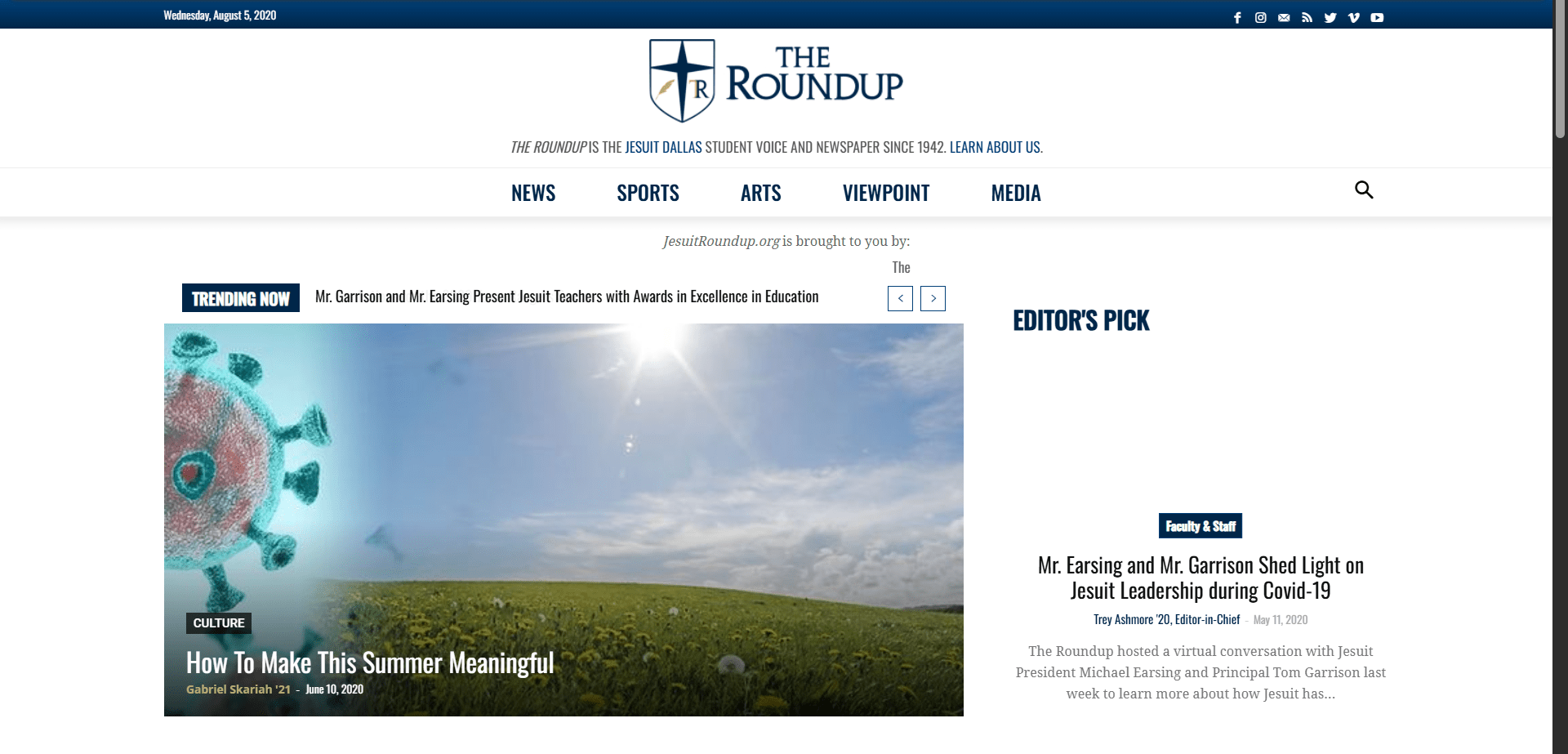
In November 2019, an unusual cluster of pneumonia cases popped up in the Hubei Province of China. Chinese officials dismissed it as nothing. By March 2020, it became pretty hard to dismiss it as nothing. The COVID-19 Pandemic caused Jesuit to close its physical doors on March 13, 2020, alongside the rest of the country. With that decision, Editor-in-Chief Trey Ashmore ’20 had a difficult set of tasks ahead of him.
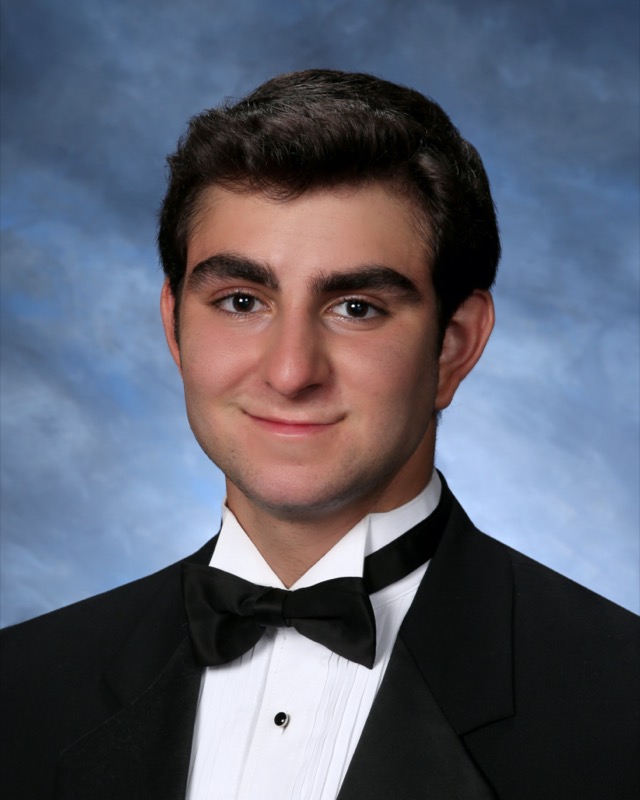
Getting people to write articles is a challenge when school is in-person. That much I can testify to. But when in-person opportunities to pressure people into doing their jobs go away, accountability becomes a vague, meaningless term. In Ashmore’s words, “Being in person makes it much easier to ‘peer pressure’ writers into volunteering for articles and following through on assignments.”
“Informal accountability largely disappeared.” -Trey Ashmore ’20
With the closure of all physical school events, much of The Roundup‘s job went away. Obviously, there was plenty for the Viewpoint Section to write about in 2020. But the News Section no longer had any campus news to cover. The Sports Section no longer had any school sports to cover. In other words:
“There was simply less news to cover.” -Trey Ashmore ’20
Though “technology could never replace the informal accountability and energy that came from being in person,” it was Ashmore’s job to make it work anyways. The News Section pivoted to covering more off-campus events and initiatives in the Jesuit community, while the Viewpoint Section got to work covering one of the most division-plagued years in American history. The Pandemic would continue for well over a year after Mr. Ashmore had graduated, but he had steered The Roundup on a course to make it through the crisis.
No Time Like the Present
All of that brings us to today. From the early days of the transition period to the expansions of 2016, and from the tough times of the Pandemic to today, The Roundup has covered Jesuit news online for 15 years now. We’ll continue to do so with all the vigor our predecessors had. But to Round this Up, I thought I’d highlight this year’s developments similarly to how I’ve showcased past years’ happenings.
For one, the Media Section is back. Under the leadership of Andre Cornejo ’26, The Jesuit Roundup Instagram account is once again active, posting only the most compelling on-the-street journalism. The Revamped Ranger Experience Podcast, previously run by Managing Editor Sebastian Suwanda ’26, has been folded into the Media Section, where it can be given the attention it deserves.
The Viewpoint Section, under Evans Senvalds ’26, has been hard at work covering the very eventful year we’ve had from all possible angles. Assistant Managing Editor Noah Cowley ’28, Viewpoint and Copy Editor Andrew Finger ’27, Assistant Sports and Media Editor Owen Maynor ’27, and others contributed to the rich tapestry of the Viewpoint Section with articles on philosophy, current events, sports opinions, and more.
The News Section, under newly-selected Managing Editor Reese Beaudoin ’28, has extensively covered campus events from Prom to convocations. Student Council elections and a construction-related April Fools article were all highlights of the News Section’s coverage.
And lastly, the Sports Section, under our new Editor-in-Chief Drew Shippey ’27, has brought the spotlight to our Ranger athletes like never before. This past year, he covered exciting football, lacrosse, basketball, and swim/dive seasons, in addition to many others.
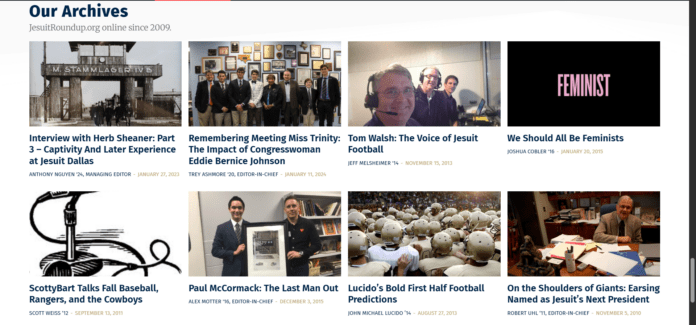
This year, The Roundup saw the rollout of a new website designed to display more content to the viewer, and with the technical expertise of Mr. Joe Nava ’02, it has done that. Renovations to the admin side of the site are ongoing, with the aim of improving productivity from our writers and editors. The next set of Roundup leaders are excited to see what they can do with it.
And there you have it. 15 years of an online Roundup. Only with hard work, faculty guidance, and help from you, dear reader, have we come this far.
Thank you for tuning in, and here’s to another 15 years of The Jesuit Roundup!