


And so, we come to a final adjudication: Donald Trump’s sweeping tariffs are unconstitutional. The Supreme Court justices ruled in a 6-3 vote that Trump’s imposition exceeded his power given by the congress under a 1977 law asserting the president’s power to regulate economic affairs under immediate national emergency.
The specific impetus of a series of court cases finally resolving in the Supreme Court were two “sets” of tariffs. The “trafficking tariffs” targeted China and U.S. neighbors Mexico and Canada to abate the flow of fentanyl, among other harmful substances, into the U.S. The second pair, the far more significant ones coined the “reciprocal tariffs,” instated a 10% base tariff on every country, and an additional, embarrassingly simple reciprocal rate calculated by halving the trade deficit divided by imports, measuring bilateral trade deficits while factoring out current tariff rates, currency rates, or trade barriers. This left certain trade outliers like Lesotho (initially) with economy-wrecking tariffs as high as 50% despite their unimportant role in U.S. trade.
Concerns and Legality
The tariffs collect around $30 billion a month for the federal government, about 4 times the amount of the previous administration and a little more than 5% of the government’s income. Pushback on Trump’s economic policy mainly arises domestically from the idea that tariffs are futile, they burden the business and consumer, and primarily that they were enacted questionably.
The tariffs are often considered vain in the sense that they make up a small cut of the federal government’s income (>5%), a small gain for larger ramifications, and that they are sidestepped. For example, many companies adopted a “China +1” policy, maintaining the majority of production in China but moving final production to another country with lower tariffs. This system caused Chinese imports to fall from 12% to 8%, though finished goods still underwent a nearly identical manufacturing process.
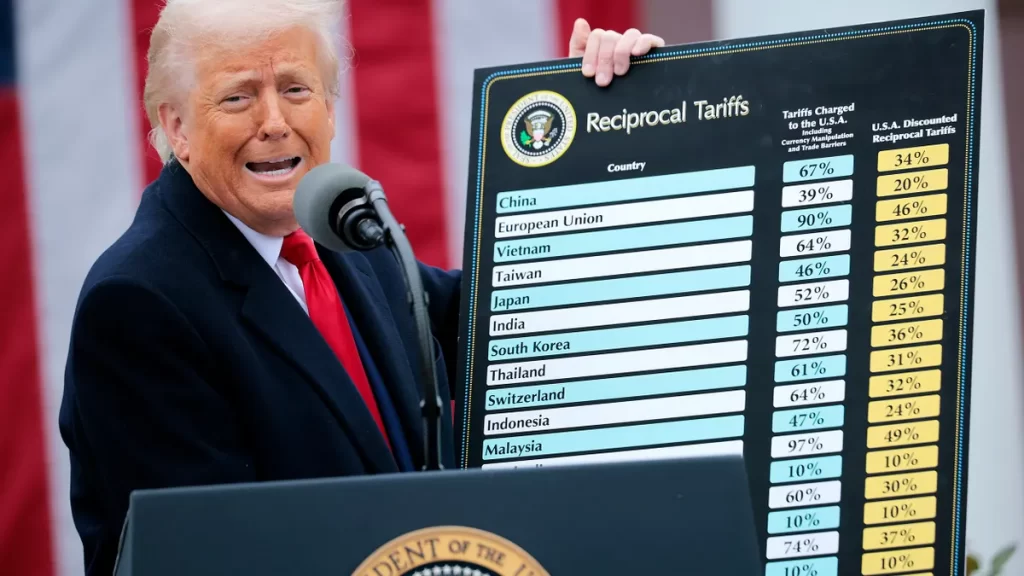
To the second point, Trump’s tariff policy can reflect tariff costs on the business and, by extension, the consumer. Foreign manufactures often mitigate tariff costs by charging more for a product, and so businesses in the US increase prices to preserve margins. Brent Neiman of the University of Chicago and Gita Gopinath of the University of Harvard, a former International Monetary Fund analyst, concluded in a working paper that nearly all of the cost of Trump’s tariffs are being paid by U.S. importers, not foreign suppliers. The squeezing of U.S. businesses, though temporarily devastating, however, can facilitate a movement towards a greater concentration of domestic manufacturing entailing infrastructure development and reducing dependency, shown in major investments by chipmakers, namely NVIDIA.
Third, the largest concern in its own category, the one warranting judicial review, was the means by which he seized the power to install his policy. Trump’s tariffs invoking the International Emergency Economic Powers Act (IEEPA) unambiguously proscribes the use of tariffs by the president, maintaining the US Constitution’s clear designation of tariffs to congress. This was the settlement reached by the Supreme Court.
“Based on two words separated by 16 others in […] IEEPA’ […] regulate’ and ‘importation’ […] the President asserts the independent power to impose tariffs on imports from any country, of any product, at any rate, for any amount of time,” Chief Justice John Roberts writes. “Those words cannot bear such weight.” “IEEPA,” Roberts continues, “contains no reference to tariffs or duties,” and moreover, “until now no President has read IEEPA to confer such power.”
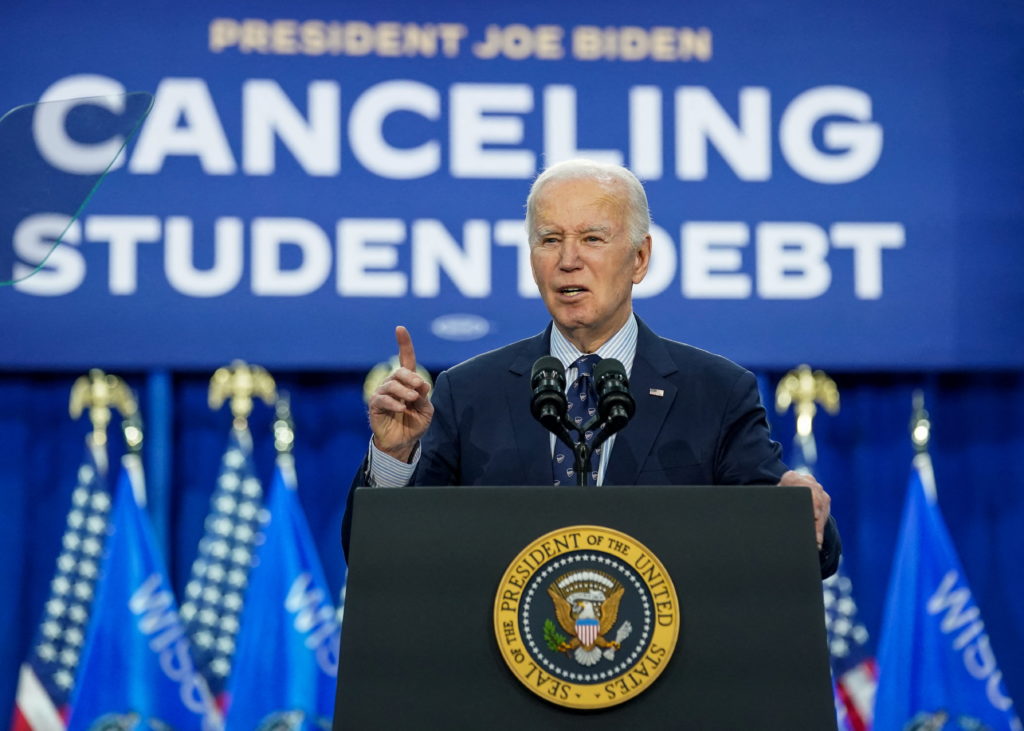
The only way Trump could quasi-legally impose tariffs under the IEEPA would be through a congressional statement made through the “major questions” doctrine, delegating executive seizure of decisions with vast political and economic consequences (Trump’s defense in the court). This same doctrine struck down the radical, moronic student loan-forgiveness policy under Joe Biden that warped our understanding of what a national emergency is even more. Highly consequential, designated-as-non-unilateral executive decisions cannot be made without congress. The court must remain skeptical of overreaching, alleged emergencies to infringe on congressional power regardless of the policy’s merit.
And as John Roberts argues, the allocation of tax creation to the president is a blatant dichotomy, not a spectrum. A decision favoring the administration would “give the President power to unilaterally impose unbounded tariffs,” “unconstrained by the significant procedural limitations in other tariff statutes and free to issue a dizzying array of modifications at will,” should he “declare” an emergency. The interpretation “would represent a transformative expansion,” diminishing the role of checks and balances in our nation’s economics.
In the defense of Trump, Kavanaugh claims the “major questions” doctrine wouldn’t be applicable as congress “clearly” designated intrinsic power in the IEEPA for president-enacted sweeping tariffs, a “longstanding historical practice [proven in] relevant Supreme Court precedents.” “Courts read the statute as written and do not employ the major questions doctrine as a thumb on the scale against the President.”
A Desperate Pivot
But any successful politician must have some legal proxy, and so after this devastating knock to a key player in Trump’s economic policy, Trump pivoted to another legal authority: Section 122 of the Trade Act of 1974. This statute, though, is arcane and obsolete in today’s economic context.
An Irrelevant Justification (Balance-of-Payment Deficits)
Section 122 addresses the balance-of-payment deficits arising from insufficient private inflows to finance a current account deficit, an aggregate of trade balance in goods and services, net international transfer payments, and net income on international assets, among other items. The account deficit requires cover through foreign lending, equal and opposite in value to the deficit (foreign accumulation of financial claims).
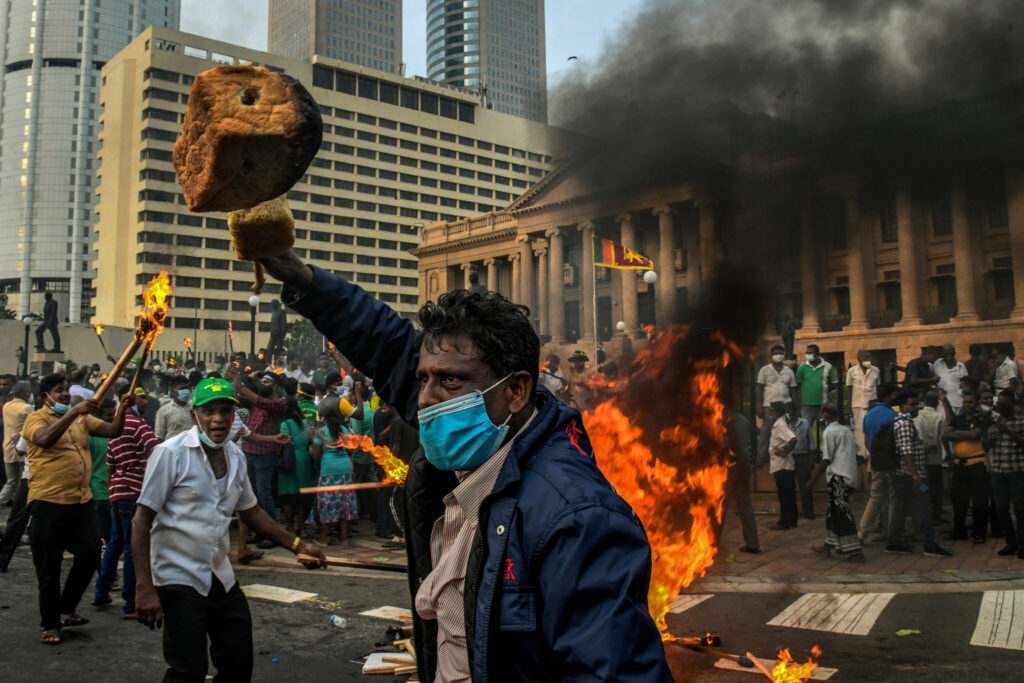
Insufficiency of coverage through foreign investment, as stated, creates this balance-of payments-deficit depleting foreign reserves to fill the gap, constituting a currency crisis, a forced currency crash by the central bank upon a currency’s indefensibility. Sri Lanka exemplifies this phenomenon in its 2022 economic crisis, wherein foreign reserves failed to account for their spiraling current account deficit from a lack of tourism, and so the Rupee fell 50% in weeks causing a humanitarian crisis.
In our current economic state, balance-of-payment deficits are virtually impossible, nullifying Section 122. The US dollar functions on a floating exchange rate system meaning current account deficits naturally deplete the price of the dollar, attracting foreign investors and rebalancing the currency. If we buy $1 trillion in Japanese technology but only export $500 billion, that $500 billion deficit reduces the price of the US dollar, attracting foreign inflows that pay for the deficit and increasing the price of imports, creating a balance of payments of zero: two sides of the same coin.
Also, the US dollar is intertwined into the global economic ecosystem making up 88-89% of foreign trade, and the dollar’s complete denomination of the global debt reinforces our position as the standard. On top of this, our massive bond and stock market is unlike any other in size, preventing foreign investment’s economic sway and creating a stronghold in global economic crisis.
Application of Statute
In the intended purpose of Section 122, Donald Trump’s tariffs are entirely inapplicable. Donald Trump’s trade deficit doesn’t and cannot come to a balance-of-payments deficit, and our currency is in no immediate danger. Even interpolating, where Section 122 gives the power to “to prevent an imminent and significant depreciation of the dollar in foreign exchange markets,” the dollar’s depreciation of 9% since Trump took office is not an unusual movement and thus cannot constitute invoking the statute.
Even if Section 122 passes in the judicial system, Donald Trump would lack the flexibility he had. The borderline comical calculation of his “reciprocal tariffs” couldn’t be justified under this statute due to its nondiscriminatory nature, only an across-the-board tariff (which Trump has already promised since the Supreme Court judgment), reducing the ability of the US in bilateral deal-making and desired geopolitical leverage, a primary objective of the tariffs.
Final Thoughts
Likely, this sidestepping of jurisdiction will only buy time for the administration to go about legally enacting the tariffs through congress or to find another workaround. Kavanaugh wrote in response to the Supreme Court’s decision that “numerous other federal statutes authorize the President to impose tariffs and might justify most of the tariffs at issue in this case, albeit perhaps, with a few additional procedural steps that IEEPA, as an emergency statute, does not require.”
This unprecedented economic policy, at least since the Smoot-Hawley era under Hoover, expectedly raises questions, especially in litigation. The outcome of this battle will solidify how we think of the executive role in United States economics.
Stay tuned into The Roundup for more political coverage!
