


We live in a conflict-ridden world. This statement will not be debated in this article but will rather be treated as an axiom on which this essay is built. Yes, it can be discussed the extent to which conflict is evil, or if it is a necessary evil, or a number of other extraneous details. However, a more pertinent question is how to deal with the conflict that seems to plague our sinful world. This question has met a variety of responses. The two most popular are A) fire must be met with fire, and B) turning the other cheek.
Both of these responses have considerable historical backing. Fighting fire with fire is perhaps more instinctual than logical. Many find self-defense or fighting back against oppression to be the natural response. That is not to say it has no legal or logical basis. In fact, this philosophy harkens back to ancient times, where harsher laws ruled the land. An example of this would be Hamurabi’s Code, which followed a strict form of retaliation for crimes that is colloquially known as “an eye for an eye.”
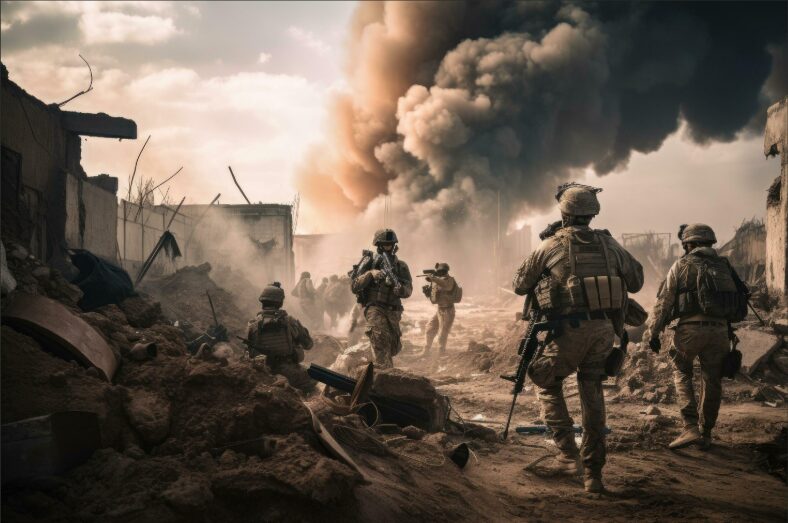
Pacifism, as a response to conflict, has also seen significant development through history, although it is likely a younger philosophy. Unlike the former response, having the discipline to accept the aggravations and pains of conflict in favor of seeking a speedy resolution is based more on our unique human ability to reason. Pacifism is not the instinctual reaction, but the reasonable one. Pacifism is not widely found in nature. We as humans, however, have come to understand the intrinsic value of every human life. It is with this logical forethought that pacifism was born. However, is it a suitable response to war and conflict in the modern era?
The Thesis
Pacifism, in its most basic form, is an inadequate response to war in the 21st century. As it is typically colloquially defined, pacifism is simply a rejection of conflict, be it armed or verbal, personal or international, light or aggressive, etc. However, in the complicated world of modern geopolitics, a basic rejection of conflict as a concept is, candidly, ill-placed hope. Pacifism as a movement has not reached the scale to make it a viable response to conflict, and would likely leave the defender in an extremely precarious position. In a world of power-hungry, greedy, selfish, imperfect humans, there will likely never not be an aggressor. However, alternate forms of conflict—forms that prioritize human life by supplementing conflict with alternate combatants—could potentially be viable. Thus, I propose Strategic Pacifism as the ideal modern response to conflict, with an aim towards conflict carried out by either autonomous or remotely controlled machines.

Comparative Analysis
First, to evaluate the viability of strategic pacifism, it must be compared with pacifism in its most basic form: absolute pacifism. Concisely, absolute pacifism stipulates that “all forms of violence and war are always wrong, no exceptions” (Allman 2008, p63). This seems like a reasonable and moral position to hold; however, the implications of having no exceptions—regardless of circumstances—fail to recognize the natural and necessary reaction to defend oneself. In fact, defending oneself with might is strictly forbidden by absolute pacifism, as “the use of any force or coercion, even in self-defense or for protecting the weak and vulnerable, or in cases of humanitarian intervention” (Allman 2008, p64).
This position, while at a surface level a noble stance in opposition to the world’s cruelty, selfishly fails to consider the needs of others. To watch the weak and vulnerable be crushed under the might of an oppressive force is horrifically immoral, the seemingly honorable stance corrupted by the pain of those who are left defenseless. It is by this tenet, the protection of the innocent and vulnerable against the corruption of an imperfect, human world, that strategic pacifism outshines its absolute counterpart. Strategic pacifism—as is natural for any form of pacifism—rejects violence as counterproductive and a product of humanity’s shortcomings. In contrast, strategic pacifism permits the use of force if and only if “nonviolent alternatives have been exhausted or would be ineffective” (Allman 2008, p65). This particularly extends to the realm of protection, in which, if a bid for peace or a treaty of some sort can not be accomplished, if the oppressor cannot be dissuaded, if the aggressor has some failing of faculties that would permit reason and morality from being the source of their actions, or any other of a number of similar scenarios, then violence is permitted. It must be proportional and used only in defense or for a righteous cause, but it is permitted—a necessary difference between strategic and absolute pacifism that makes the former more suited for the modern, conflict-ridden world.
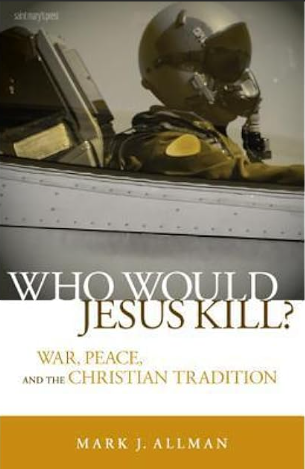
One potential alternative to strategic pacifism is classical pacifism. This branch of pacifism is not as strict as absolute pacifism, yet still more so than strategic pacifism. Classical pacifism defines the line between military and police action. A classical pacifism would “reject war between nations, but they can support ‘police actions’ whereby limited force is used to restrain evil or aggression, to defend human rights, and so on” (Allman 2008, p65). This differentiation solves the issues of absolute pacifism on a personal level. If someone is attacked, they can defend themselves, with force if necessary. Or, if someone has become a danger to themselves or others, police or those around them can restrain or stop them using force. Furthermore, it emphasizes the importance of proportionality, ensuring that wanton violence is still prohibited. However, this still leaves the issue of violence on a macro level. Conflict between nations, on the level of classical pacifism, is strictly prohibited. This prevents self-defense and humanitarian intervention on an international level, since it shifts from police action to military action. This would also render revolutions amoral, regardless of the crimes the ruler has committed against his people, since it would be on a national scale. This is an important distinction, as it highlights the shortcomings of classical pacifism. Yes, it is more appropriate than absolute pacifism, but it is still too strict to allow for intervention or humanitarian efforts that must be coupled with force. It is for this reason that strategic pacifism remains the most effective response to conflict in the modern age.
Practical Scenarios
In war and conflict, the belief of pacifism manifests in the form of conscientious objectors. These are people who refuse to operate weaponry or be the cause of the death and suffering of the enemy. There are two types of conscientious objectors: one, the conscientious objector who—in all cases—is against violence and war, and two, the selective conscientious objector who aims to minimize the necessity of violence, but is willing to participate if they deem it necessary. The former is a believer in absolute pacifism, and the latter in strategic pacifism. It is important to note that many governments, including the United States, only recognize a full conscientious objector if they recognize the status of conscientious objectors at all. It has been said, however, that the privilege to abstain from violence that conscientious objectors are afforded is earned by the willingness to pursue violence found in their brothers in arms. Major Pete Kilner has himself asserted that “war is necessary if we want to live fully human lives … you can’t say that you believe in human dignity and human rights if you’re not willing to defend them” (Soldiers of Conscience 2007), underscoring the previously discussed shortcoming of absolute pacifism.
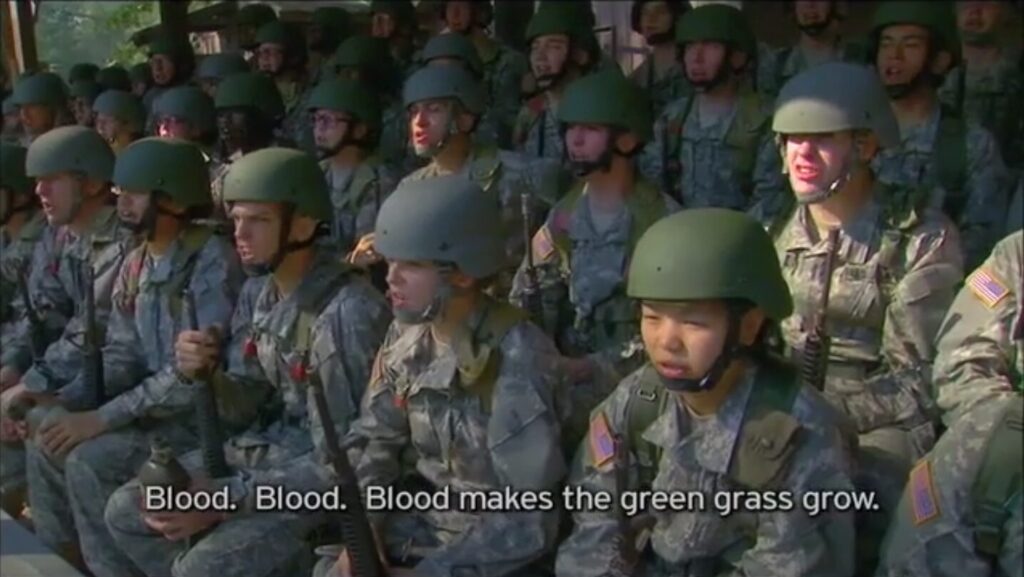
Despite this, humans in general have a tendency towards nonviolence, with only about 25% of soldiers in the world wars on the front lines actually taking the lives of the enemy, with most admitting they were unable to reconcile their conscience with violence and take lives if the enemy. Humans are naturally pacifists. To combat this, the U.S. military began training its soldiers, making shooting a gun a normalized response to enemy movements or perceived threats. Furthermore, they desensitize the soldiers to violence by having them shout warcries such as “Kill, kill, kill without mercy,” and “Blood, blood, blood makes the green grass grow” (Soldiers of Conscience 2007). However, these techniques—while effective—have removed the agency many soldiers have in the act of taking a life. By turning towards reactive training and a desensitization to the concept of harming a fellow human, the concept of pacifism has been flipped on its head. While absolute pacifism is not perfect, merciless killing is indesputably immoral, thus leaving strategic passifism—or the taking of human life only when absolutely necessary—the obviously correct response to the violence of the modern world.
Critiques of Pacifism
Despite this, pacifism in general has received many criticisms, two prominent ones being political and Christian realism.
Political realism stipulates that “the right thing for any state or government to do is whatever advances or protects its own self-interests” (Allman 2008, p103). This concept highlights that, in the realm of geopolitics, a government is often forced to make morally questionable decisions to protect its own people, a nationalist view that regards those outside of the given state or nation as lesser. However, this is more a critique of absolute pacifism and its stringent guardrails than it is of the more forgiving—yet still morally worthy—strategic pacifism. It is arguable that strategic pacifism is even advantageous for a nation, since it would prevent the given state from being dragged into unnecessary conflict yet still permit it to defend itself.
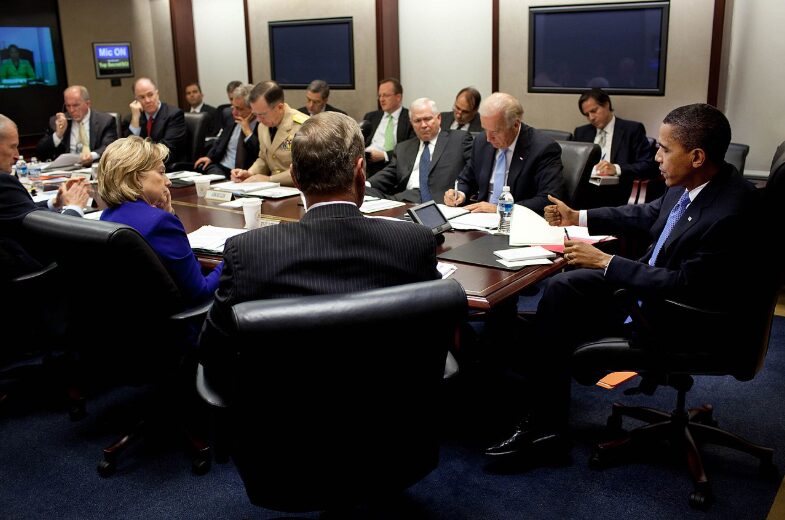
On the other hand, Christian realism argues that there is an “overdeveloped confidence in human goodness; [Christian pacifists] believe that the gospel law of love is enough to rid the world of violence and evil” (Allman 2008, p108), an extremely naive position on the part of the pacifists. Again, however, this critique does not aptly apply to strategic pacifism. While the absolute pacifism would be condemned by their wholesale rejection of violence, the strategic pacifist would be permitted the use of violence in the inevitable extreme scenarios, thus bypassing the naivety of the typical Christian pacifist’s belief in a peaceful heaven on earth. Strategic pacifism is more adept for the violent reality of the modern, sinful world.
The Solution
Strategic pacifism is good, but in war, there is still death and destruction. Human life is still not sanctified or respected. Therefore, I propose that, instead of carrying out combat with human beings, combat should be carried out with drones or other machines. There are various forms of media in which this is the case, most of them futuristic. My favorite work in which machines are used for combat as opposed to soldiers is “Insignia,” a young adult novel by S. J. Sinkaid. The premise of the book is irrelevant, but combat is carried out in space using warships that are piloted by people on Earth. The novel covers a variety of humanitarian issues, including the use of children in the military (the pilots are children), but I have always considered the use of drones in war to be an interesting alternative.
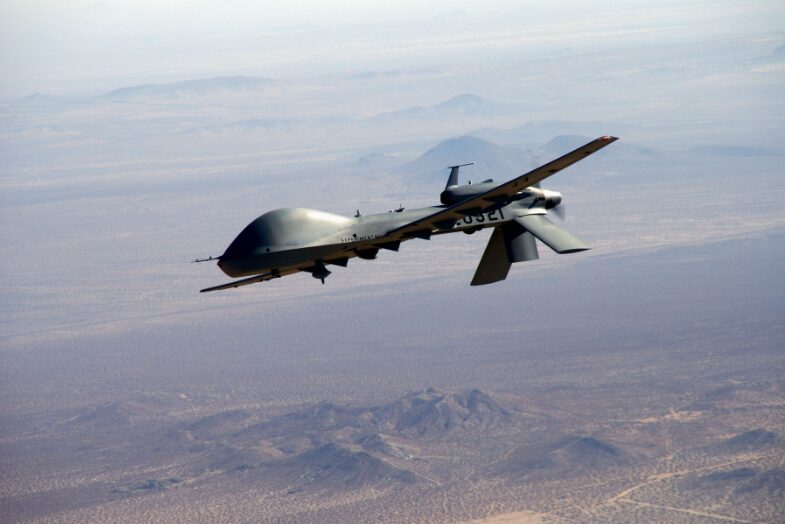
In fact, drone use has started to make its way into wars in the present day. They have been used on both sides in the Ongoing Russia-Ukraine conflict, with much success on the Ukrainian side. They were also used in the Israel-Gaza conflict. In modern warfare, these drones are typically used for reconnaissance or, more crudely, as suicide bombers. This is a guerrilla tactic that has found prevalence in conflicts against more developed adversaries. In the conflict with pirates, the US Navy fought drones with homing missiles that would target the drones. This, however, was of great advantage to the pirates. Missiles are extremely expensive, making them an uneven tradeoff for the US forces. This, combined with their much slower production speed, has made kamikaze drones a real threat to the US military. While I believe that in an ideal world these conflicts would strictly be drone vs. drone, their use in modern combat is clear proof of concept. In conclusion, strategic pacifism is the ideal response to conflict, with conflict itself being made as humane as possible through the use of drone warfare.
Stay tuned into The Roundup for more student viewpoints!