


On Friday, December 5th, Netflix announced that they will be acquiring Warner Bros. Discovery’s Studios and Streaming Division for ~82.7 Billion Dollars, subsequently now leading the bidding war over the financially strained production company. However, Paramount, originally showing extreme interest in the Hollywood dynasty, has announced a hostile counter bid, which CEO David Ellison considers extremely more generous than Netflix’s “inferior” offer. The counter bid, which has a value of over 108.4 Billion Dollars, is completely laid out in a Paramount led website, “stongerhollywood.com,” which describes the $30.00 per share amount as having a better value than Netflix’s original $27.75 per share offer, even though Netflix’s offer also includes $4.50 per share in Netflix’s own stock. It’s also important to note that Netflix’s bid only covers WBD’s Streaming and Studio Business, excluding their Global Networks business, while Paramount is seeking to acquire 100% of the entire company, and completely upfront. However, there is also the aspect of multiple anti-trust laws that prevent a monopoly from forming through studio acquisitions, so there is a possibility none of these deals will go through.
Recently, on January 7th, Warner Bros. Discovery rejected Paramount’s offer, while multiple sources stated that WBD would be interested in a higher price tag on the deal. However, Ellison still continues to stand by the $30 per share amount.
Now, while I can continue to spew senseless numbers over the acquisition, the main question on all movie lovers minds is “What does this mean for the future of the Film Industry?” Well, many can argue you both ways on the matter. Some claim that Netflix’s control of the company will ensure the end of theatrical releases, while others argue that old institutions such as WBD have held control for too long, and Netflix’s acquisition will pave the way for a new and innovative industry.
What will happen with Theatrical Releases?
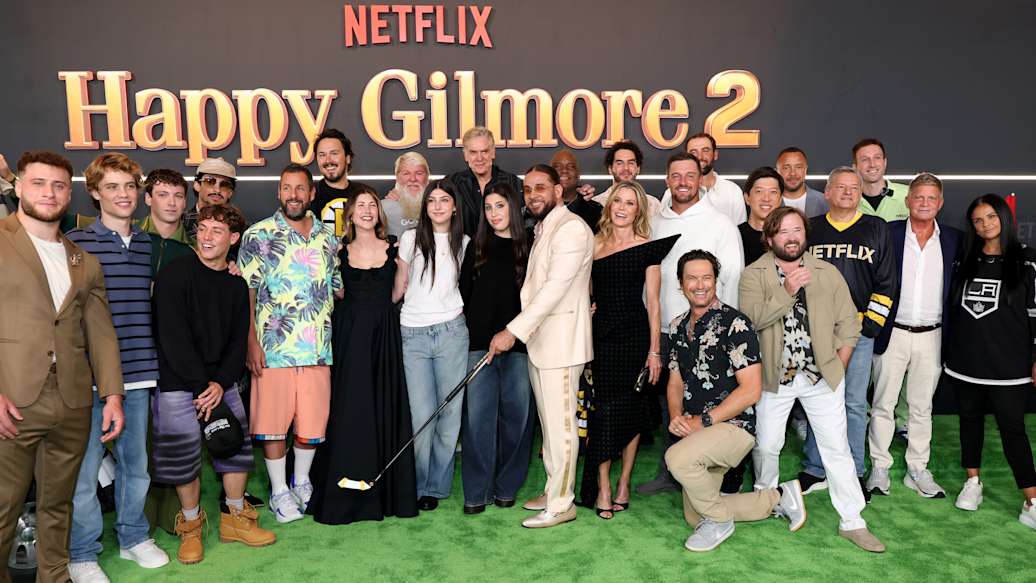
This is the main question all of us are asking, and for good reason. Netflix is a service that redefined the film industry through its streaming platform, with its direct-to-streaming films paving the way for a new type of viewing experience. Within the past year, there has been a significant increase in direct-to-streaming films from 95 in 2024, to a predicted 110 in 2025, with some of the notable films ranging from “Happy Gilmore 2” to the recently released “Frankenstein.” In an already struggling industry, Netflix’s purchase of WBD could be the final nail in the coffin for movie theaters.
The theatre-going experience has become a staple in the film industry, allowing for filmmakers to give the audience their full vision as it was intended. When questioned about the threat this buyout may pose on movie theaters, Netflix CEO Ted Sarandos said, “The studios and the theaters are duking it out over trying to preserve this 45-day window that is completely out of step with the consumer experience of just loving a movie.” He then followed it up with the fact that going to see a film “for movie theaters,” and “for the communal experience” is “an outmoded idea.”
Could he be right? Possibly, as evident in the extreme decrease in the global box office these past couple of years. Could he be wrong? Absolutely, because many of the biggest filmmakers are beginning to rally against the company, actually urging for a longer theatrical release window, while Ted Sarandos expects to lower the window below 45 days, with some sources stating it could drop to only three weeks. Alongside that issue, Netflix, in their current contract, agreed to maintain a reduced window all the way to 2029, and after that, who knows what’ll happen to modern theatrical releases, or if there will even be any.
What is the Industry’s Reaction?
Many industry professionals have come out against the deal, as they believe that Netflix’s streaming background will eventually become too swaying. Academy Award Winning Filmmaker Sean Baker stated in an interview recently, “We should not be reducing theatrical windows, we should be expanding [them]…This is how the filmmaker wants you to see his film, and everybody else can wait for it. My next film, I don’t care what happens, I’m gonna get a hundred-day theatrical window.” Multiple other professionals have had the same reaction, as well as multiple workers unions such as the DGA, the WGA, and the Teamsters. President of the Directors Guild, Christopher Nolan, is said to be having a meeting with the heads of Netflix to make sure they plan on maintaining creative rights, and that theatrical release window.
If the Netflix-Warner Bros. Discovery deal does go through, which will most likely be around mid-2026, there is a high chance that we could see major strikes across all unions, and possibly even earlier. Although the order has not been given, and no strikes have been planned, many of the unions are heavily against the deal, so it is not something completely out of the question. Although with the current state of the industry and the world-wide box office, another strike as big as this may be, is in no way needed. Sean Baker commented for everyone worried that no one, “should be commenting until we all know how [the deal] is going to play out,” a refreshing reminder that this process does indeed take time.
Is there necessarily a better decision?

This is the question on everyone’s minds. In my personal opinion, no. Something that makes the film industry so beautiful is how dynamic it is. It is constantly changing, and the chain of command is always being flipped around. While ownership changes within a studio may affect the studios future, nothing can take away from consumers the impact Warner Bros. Discovery has had on them. From history altering films such as “Casablanca,” to my personal favorite, “The Shining,” Warner Bros. has already created a legacy that will withstand the test of time. No matter who wins the bid, change is inevitable, and like always, I am 100% positive that the industry-shaping studio that is Warner Bros. Discovery, will always be in the picture.
