


Over the past decade, the rise and fall of numerical jokes has become a defining feature of meme culture. From the original comedic icons 19 and 21, born during the golden era of Vine (TikTok’s chaotic predecessor), to today’s mysterious successor, 67, these numbers have taken on lives of their own. Yet many outside the loop are left wondering: What exactly is “67”? Should we be worried about what it means? And, perhaps most importantly, could this cryptic integer somehow signal the end of human civilization as we know it?
Backstory
There are three main points of intrest to this trend.

First, the origin of this meme is often attributed to Skrilla, an American rapper from the Kensington neighborhood of Philadelphia, Pennsylvania. Skrilla produced a song called DootDoot (67) in which the line “6-7” is repeated numerous times in the hook. Skrilla has gone on record saying that the meaning is intentionally vague: for him, it’s “negative to positive,” but he doesn’t assign a concrete definition to the phrase.
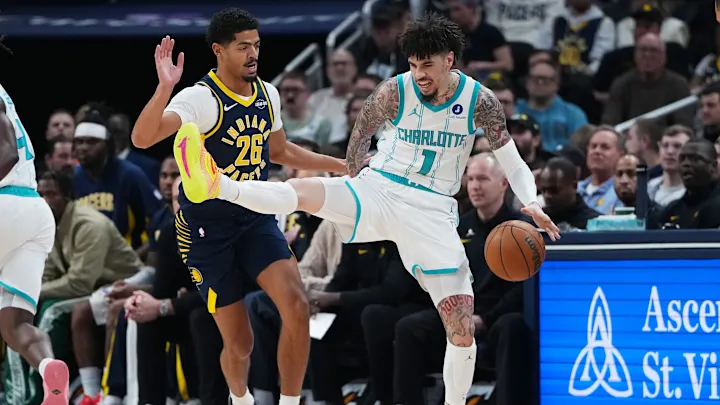
Second, the meme received a major boost through edits of NBA player LaMelo Ball, who is 6′7″ tall. During an interview, he was asked his height, and he responded “6-7” while making a seesaw motion with his hands. This became a widely shared clip across social media platforms like Instagram and TikTok.
Finally, just as the meme had started to die down, it experienced a resurgence when a young adult known as Maverick Trevillian (the “67 kid”) went viral for a video in which he shouted, during a high school basketball game, “Ay, 6-7!” This moment sent the slowly fading meme back into the limelight of public attention.

These repeated events, spanning from 2024 to now, have transformed this simple meme into a generational in-joke that only those “in the know”… well, know.
Why did it blow up?
67 utilized nearly every facet of modern culture to amplify its virality, spreading rapidly across the internet. Originating from a catchy song, the meme then found new life through its connection to sports and later through its signature hand gesture, allowing it to resonate with audiences across genres and platforms. Its deliberate absurdity- stemming from the fact that it has no fixed meaning- gave it the irresistible “brainrot” charm that defines much of modern meme culture. And as Gen Alpha and younger teens enthusiastically adopted it, repeating it in schools, videos, and everyday conversations, its popularity grew even further.
So what does 67 actually mean?
In short, it doesn’t really mean anything. According to Dictionary.com, it can signal “so-so” or “maybe this, maybe that,” but that’s just one interpretation, and there’s no universal definition. The popularity of the joke actually lies in its complete randomness. In reality, if it had an exact, clearly defined meaning, then 67 would lose its chaotic charm- the very quality that makes it funny, viral, and endlessly repeatable.
Wanting a more expert perspective on the 67 joke, I sought out professional advice from some of the brightest minds at Jesuit Dallas. The following are interviews with two experts in the brainrot field, both deeply involved in its study.
Kevin:
So today I’m here with an expert in brain rot. Christian Irwin (class of 27) here has been educated by the masters of the Brainrot community. Christian, could you let us tell us a little bit more about the origin of six or seven?
Christian:
Sure, Kevin. So basically, there was a song that came out a while ago, and one of the lyrics in the song, the artist says 67, and that mainly started the meme. But it really took off when a clip from a kid in a middle or high school in a football or basketball game bleachers came up to the camera and did the 6’7″ hand signs and then said the words, which mainly let it take off.
Kevin:
Why are kids so infatuated with the six’ seven hand sign?
Christian:
So I think kids are really into it because it’s kind of like… it’s different from most memes. Most memes have a meaning and an image or something behind it, but it’s purely just two numbers. And I think they find enjoyment out of saying something so simple that maybe confuses people who don’t know what it is.
Kevin:
I’ve got to ask, is it satanic in nature? What does it truly mean?
Christian:
A lot of people will probably tell you this, but it doesn’t really mean anything. People just find it funny, and as it’s grown to being a very popular meme this year, people have created branch-offs of it like 41, 61, 93, etc.
Kevin:
Should the leaders of America—specifically our teachers, the president of Jesuit Dallas—be concerned with the up-and-rise of the six seven?
Christian:
I don’t think they should, really. It’s only the freshmen who are gonna be saying things like this, and even then it will probably die pretty soon. They’d only really worry about it if it was disrupting class.
Kevin:
What is your advice to teachers who are experiencing some of the backlash of six’ seven in their classrooms?
Christian:
If it’s getting too bad, you can crack down on that, but to be honest, I think you should just really embrace it, you know? Kind of go with it. A lot of teachers I have like to make the joke along with the kids, like when it’s in a test or if they accidentally say it, which I think is a good approach.
Kevin:
Okay. Now, my final question for you: should it be stopped?
Christian:
In my opinion? Yes. It’s getting kind of annoying hearing it all the time. At first, it was a little bit funny, but now it’s kind of everywhere, and it’s kind of turned into one of those memes that really only younger people say — which is why I associate it with the freshmen.
———————————————————————————————–
Kevin:
Hello, today we are with the expert in this war of 6’7, with Professor [REDACTED]. What’s your actual name? Last name?
[REDACTED]:
Yes, that is my name.
Kevin:
So I wanted to start off with—I know you’ve studied this aspect of literature and of human psychology immensely. What is the lore of this field?
[REDACTED]:
So everyone knows it all originates from the song. However, it truly takes its roots back when—I don’t even know, when was it? Was it like the kid in the basketball game?
No, I think the kid in the basketball game made a cryptocurrency. That’s what I’ve heard.
Oh, yes, yes, yes. How could I forget? It all originated from the viral online video of a child going, “I know… 67.” And the rest is history.
He went on to form the most stable cryptocurrency that rivals Bitcoin and Dogecoin. Let’s just say when Huck Coin finally goes up, I’ll be a very rich man.
Kevin:
Oh, wow.
But now it has evolved into something so beautiful that even the mere utterance of the singular number six or seven warrants a reaction by the masses.
This reaction—is it positive? Negative?
[REDACTED]:
One could say it has elements of both. It is an expression of joy and personal thrill. However, unfortunately, it has a tendency to hijack the subject’s mind and make decisions that some may find disturbing.
Kevin:
I know people who don’t fully understand the complexities of 67 are often fearful of it—teachers, adults. What would you tell them?
[REDACTED]:
This has happened many times before, as with 21 every single generation.
Every generation has their jokes, and every generation must come to accept that they will never truly understand what elements of pop culture dominate the youth or what those things mean.
Kevin:
So is this more of a Gen Z meme, or is this a new Gen Alpha meme?
[REDACTED]:
See, this is the thing: Gen Z and Gen Alpha have this overlap where half of Gen Z has been so deeply engrossed in the internet that they could almost be lumped together with Gen Alpha.
You can see this because many Gen Z-ers will doom-scroll for hours, leading them to discover pop-culture elements that, while dominated by Gen Alpha, still bleed into Gen Z.
Kevin:
I know it’s had time to evolve. Do you think it’s still in the comical phase, or is it in the overused, satirical phase?
[REDACTED]:
As with every single joke, it eventually becomes a caricature of itself. You can see this with artistic interpretations of the original video being reimagined in darker ways, reflecting people’s obsession and their inability to control themselves should the number six or seven be mentioned.
Kevin:
Okay, okay. I wanted to ask—many adults are fearful of this meme. Could it possibly spell the end of humanity as we know it?
[REDACTED]:
The unfortunate answer is no. Comedy is a beautiful thing, and although you see elements of obsession or distraction, it will ultimately end—
I estimate within two years—as the meme eventually disintegrates into something old and in poor taste.
Kevin:
I’m sorry to pry—
I’ve heard it’s recently been banned in Indiana by the police department. What are your thoughts?
[REDACTED]:
Yes, this is yet another example of encroachment on free speech. Without the ability to express ourselves in comedic ways, what are we? If we lose that childlike sense of joy and laughter, then we fall into a society that accepts only facts and answers, losing the humanity and charm that have defined our innovation.
Kevin:
Now, is there anything you’d like to tell the public about where this could potentially leave us?
[REDACTED]:
For those who fear 67, I’d tell them this: it is not something that is here to stay, but it is something that will impact the young—especially those currently in middle school, Gen Alpha—because it gives them a way to bond with each other in the same way previous generations did, allowing them to form their own culture.
Analysis:
Before I give my closing thoughts, I thought it was imperative to address some of the events discussed in the interview. First, the Indiana Police Department has been reported to have banned the use of “67.” They were even filmed and shown on Good Morning America entering an elementary school and distributing tickets to students who violated this ban, some as young as younger than fourth grade! Although this might seem like a comedic social media stunt, the legitimacy of these tickets is still up for debate. Do they truly intend to make a six- or seven-year-old pay a fine for making a lighthearted joke?! This has yet to be seen.

Many have seen the rise of this joke as simply a distraction, largely because of its frequent use in educational settings. This isn’t intentional; it’s simply because schools act as the main gathering place for nearly all adolescents from ages 5 to 18. Some even attribute this phenomenon to the effects of urban sprawl, arguing that it’s no longer safe for children to play outside without adult supervision, leaving school environments as the primary space where trends like this spread.
Conclusion:
Although, in a microcosm, this may seem like just another example of brainrot, in reality it is a shared cultural experience- something children use to connect with one another and find a sense of belonging. To further extrapolate, “brainrot” is a slang term referring to the perceived mental deterioration that results from overconsuming trivial or unchallenging online content, often leading to issues like a shortened attention span, difficulty focusing, and general mental fogginess.
Now, the concern surrounding brainrot and social media is valid. The average age at which children are introduced to social media has been decreasing, and as kids spend more and more time on electronic devices, parents have become increasingly fearful of what their children are consuming. Controversies like “Elsagate,” the growing flood of AI-generated “slop” filling social media platforms, and the widespread adoption of short-form content by almost every major app have only heightened public anxiety about the future of the internet landscape.

The truth is that a large portion of boomers, and even many young adults, are fearful of jokes like these. However, fear should not be something that limits the youth. Creativity and exploration should be encouraged in the kids of today, because they are the future leaders of tomorrow! If we don’t teach young people to push boundaries and trailblaze, how can we expect society to evolve and reach for greater heights?
“the only way to make sense out of change is to plunge into it, move with it, and join the dance” -Alan Watts