


Three years and an estimated 1.5 million total casualties into what the Kremlin once called a “three-day special military operation,” the question still comes up: Who will win? In one sense, the answer is already clear. Russia failed to topple the Ukrainian government, has become a geopolitical pariah, and is propping up its economy through a wartime defense sector that cannot last forever in peacetime. If Russia is not winning, the real question becomes: how does this war actually end?
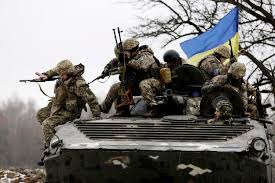
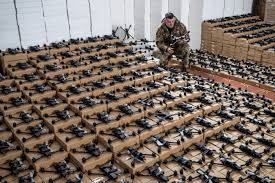
It is interesting to observe how both sides have adapted to the realities of war in the 21st century, utilizing motorcycle brigades, drone swarms, and online propaganda to gain a competitive edge. Drone swarms clash with Mad Max brigades while penal battalions and mercenaries fight brutal house-to-house combat. North Korean soldiers are mowed down by Polish volunteer fighters, drone pilots get points for how many kills they get, and AI videos of the enemy losing are distributed by both sides. Modern war is bleak, ridiculous, and slow.
During 2025, Russia gained roughly 2,000 sq miles of Ukrainian land, averaging a little over 5 miles per day, while averaging around 1,000 casualties per day. At the current rate of the Russian advance, Russia is set to control all of Ukraine by the year 2130 at the cost of 37,000,000 soldiers. Obviously, that is not happening, and not even Russia is pretending that it intends to conquer all of Ukraine. It claims to have annexed 4 Ukrainian Oblasts, 5 if you count Crimea, or roughly 25% of Ukraine. It is important to note that Russia does not yet control all the territory it claims, meaning that it not only failed to achieve its initial war aims, but has also failed to achieve its limited goals after 3 years of grinding trench warfare in the Donbas. Regardless, the current Russian offer for peace is all the land they claim, guaranteed Ukrainian neutrality, Ukrainian demobilization, and for Russian to be the official language of Ukraine. These terms are demanding, given what little Russia has achieved, and are especially worrying given that they make Ukraine incredibly vulnerable to a future Russian invasion. Ukraine is willing to sign a ceasefire at the current front lines; however, it considers ceding additional land that Russia does not yet occupy as a “Red Line” that it won’t cross.
The Challenge of Peace
The attempts at peace talks have been interesting because it feels like everyone is arguing from a position of weakness. Russia, once a world power, is struggling to fight its young neighbor. Ukraine is smaller and weaker than Russia, and is dependent on foreign assistance to continue fighting. Europe, which has always been a steadfast backer of Ukraine, has proven unable to actually achieve anything; instead, it has been nagging America to do the heavy lifting for them. The Biden administration was committed to Ukraine’s defense, but was largely impotent, with Biden being seen as a weak leader on the world stage. The Trump administration, on the other hand, has been aggressively pursuing peace, but has had what can only be described as an incoherent foreign policy on the war. Trump himself is fickle and has switched back and forth between bashing Zelensky and or Putin on Truth Social. As of now, he seems committed to Ukraine, sending them new weapons meant to pressure Russia into signing a peace, but honestly, who knows how long his commitment will last. Either way, his actions have brought both nations to the negotiation table, which alone is an impressive feat. Getting both sides in the same room is one thing; getting them to compromise is a lot harder.
Putin is stuck in a sunk cost fallacy. He promised his people victory over the opulent West, yet he has sent hundreds of thousands of Russian sons to die in the mud against a nation with whom he could have been allies. If the war ends in anything less than a total Russian victory, or at least something Putin can declare a total Russian victory, then Putin’s legitimacy will evaporate. For him, losing the war would be the end. His regime would fall apart, so he will continue to fight as long as it takes for him to get what he wants. Even though the amount of lives and resources lost far outweighs anything he could gain from this war, he will continue to fight. For pride and self-preservation, he will continue waging this pointless war.
Zelensky has far more reason to fight this war than Putin. He is defending the sovereignty of his nation from invaders. He is justified in not conceding to Russia’s terms, given that Russia would likely use a ceasefire as a period to reorganize and later launch a renewed offensive, possibly aimed at Kyiv. Zelensky has no reason to ever trust Putin, and for this war to end will need security guarantees from the West to ensure a lasting peace. While it’s fair to consider Ukraine the “good guy” in this war, Zelensky is not a saint. He has spent recent months bailing his friends out whenever they get into a corruption scandal, and has greatly limited the freedom of the press. My article “Dictator Zelensky?” covers many of his anti-democratic tendencies, like suspending elections until the war is over. During Ukraine’s time of crisis, Zelensky has taken many emergency measures, and he has made himself the most powerful leader Ukraine has ever had. I’m not saying he is a dictator, but it wouldn’t be difficult for him to crown himself.
The Postwar
The most likely scenario for peace would occur if both sides agree to some level of compromise. Russian territorial acquisitions are unavoidable, and Ukrainian membership in NATO will be off the table. Initially, a ceasefire would be established. There would be a no-fly zone over Eastern Ukraine, Ukraine would pull its forces back to the new border in the 4 oblasts it ceded, and both sides would withdraw from any salients across the rest of the border. Ukraine would have military neutrality enforced, and after receiving security guarantees, would demobilize much of its army. In this future, Ukraine would be in a weakened state, needing to rebuild with heavy European assistance. Ukraine cannot host Western militaries within its borders, but it will be able to create economic agreements with the European Union. Ukraine currently has a war economy, with a massive portion of the population actively serving in the military. It will have to demobilize and adjust to a period of rebuilding. Ukraine will be diminished; it will have lost land, people, resources, and infrastructure, making a post-war economy far weaker than the pre-war one.
Many people who left Ukraine to flee the draft and violence will remain abroad, choosing to remain in the new lives they created for themselves rather than returning to their war-torn homeland. Ukraine’s new economic partners will intend to aid the struggling nation; however, this could very well backfire. American and European companies will offer lucrative investment deals within the country, where they will be able to gain an incredible amount of influence within the sectors they invest in. Ukrainian companies will find themselves outcompeted domestically, and the Ukrainian government will be unable to pursue protectionist policies while actively joining the EU.
In this postwar world, Ukraine is incredibly diminished. They would be at the total mercy of their European partners, whose economies, already producing almost exclusively consumer goods, would be able to dominate the Ukrainian market. The only advantage Ukraine would have in the European market would be its access to black soil, making farming in Ukraine far more efficient than anywhere else in Europe. Much of the land with black soil would have been ceded to Russia; despite this, Ukraine would still have the strongest agrarian sector out of any EU nation. This has historically been the reason that Ukrainian EU membership hasn’t happened, as black soil gives Ukrainian farmers such an advantage over other European farmers that farmers in countries like Poland, Spain, and Hungary would be driven out of business, as Ukrainian grain would be by far the cheapest in all of Europe.
Zelensky, despite Ukraine making concessions, would be considered a national hero. Elections would need to take place once peace is established, and Zelensky and his party will easily gain an absolute majority. Zelensky will be a leader, beloved by his people, politically ascendant, and with total support from his foreign allies. He would be in the perfect position to maintain power for as long as he pleases. There is no reason to expect him to make himself more than a two-term president; however, he has shown autocratic tendencies during his rule. It is impossible to predict what course he will take; one can only hope he will step down once he has reached the end of his second term, and allow Ukrainian democracy to flourish. Otherwise, Zelensky could easily become a mirror image of Putin, a strongman who saved the country from corruption and foreign adversaries, but ultimately becomes a corrupt autocrat with a cult of personality.
Russia would declare itself the “victor” in the war after annexing 4 oblasts. The land they take would be useless economically, at least in the short term. The territory would be devastated, depopulated, and resistant to Russian occupation. Their actual prize in the war would be ensuring Ukrainian neutrality, while leaving Ukraine incredibly vulnerable to a future war. The cost they paid for their “victory” would be hundreds of thousands dead, maybe over a million by the time the war ends, international isolation, and severe economic downturn. The Russian economy is held up almost exclusively by oil exports and the growth of its military industry. They have been able to obscure their economic stagnation through the artificial growth in their defense industry, but once that dissipates, Russia will find itself in a terrible position. Russia currently has an inflation rate of 8% and an interest rate of 16.5%. It currently has low unemployment and high GDP growth, but neither of those is natural. Once Russia begins to move back towards a civilian economy, it will be left with a low-skilled and aging workforce suffering a severe brain drain. Private investment within Russia would be prohibitively expensive, while inflation remaining high would destroy the population’s savings. They will become entirely dependent on resource exports, with their main economic partner being China. As the Russian market becomes increasingly intertwined with China’s, Russian manufacturing and technology will be outclassed and outcompeted by the Chinese alternatives. Ironically, Russia could find itself in a postwar situation very similar to Ukraine, at least economically. Ukraine’s economic dependence on resource exports to Europe and investment from European companies may be mirrored by Russia’s future dependence on exporting to China and investment from Chinese companies—the once World Power of Russia could very easily find itself economically subjugated by a foreign power. 10 years ago, one could have considered Russia the world’s 2nd strongest nation behind America. Now, after 3 years of Russia slogging through mud and blood in Ukraine, Russia is regarded as a joke. All bark, no bite. They have reduced themselves to the level of Iran or North Korea, threatening to nuke London or Berlin whenever another arms package is delivered to Ukraine.
This war will have to come to an end, and it will most likely be an anticlimactic one. A negotiated peace resulting in both sides in a worse position than before the war started. Ukraine’s NATO membership will be permanently postponed, and the country as a whole may find itself poorer and more destitute than ever before. It is up to Ukraine’s future partners to rebuild the country in a way that will actually allow the nation to recover, and have a future within the European community. As for Russia, they may use this war, the hundreds of thousands dead, as a moment of introspection. To evaluate why this war had to be fought against a brother nation, and why it had been fought so poorly. One can only hope that Russia will choose a better future for itself and the rest of the world, but I wouldn’t hold my breath.
