


“Apartheid” is an Afrikaans word meaning apartness, describing the period from 1948 to 1994 that carried significant institutional and legal separation of white, black, and mixed people in South Africa. Different races would have designated segregated schools, stores, bathrooms, beaches and other crucial public, residential and business places. This segregation was sanctioned by the minority white government to heavily diminish non-whites. Non-whites were forcibly removed from their homes, exiled, and confined to infrastructure-devoid, poor, “tribal homelands” defined by their ethnicity, whilst whites seized and occupied their towns.
Non-whites, particularly black South Africans, were denied the right to vote or participate in the government. Apartheid-opposing organizations like the African National Congress and the Pan-African Congress were outlawed, and the Apartheid constitution contained no bill of rights to protect against discrimination.
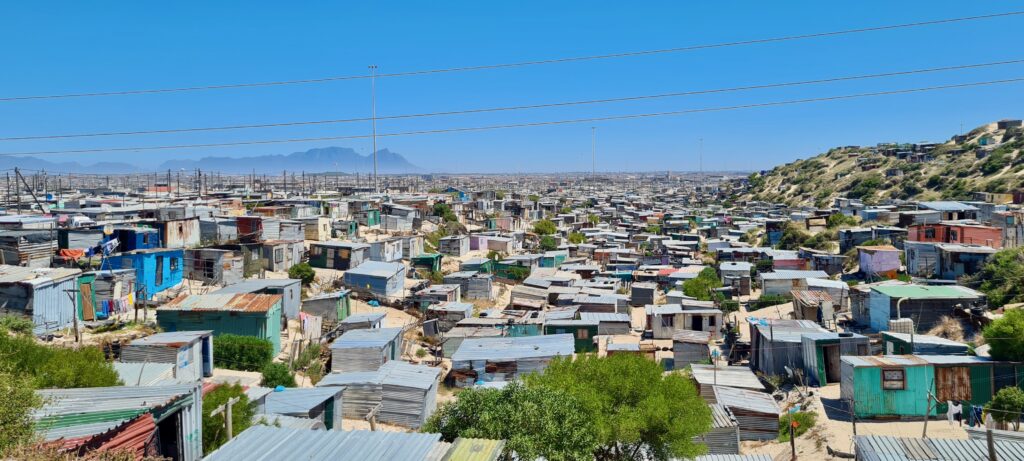
The Apartheid’s effects on South Africa were and still are horrific. Even after the Apartheid’s end in 1994, the systematic discrimination and the depressions in education, employment opportunities, and housing still plague non-white communities. Cape Town, South Africa, perfectly illustrates this striking duality. Look at the coastal side of Table Mountain and you will see placid millionaires’ and billionaires’ homes nestled between the mountain and the beaches but look inland and you’ll see concentrated slums of shacks, erratically interconnected by unpaved roads, the area being one of the most dangerous places in the world.
According to many, there’s a “clear” parallel between modern Israel and latter 20th century South Africa. Prominent figures like AOC, Rashida Tlaib, and various organizations aggressively assert this rhetoric, portraying the Israeli government as a race-oppressive regime to Arabs, namely Palestinians, within its borders. I disagree with this view. There is no doubt that many non-citizen Palestinians face substandard conditions in specifically the West Bank, but there is a nuance.
Racial injustice is not codified in Israel, nor is it systemic (like in South Africa). It is instead the product of ongoing conflict, with Israeli citizens being unsegregated within its borders.
Equality Within Israel
First, I’ll begin the argument by establishing Israel’s blatant, legislature-enforced impartiality. Israel’s 2 million Arab citizens (21% of the population), and all other ethnic groups, have the same rights as Jewish people. I’ll be using the term “Jewish” as an ethnicity rather than to describe a follower of Judaism.
Political Participation
Arabs have a spectrum of political parties in Israel and they significantly participate in the existing government. The two largest Arab political parties in Israel are the conservative Ra’am Islamist party, and the socialist, left-wing Hadash-Taal. These parties have the same rights as Jewish parties, though they often defy The Basic Laws in ways that aren’t intrinsic. The Basic Laws are a kind of “permanent stopgap”, a quasi-constitution that maintains the state as nondiscriminatory, Jewish, and Democratic in the absence of an actual Israeli constitution. Ra’am, though, became the first Arab political party to join the Israeli governing coalition in 2021.
This kind of political duality could not be found in the South African Apartheid; leaders of the black South African political parties would be brutally murdered or imprisoned, and other members would be exiled and be revoked of their citizenship.
Besides having their own parties, Arabs also participate in the existing government. 102 Arab members have served in the Knesset, the legislative branch of Israel, since 1949. Mansour Abbas, Waleed Alhwashla, and Yasir Hujeirat from the United Arab List (Ra’am), Afef Abed from Likud, and Hamad Amar from Yisrael Beiteinu all currently serve in the Knesset with many more from different Arab parties. Arabs, thus, have a significant sway in the creation of Israeli legislation. Black South Africans could by no means influence broader Apartheid South African legislation.
Societal Participation & Education
Beyond governance, Arab citizens also play a more-than-substantial role in Israeli society, even being the majority in crucial industries. Take for example, the healthcare industry. According to the Labor Force Survey, conducted by the Central Bureau in 2023, Arabs constituted approximately one-quarter of Israel’s physicians (25%), nurses (27%), and dentists (27%); and they account for a striking half (49%) of pharmacists.
Also, Arab citizens have a great and ever-increasing presence in higher education. Arabs make up 17% of all students in Israel, relative to their 21% population. Significantly, though, this number has skyrocketed; the number of Arab students admitted to higher education in Israel rose 122% from 2011-2021, with master’s degrees increasing 228% and PhD’s increasing 133%.
Now, I’m not denying that there are gaps in education for some Arabs, but it happens largely for the same reason that it does here, in the United States. Schools in Israel are partly funded by property taxes, and in poorer areas, where concentrations of Arabs are typically higher, there’s less money to tax. Education inequality is undeniably an issue that needs attention, but it is not intrinsically a matter of race in Israel. Arabs in Israel are rapidly gaining opportunity in education, suggesting the barrier is not systematic nor systemic. Hopefully this trend continues.
Incredibly important, though, is the fact that Israeli schools are not segregated. Jewish people, Palestinians, Druze, and all other ethnicities can go to the same schools. Many claim the Israeli public school system is apartheid, given the existence of separate sectors for Muslim, Arabic speakers, and Jewish, Hebrew speakers, but these are not definitive and they exist largely to give religious and language-specific instruction, because an Arab citizen can freely go to a Jewish school, though they often choose to go to an Arab, Muslim school. There’s no legal code that binds Muslims to Muslim schools and Jewish people to Jewish schools; it’s simply an accommodation.

In Apartheid South Africa
South African education was systematically and completely segregated. The Bantu Education Act of 1953 was a South African law that segregated black South African education from that of the whites. This system was drastically inferior for Black South Africans in the sense that it groomed black South Africans into a life of menial labor for the whites, depriving them of abstract thinking. The South African federal government intentionally underfunded the segregated black schools, spending about a tenth of what they did on white schools. The Bantu Education Act taught obedience and submission, the Minister of Bantu Education saying that “equality with Europeans is not for [black South Africans].”
Black South Africans, as I already established, could not participate in politics or the government. Their societal activity was almost entirely segregated from the whites. They were prohibited from working higher-wage, “elite” jobs, the ones that the whites would work. They were disintegrated from white society.
Within Israeli borders (this excludes the West Bank as we’ll look at the security issues and the nuance later), all races are equal. Arabs can work and learn alongside Jewish people and all ethnicities jointly participate in society. All ethnicities can vote, and the legislature, namely the Basic Laws, protect human dignity and liberty for all, these laws backed by Israel’s independent judiciary.
The West Bank
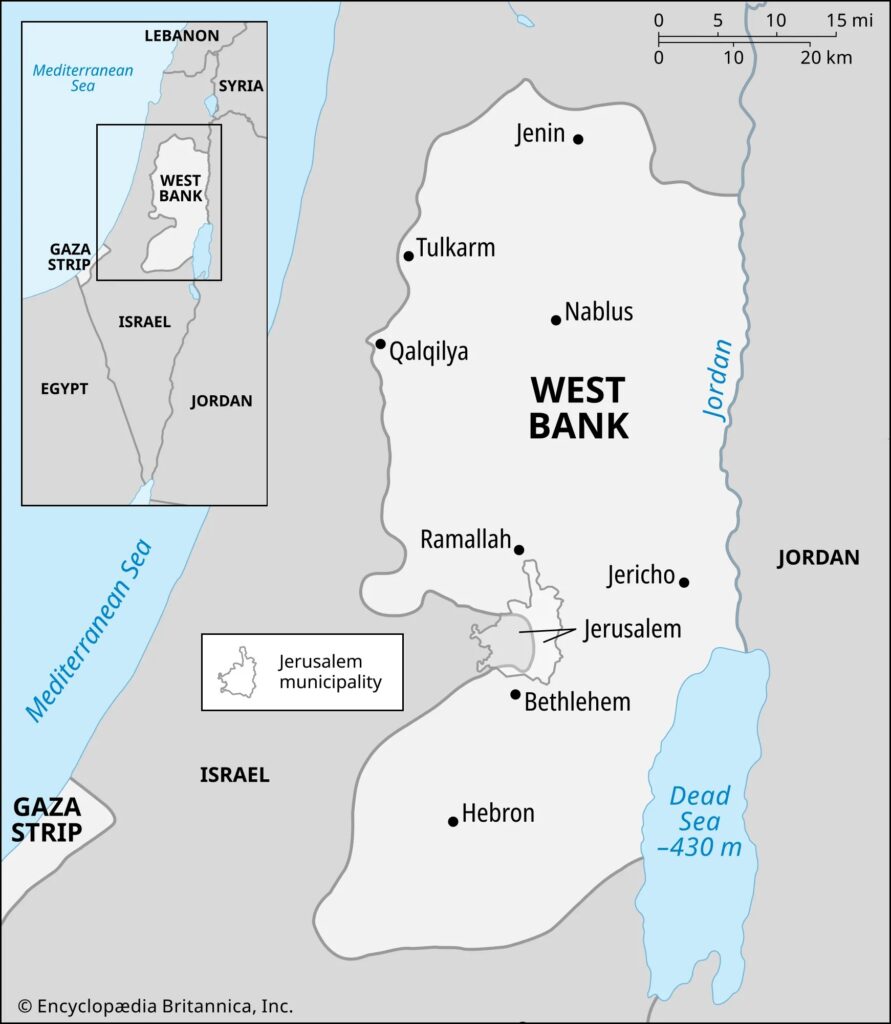
So now we get to the core of the accusation. Amnesty and the Human Rights Watch, as well as other organizations and figures, argue that this “apartheid” takes place in the West Bank, a piece of Israel-occupied land on the western bank of the Jordan River.
In the West Bank portion of the Palestinian Territories, Israeli settlers and non-citizen Palestinians live under two different legal systems. Settlers get Israeli civil law, and non-citizen Arabs get military law. Arguably, movement systems, separate roads, resource allocation and permit systems create a two-tier system, constituting apartheid, right?
Well, this system is not Israel-specific and it’s less straightforward than portrayed. Under international law, citizens and non-citizens in occupied territory have different statuses. The Palestinians in the West Bank are not Israeli citizens and they never were. They were under Jordanian control from 1948-1967 and came under Israeli administration after Jordan’s failed attack in the Six-Day War. It’s not discrimination against Arabs; an Israeli Arab would not be subject to military law.
Israel is not insistent on keeping the West Bank as its own under a palliating label of “occupation;” they have repeatedly made offers. In 2000 at Camp David, Israeli Prime Minister Ehud Barak offered an estimated 94-96% of the West Bank, and Olmert offered even more. The compromises that Palestinians will not agree to involve the maintenance of Israeli security, a necessary component. Last time Israel withdrew from Palestinian occupied territory (Gaza) without precautionary measures in 2005, Hamas nested and hurled more than 20,000 missiles at Israeli civilians. Apartheid South Africa never intended to give non-whites their own, self-dependent state. By Amnesty’s definition, any military occupation would be an “apartheid.”
The Oslo Accords
These organizations and figures also ignore that the West Bank has its own government defined by the Oslo Accords: The PA (Palestinian Authority). They govern areas A and B encompassing the major population centers, and they have their own parliament, police force, and set of ministries.
And of course, it is a fact that settlements complicate peace, but they do not constitute apartheid. It creates a territorial conflict in need of resolution. Israel would not engaging in apartheid under this policy; it would be like any other territorial dispute in the world: Western Sahara, Cyprus, Northern Ireland, Kashmir, and more. We do not call these apartheid.
“Same Territory, Different Rights”
The argument that Israel is apartheid because West Bank Palestinians live in the same land as Israeli settlers, though they have different rights by military law, restricted from voting in Israeli elections, is similarly misleading. Palestinians were, once again, never Israeli citizens (nor do they desire to be), whereas Israeli settlers are. Arab Palestinians are not excluded from voting because of their race; Arab Israeli citizens vote. They’re excluded because they are not citizens and never sought to be citizens; the Palestinian movement seeks its own state, not integration with Israel.
Additionally, the restrictions emerged only after concrete threats to Israel, and they have not been static. Security laws tightened drastically in Israel after the Second Intifada, where terrorists killed over a thousand Israelis, a majority of which were civilians murdered in suicide bombings on buses, streets, and in restaurants. Movement restrictions deployed by Israel limited access to education, jobs, and medical service. Curfews like those in “Operation Defense Shield” enforced strict, prolonged curfews on non-citizens. Military operations took place in areas A and B, governed by the PA, establishing numerous checkpoints.
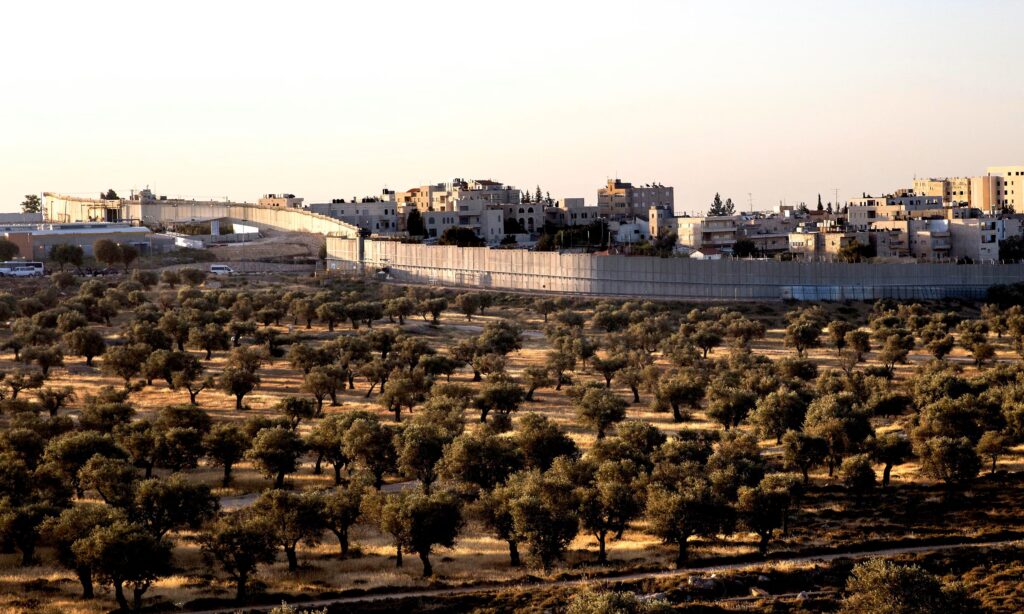
These restrictions loosened significantly in a period after 2008, with the number of checkpoints declining tremendously, and roadblocks being removed, specifically 140 in the year 2008. Israel lifted vehicular permits for travelling to and from Nablus City, and roads were reopened for Palestinian use. This easing strongly restimulated the West Bank’s economy. West Bank prosperity, again, decayed as security threats increased, namely after the terrorist attack on October 7th.
Israel’s fluctuating restrictions on the West Bank, proportional to security concerns, indicate that Israel imposes these laws not to suppress Arabs, but to redress threats. In times of peace, when Israeli civilians were not slaughtered en masse, Israel loosened up. When violence increased, so did restrictions.
Israel cannot risk non-citizens, governed by a different body, participating in the voting process of Israel and roaming in-and-out of Israeli land freely. Of course, equal opportunity in the West Bank for citizens and non-citizens would be an ideal, but only in an unreality of moral perfection where the compromise was not security, where Israelis were not at risk of militant terrorist attacks.
Fundamentals
Let’s look at the fundamental issue, the parameters that truly denote apartheid. Apartheid South Africa was built upon an explicit racial ideology, that whites were superior, and blacks were inferior, codified in law to maintain permanent racial dominance.
Israel does not have this ideology. Its Basic Laws, as discussed, guarantee all ethnicities equality, a demonstrable reality. And while its democratic system is far from perfect, the Basic Laws, as discussed, do protect civil rights, and a strong presence of Arabs in the government and society prove that Israel does not employ a racial hierarchy. Israel’s restrictions on the West Bank exist because of documented security concerns and a responsive security policy, not systematic racial oppression.
Finally, the apartheid argument undermines the label of “apartheid.” The South African Apartheid was universal, applying everywhere to all non-whites. It is a truth that Arab citizens in Israel have rights. So, Israel only practices apartheid in disputed territories in a limbo of ongoing conflict towards specifically non-citizens in a non-racial manner? That’s not apartheid.
Conclusion
The distinction between injustice and apartheid is not semantic, it’s substantive. Both Israelis and West Bank Palestinians hold legitimate grievances. Palestinians face hardship with checkpoints, permit systems, and movement restrictions. Most Israelis live in fear of rocket attacks and terrorism. Mislabeling this complex territorial dispute does not advance peace.
When Khaled Kabub sits on Israel’s Supreme Court, and when Mansour Abbas can negotiate billions in funding for Arab communities, and when Jewish people learn side-by-side with Arabs in Tel Aviv University, we witness a dynamic of equality and integration incompatible with the apartheid label. The South African Apartheid’s horror characterizes a permanence, a codification of segregation on non-white South Africans. Israel does not systemically segregate Arabs from Jews; it’s a complex issue of security, one that cannot be solved with the slandering title of “apartheid.”
Stay tuned into The Roundup for more political coverage.
