


On September 26, 2025, Donald Trump reignites a century-long debate over one of America’s most controversial policies: birthright citizenship. The Trump Administration revitalized a legal battle on an executive order with the Supreme Court, one that would deny hundreds of thousands of American-born children automatic citizenship whose parents lack permanent legal status.
Back on his inauguration, Donald Trump signed executive order 14160: “Protecting the Meaning and Value of American Citizenship,” ordering federal agencies to refuse citizenship to any newborns unless at least one parent is an American citizen or lawful, permanent resident. This policy would affect an estimated 150,000 newborns annually who would otherwise be citizens.
The Order and the Fourteenth Amendment
The order argues that the 14th Amendment’s clause stating “all persons born or naturalized in the United States, and subject to the jurisdiction thereof, are citizens of the United States and of the State wherein they reside,” was exclusively to impugn the decision in Dred Scott vs. Sandford. Thus, the 14th amendment was never intended to fulfill the purpose that it does today, granting citizenship to, for instance, undocumented immigrants; It was only to protect the people of African descent who were denied citizenship.
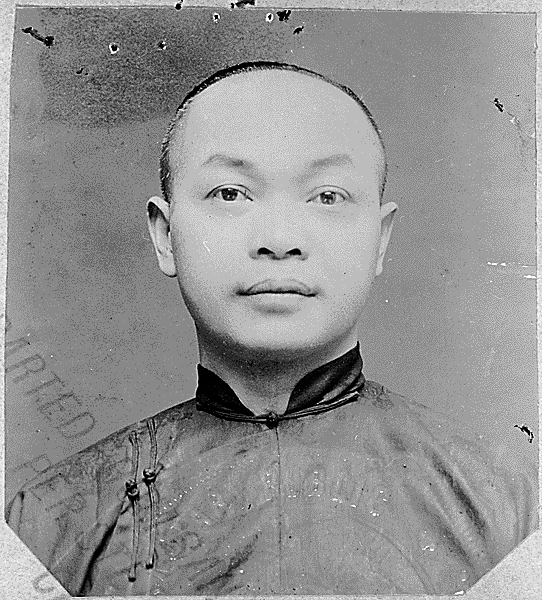
United States v. Wong Kim Ark was another case that reinforced the idea of birthright citizenship by the 14th amendment, and of which the administration also claims was misinterpreted. Wong Kim Ark was born in San Francisco to Chinese parents of residence in the U.S. Wong Kim Ark temporarily visited China to see his parents (who had left the U.S. after 20 years), but upon his return to the U.S., he was denied citizenship.
This denial sparked the question, sourced from Wong Kim Ark himself: “[is] a child born in the United States, of parents of Chinese descent, who, at the time of his birth, are subjects of the Emperor of China, but have a permanent domicile and residence in the United States, and are there carrying on business, and are not employed in any diplomatic or official capacity under the Emperor of China, […] at the time of his birth a citizen of the United States by virtue of the first clause of the Fourteenth Amendment of the Constitution?”
The Supreme Court decided in a 6-2 vote to establish the parameters of the concept jus soli, the citizenship of children born in the U.S. to non-citizens. Donald Trump disagrees with modern interpretations of the ruling in that the interpretations cover children of parents who illegally immigrated, and those born to parents of non-permanent residence.
Executive order 14160 culminates the administration’s grievances on constitutional birthright citizenship by creating two parameters by which a newborn will not be considered a citizen of the United States: (1) when the newborn’s mother was unlawfully in the United States and the person’s father was not a United States citizen or lawful permanent resident at the time of the person’s birth, or (2) when that newborn’s mother’s presence in the United States was lawful but temporary, and the newborn’s father was not a United States citizen or lawful permanent resident at the time of the person’s birth.
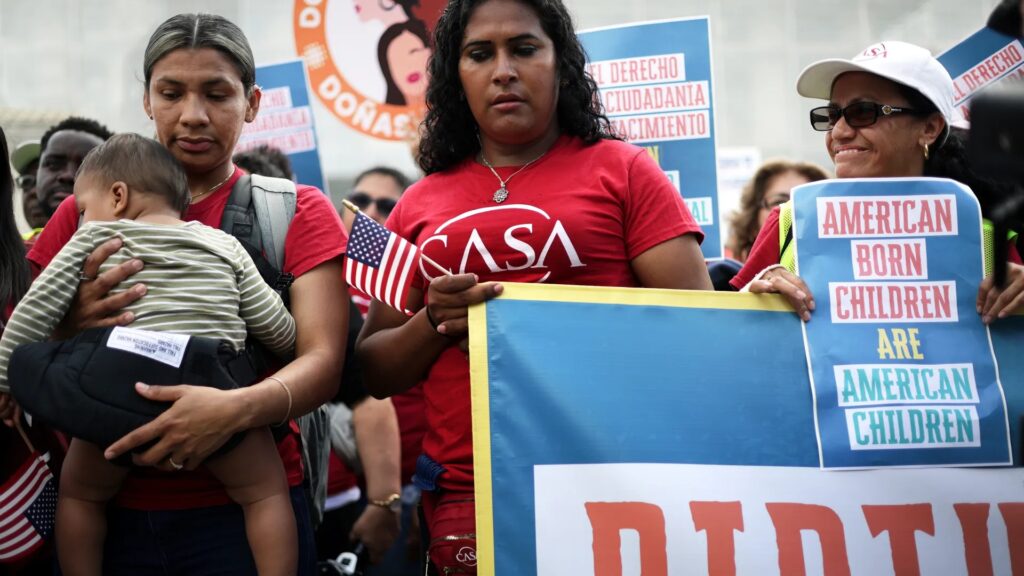
However, Trump’s interpretation conflicts heavily with how America has come to understand our birthright citizenship. Historically, undocumented immigrants’ children have been protected by the 14th amendment, the Center for Immigration Studies estimating that there were 225,000 to 250,000 births to undocumented immigrants in 2023 who were covered by birthright citizenship, roughly 7% of the United States population at the time. So what motivation does Trump have to clash so heavily against the standard?
The Rationale
Such liberal birthright citizenship provides a strong incentive for illegal immigration through what critics refer to as “chain migration.” When a child is born to undocumented immigrant parents in the U.S., they automatically become a U.S. citizen. After turning 21, the child can sponsor their parents for a green card, creating situations where the parents return to their home country for that 21 year period and move the the U.S. after 21 years.
Congress states that “millions of illegal immigrants have at least one child who is deemed a citizen under the erroneous interpretation of the 14th Amendment,” and that “estimates show that most children of unauthorized immigrants are citizens by birth, and the number has been increasing exponentially since 2003.” The act of visiting the U.S. to gain birthright citizenship for one’s child is called “birth tourism.”
Trump claims that birth tourism is an exploitation of the fourteenth amendment as we know it, and thus devalues the idea of American citizenship. By changing how we interpret the fourteenth amendment, Trump aims to greatly decrease illegal immigration, intending to fall into his “America-first” policy portrayal.
The Flaws
As it is, when a child is born in a hospital, the hospital gathers basic information about the baby to create a birth certificate where the parents can later request a Social Security Number, both certificates that prove citizenship. With Trump’s order, it would not be so easy.
The U.S. government would have to establish a bureaucratic system where they’d take time to obtain and process legal documents of the parents, adjudicating or affirming their citizenship, then issuing the certificate. This process would be incredibly inefficient and resource consuming. We would first have to establish this complex system, make it the norm, then put in the impediments of bureaucratic paperwork and interpretations, and legal barriers ultimately producing delays, errors, and an awkward period where the child’s citizenship is still being determined.
Also, there is the argument against the order’s morality. By eliminating birthright citizenship, you put people whose parents aren’t of legal status in a stateless “shadow,” leaving them without access to many public benefits and putting them at risk of deportation.
Policy Playout
Like many of his day-one orders, Trump’s executive order 14160 was almost immediately shot down by multiple courts. Key court actions include: Washington et al. v. Trump where the states of Washington, Arizona, Illinois, and Oregon all sued for a violation of the 14th amendment, federal judge John Coughenour casting a temporary restraining order and calling the order “blatantly unconstitutional,” and judge Deborah Boardman issuing a nationwide injunction blocking the order for conflicting with a century of Supreme Court precedent.
Likewise, for the order to come into effect, Trump would need a Supreme Court ruling or constitutional amendment in his favor. So now we arrive back at the present, where Trump has appealed to the Supreme Court who will decide the order’s constitutionality. In my opinion, it is unlikely for the court to rule in Trump’s favor due to birthright citizenship’s long history of judicial reinforcement, though we may see Trump’s “sidestepping of the constitution” prevail.
