


Recently, our very own viewpoint editor, Evans Senvalds, published an article detailing why he thought the increased deployment of the National Guard under the current administration was a good thing. And I don’t disagree with much of what he said in that article. I agree with his stance on the LA Riots and Operation Lone Star down at the border. In fact, I think he got most of that article right. But in my mind, what is happening to D.C. and what may soon happen to Chicago crosses lines of principle and constitutionality. So here I’ll put out my take on the issue like two weeks after he did, and try to convince you that, in spite of crime rates in major cities, the National Guard isn’t the solution.
Justifiable Deployment
To call out an unjust deployment of the National Guard, we need to know what a justifiable one looks like. In the eyes of the law, the president can normally only federalize the Guard (that is, take over command from the state governor) when one of three things is happening: when there is an ongoing rebellion/invasion against the United States, when the president is unable to enforce federal law without the Guard, or when a state is denying people their federally-guaranteed civil rights. The big exception is the District of Columbia, where the D.C. National Guard is directly subordinate to the president. The executive has a lot of power in the capital, and can mobilize the guard pretty much at will.
Examples of justifiable deployment under these pretexts are plentiful, but we’ll cover one example of each scenario here.
1916 Deployment to Mexican Border
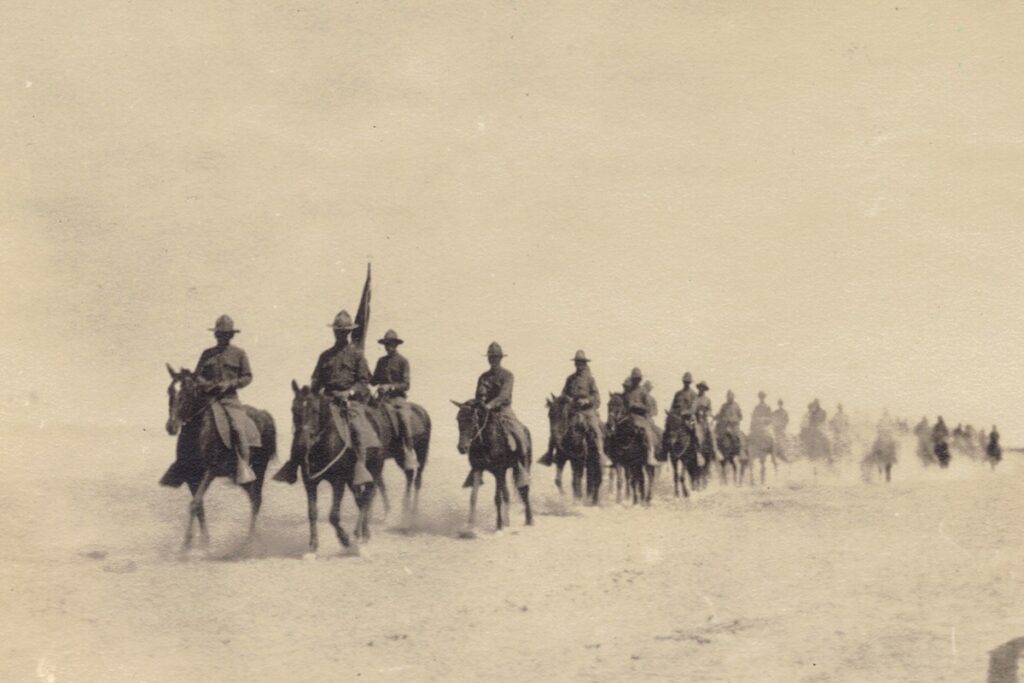
As mentioned in Evans’ article, one of the National Guard’s earliest deployments in its modern form was the 1916 mobilization. Pancho Villa, a Mexican revolutionary participating in that country’s civil war, decided he needed more more military equipment, so he made the ingenious decision to raid the border town of Columbus, NM, to get more. He killed 17 Americans, and burned the settlement down.
As the Army mounted a campaign inside Mexico to bring Villa to justice, the National Guard was lined up on the border, sealing it off to any other Mexican warlords dumb enough to attempt to copy Villa. It was a mission the National Guard was well-suited to. It was a low-intensity border war requiring a large number of men to cover such a large border. American territory was invaded, and the National Guard stepped in to prevent a repeat of the incursion.
1992 Rodney King Riots
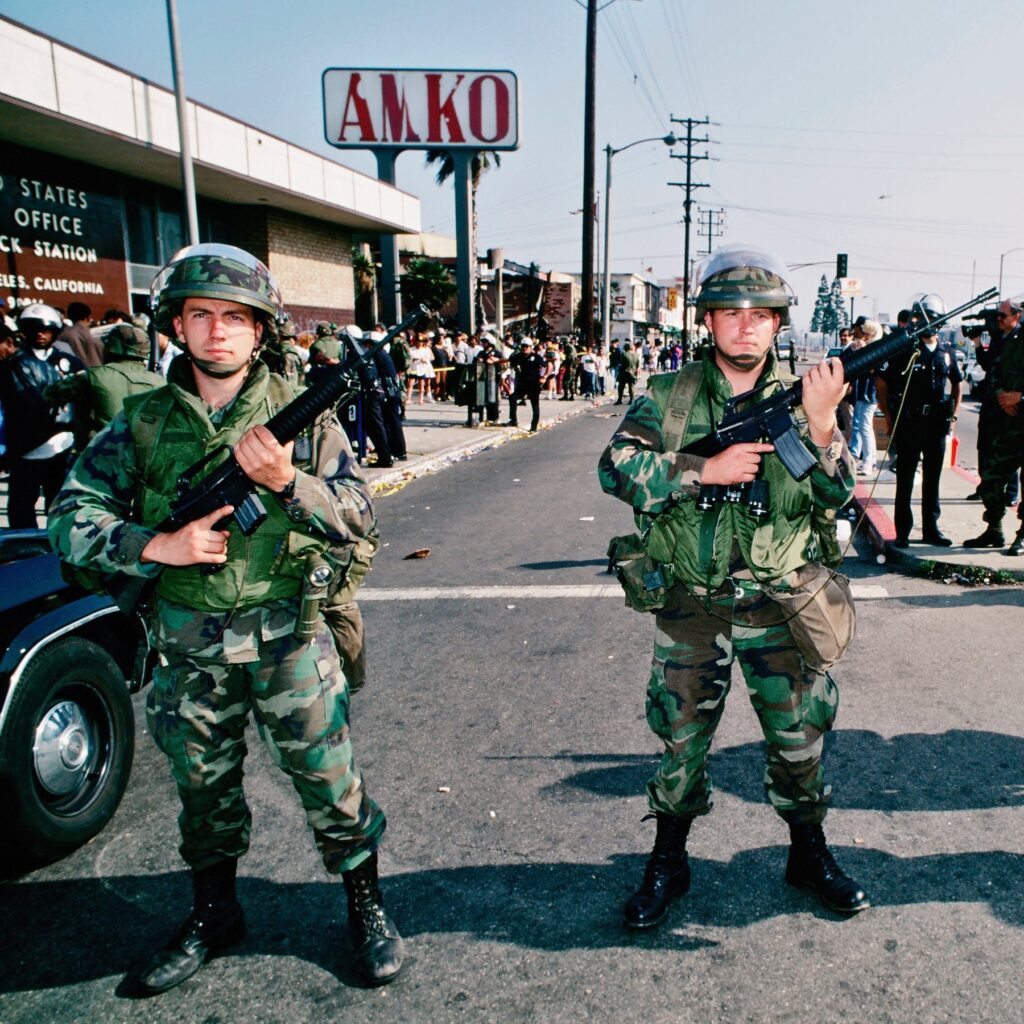
After a high-speed pursuit of unarmed drunk driver Rodney King, four LAPD officers beat the suspect half-to-death with batons. The incident was videotaped by a bystander, and caused outrage in Los Angeles’ black community, which felt victimized by the “judge, jury, and executioner” mentality the LAPD brought to the issue. After the four officers were acquitted of using excessive force, the city exploded.
Spreading from south Los Angeles into other parts of the city, violent riots gripped America’s second largest city. LAPD was completely overwhelmed in many areas, and even as officers sped back to the city from a training event in Ventura, the riots escalated into complete anarchy. On the evening of the first day, LA Mayor Tom Bradley had Governor Pete Wilson send in the National Guard. In addition, the situation was deemed severe enough to deploy thousands of Federal troops to the city. By the fifth day, after extensive efforts by LAPD, National Guard, Army, and Marines units, order was restored. By the end of the riots, 63 people were dead and a billion dollars in damage had been inflicted. Federal law (or any law for that matter) couldn’t be enforced, so the Guard enforced it.
1957 Little Rock Deployment
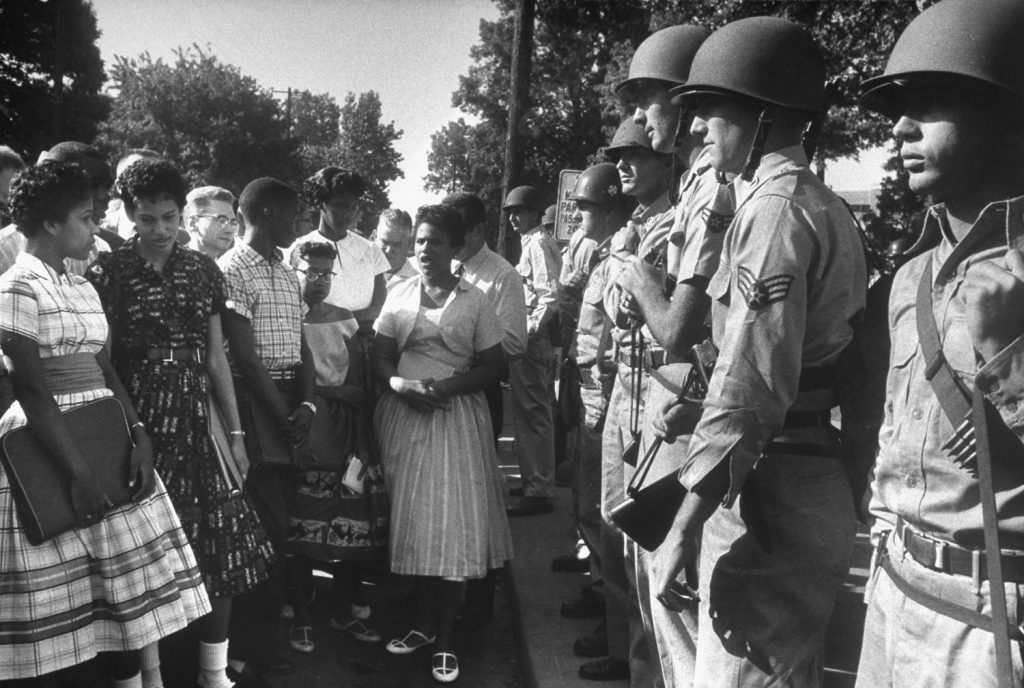
The famous “Little Rock Nine” case has gone down in civil rights history as a historic victory for black rights. After the Supreme Court ruled in 1954 that racial segregation in public schools was unconstitutional, it took three years before the decision was enforced in the South.
In 1957, Arkansas governor Orval Faubus refused to adhere to the decision and blocked nine black students slated to attend Little Rock Central High School from entering with state National Guardsmen. President Eisenhower then intervened, federalizing the guardsmen and sending the federal 101st Airborne Division. The Arkansas National Guard that had previously blocked the Little Rock Nine was ordered by the president to instead escort them into the school, under the oversight of the federal paratroopers. Though Faubus successfully stalled genuine integration for several more years, the Little Rock Nine case officially put the Federal Government on the side of integrationism, a policy change that the South wouldn’t recover from. A state had denied its people their civil rights and defied the Supreme Court. The National Guard then forced it into line.
Not-so-Justifiable Deployment
Here’s where Senvalds and I diverge in opinion. The Federal Government doesn’t just get to forcibly fix alleged problems using the National Guard. That’s not even close to how things work. I’ll cover two deployments of the Guard here, one of them ongoing and one still hypothetical.
Washington D.C. Deployment
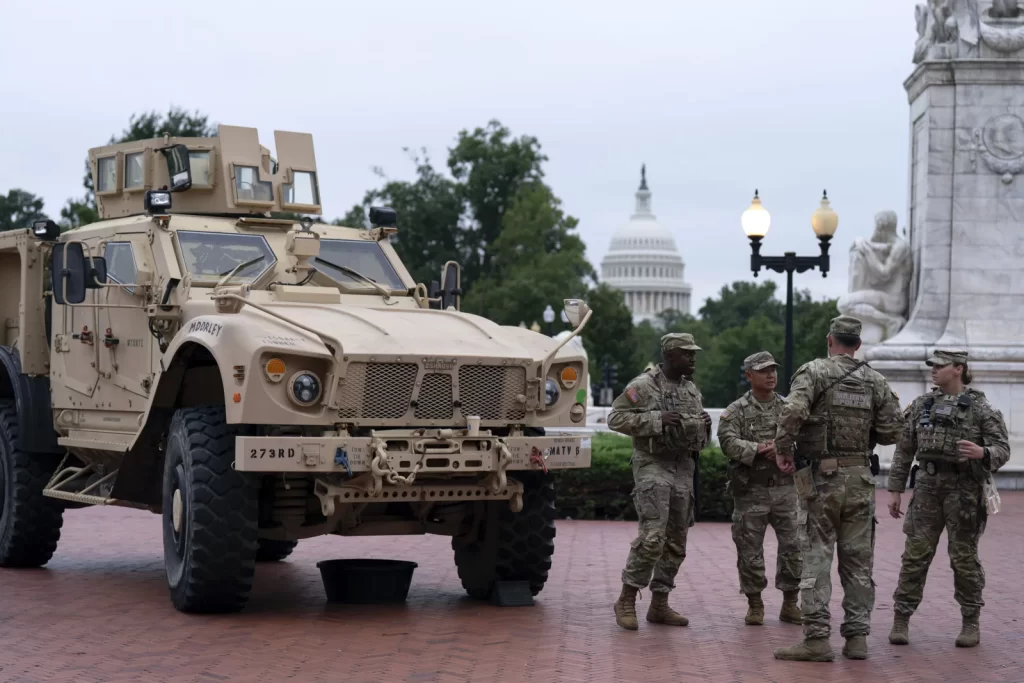
On August 11, President Trump announced the deployment of the D.C. National Guard to the streets of the nation’s capital, sparking outrage and anxiety across the country. The rationale was D.C.’s frankly egregious crime rate and understaffed police force. The parts of the city politicians don’t go to were chronically short on Metro Police officers, and violent crimes like shootings and carjackings were oftentimes an everyday occurrence.
President Trump is legally allowed to federalize both the D.C. Police and the D.C. National Guard. Make no mistake about it. The District of Columbia is a federal city. But my problem is that it was unjustifiable at a principle-level. Evans has argued that letting people just live in crime-infested squalor is immoral, and that the National Guard is the solution. But here’s the thing: he forgot why local government exists. The D.C. Home Rule Act of 1973 gave the capital many of the same governmental structures as other cities, such as a mayoralty and a city council. It gave the residents of D.C. the power to pick their own city government.
And you know what? Those residents have the right to ruin their own city. If they insist on voting in incompetent, corrupt, anti-police politicians to important positions, that’s their prerogative. D.C.’s city government is run by a collection of awful human beings. That doesn’t give the president the moral authority to take the reigns and run the place by himself. If people make dumb voting decisions, then so be it. That has been a well-known drawback of democracy for centuries, a drawback every Westerner accepts as a trade-off by now. Winston Churchill (possibly) said it best when he (allegedly) stated,
“The best argument against democracy is a five-minute conversation with the average voter.”
Potential Chicago Deployment
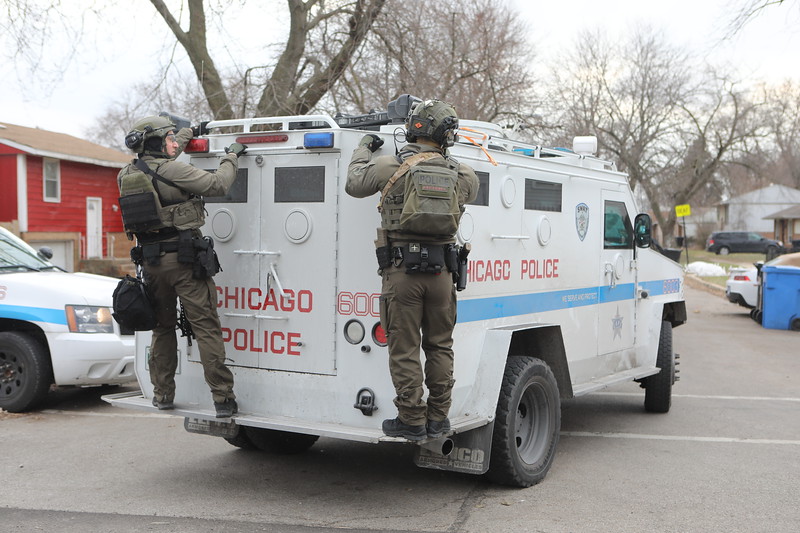
As for the potential deployment of the Guard to Chicago, that is something entirely different. That is an outright crushing of a core American principle of government: decentralization. It’s not another of Zach’s exaggerations when I say a federal takeover of Chicago is about as illegal as an action could be. Trump has said that Federal Law cannot be enforced in the city (with regard to ICE raids, etc.). But the reality is that “Chiraq” isn’t an actual warzone. It isn’t in rebellion, it isn’t denying residents their civil rights, and it isn’t in such a state that federal law cannot be enforced. Yes, CPD sometimes looks like the Marine Corps. But the Gangster Disciples also don’t have RPGs (for now).
ICE has every right to comb the city for undocumented immigrants, but as long as ICE agents can actually accomplish the tasks they’ve been given, Chicago isn’t a candidate for Guard deployment. If Governor J.B. Pritzker wants help from the Feds in controlling Chicago, then that’s something different. But so long as Illinois doesn’t ask for the National Guard, the troops cannot actually treat the South Side like Fallujah.
The Takeaway
If you didn’t feel like reading the article, I want your takeaways to be twofold. Firstly, while Trump’s D.C. deployment is legal, it ignores the basic principles of local governance and decentralized democracy. People have the right to ruin their own city with their voting decisions. Secondly, the potential Chicago deployment is outright illegal, blatantly violating the law in addition to disregarding all the aforementioned principles of decentralized government.
I know there is a tendency on the Right to put undying faith in The Donald. But I urge conservatives not to embrace that line of thinking. Not only does the president not deserve endless trust, but it sets a precedent for future Democrat presidents that we may not like so much.
Tune into The Roundup for more viewpoint articles!
