

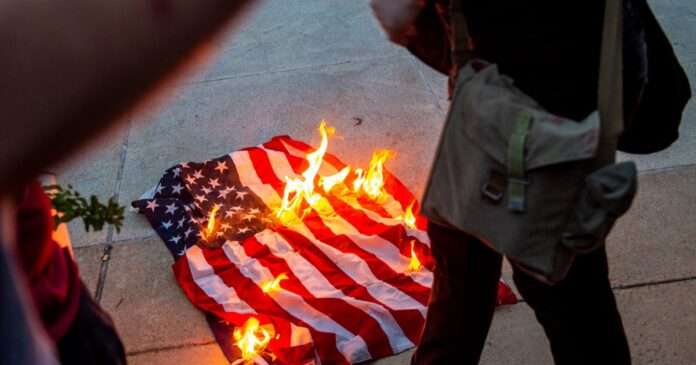
A 20 year combat veteran stands triumphantly on the velvet-stoned streets of Lafayette Square, Washington DC, bearing the United States Flag, lighter fluid, and a lighter. He throws the flag against the ground, kneels down, and drenches the cloth in the lighter fluid. The lighter ignites and meets the flag, engulfing it in flames and leaving it charred and tattered beyond recognition.
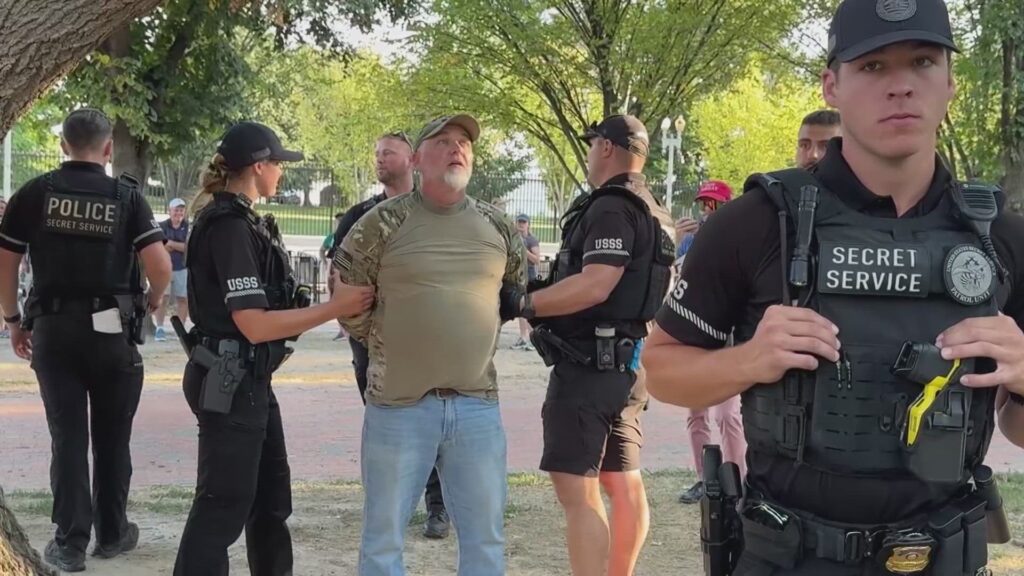
Police quickly surround him as he points to the White House, screaming that “[he’s] burning [the] flag as a protest to that illegal fascist president that sits in [the White House.” He does this to protest Trump’s executive order he had signed a day prior.
On August 25th, President Donald Trump signed an executive order to “restore respect, pride, and sanctity” to the American Flag, and “prosecute those who desecrate this symbol of our freedom, identity, and strength to the fullest extent permissible.”
The order clarifies flag desecration to be omitted from the scope of the 1st Amendment, and to vigorously prosecute those who commit this crime, including the reservation to “deny, prohibit, terminate, or revoke visas, residence permits, or naturalization proceedings, and other immigration benefits, or seek removal from the United States,” targeting foreign nationals.
This executive order follows flocks of protestors, “exercising their 1st Amendment Rights” by burning, stomping on, and severely dishonoring the United States flag. The White House specifically cites the ICE protests in Los Angeles, California, of which took place in June 2025.
Trump’s signature immediately sparked questions of legality, especially in overriding the 1989 Supreme Court Case Texas vs Johnson which established flag burning as a legal form of protest. In this article, I will discuss the legal implications of this controversial policy.
First Amendment Implications on Flag Desecration
The First Amendment of the American Constitution strictly protects the people’s rights for political criticism, no matter the severity. Especially considering that, in 1989, Texas vs Johnson explicitly clarified the coverage of flag desecration by the First Amendment, Justice William Brennan citing that “the government may not prohibit the expression of an idea simply because society finds the idea itself offensive or disagreeable.” This judgement was further backed by the takedown of the Flag Protection Act of 1989 in the United States vs Eichmann case.
While these cases clearly enable flag desecration, First Amendment protection for such acts can be fragile and limited. For example, arson and property destruction laws on the state and federal levels can usually apply to this crime. Similarly, if deemed an incitement to imminent lawless action or national threats, flag desecration would also lose First Amendment coverage, an ambiguous line to cross and a method by which Trump can “sidestep” the constitution. It is important to note however that these laws punish conduct, not expression of speech and may see difficulties in actual implementation.
The idea of “imminence of lawless action” originally stems from the mid-1900s, where the government could prosecute speakers during wartime who made anti-American remarks. Protestors and activists against drafting during WW1 and US involvement in war could even be prosecuted. However, this changed in 1969 when the Supreme Court ruled in favor of a Ku Klux Klan member in Brandenburg vs Ohio. Clarence Brandenburg, a leader in the KKK, was convicted under an Ohio law that criminalized advocating for terrorism in political reform, even though it may be indirect; Clarence had burnt a cross on live television, spewing racist and antisemitic language.
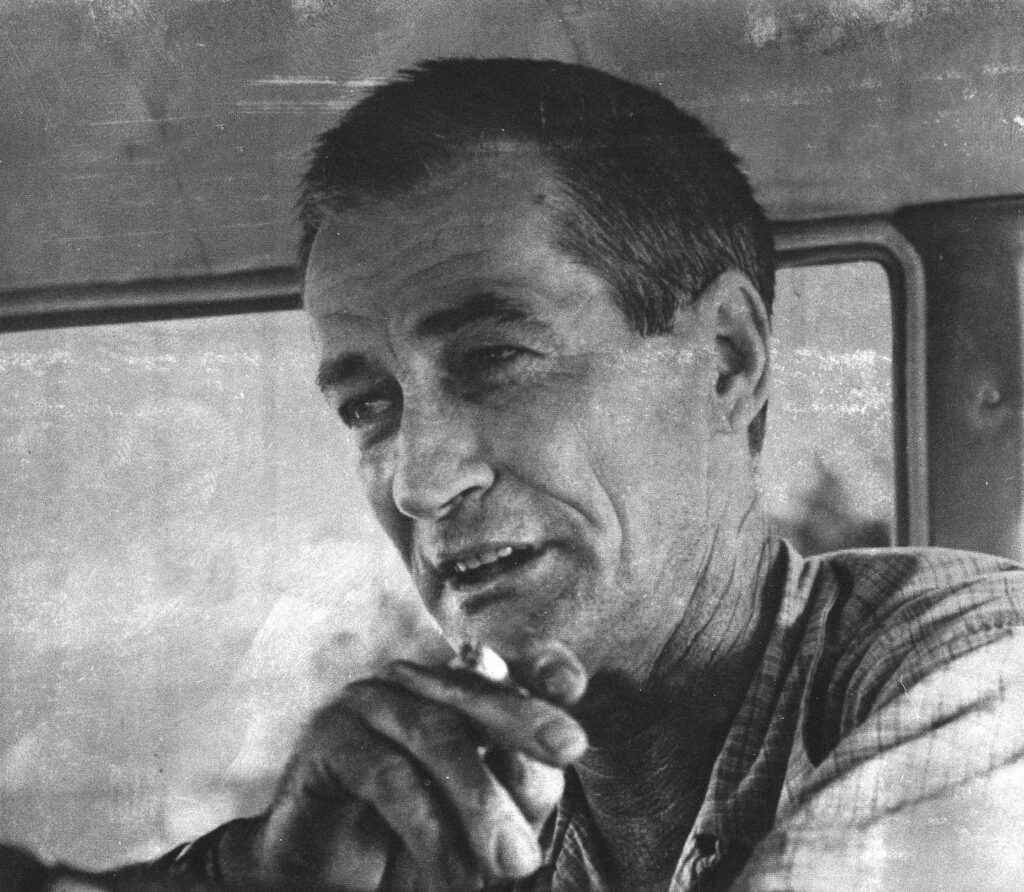
The Supreme Court later overturned the conviction, distinguishing between advocacy and incitement, essentially removing the idea of imminence. So by this order, Trump’s reasoning or “side-stepping” should not hold significance in the court. I’d also like to note that Trump ironically used this exact argument in defense of the January 6th case, saying that he did not “incite” violence on the capitol.
Final Remarks
Bob Corn-Revere, chief counsel of the Foundation for Individual Rights and Expression, comments that “While people can be prosecuted for burning anything in a place they aren’t allowed to set fires, the government can’t prosecute protected expressive activity even if many Americans, including the president, find it ‘uniquely offensive and provocative.'”
Ultimately, Trump cannot override a Supreme Court ruling as in Texas vs Johnson. As the president, he signed an oath to the constitution and thus must uphold any provisions by the court. As much as I hate watching radicals lighting fire to our flag, we must stand by our constitution or we are more of a threat to the United States than our flag-burning neighbors.