

Disneyland Railroad
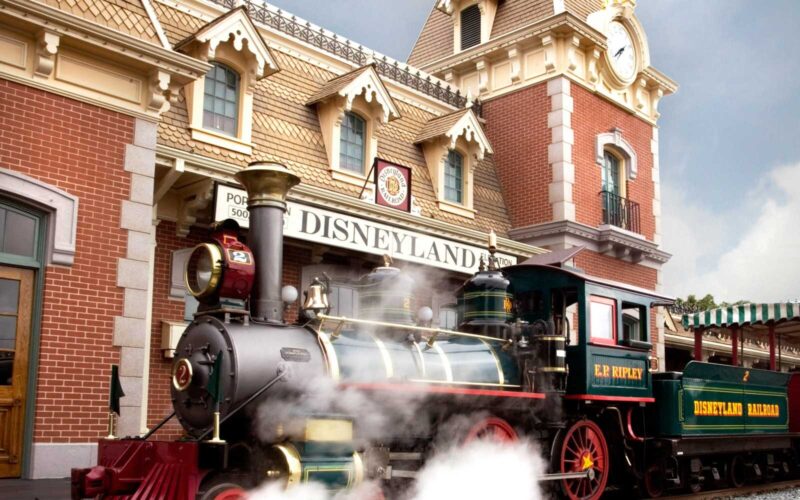
Image By Scott Brinegar
Disneyland’s Railroad, inspired by Walt Disney’s love of miniature railroads, was one of Disneyland’s key attractions on opening day in 1955. It circles the park, giving guests a nostalgic ride on a “real” steam-powered locomotive. It is a Disney classic that many love, forty-five minutes of Industrial Age America, chugging along steeped in seemingly old technology, full of both history and whimsy. Yet, there is a surprising twist behind the magic. These classic steam trains harbor an innovative secret: they run on an unusual fuel source that most people would not expect from a theme park attraction.
Image By All Ears
Originally, the trains at Disneyland operated on standard petroleum diesel, just like most engines of that era. However, as environmental concerns grew over the years, Disneyland embraced a greener solution. In a typical Disney whimsical, yet purposeful, move, the park shifted to using biodiesel. And this is where Disney’s magic makes a surprising appearance: a significant portion of this biodiesel is produced from recycled cooking oil—the very oil used to fry the French fries and chicken nuggets offered at the park’s restaurants. Do not, however, be misled by the catchy phrase “French-fry oil.” The magic is not as simple as dumping raw used oil into a train engine. The process is a high-tech transformation. The used cooking oil is collected and then undergoes a chemical conversion known as transesterification. This process converts the heavy, raw oil into fatty acid methyl esters (FAME), which is the actual biodiesel that meets strict engine performance standards. In other words, what powers the train is not unprocessed waste but a carefully engineered fuel blend that not only keeps the trains running smoothly but also helps reduce environmental waste. Even more astonishing is the environmental impact of this initiative. By repurposing waste cooking oil, Disneyland saves roughly 200,000 gallons of petroleum diesel each year—a statistic that underscores the park’s commitment to sustainability despite the added cost of producing biodiesel from recycled oils. The fanciful notion of effectively using “French-fry oil” is another amazing Disney achievement—a blend of magic and modern science—where waste is transformed into a source of power.
Smellitizers
Extending beyond the visual and the auditory to the olfactory in ways that most visitors overlook, Disney’s magic pervades the entire park. Just as the Disneyland Railroad surprises visitors by running on an unconventional fuel blend, a second layer of Disney innovation lies hidden in the scents that waft throughout the park. These are not just the byproducts of restaurants and vendors on Main Street and walkways; they are purposefully designed and delivered via a technology known as the Smellitzer.
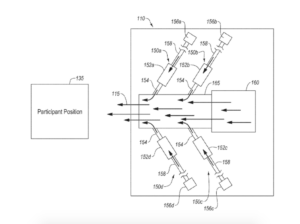
Image From WDW News Today
Invented in 1981 by Disney Imagineer Bob McCarthy and patented in 1986, the Smellitzer is a clever scent-emitting system that projects artificially generated aromas up to twenty feet away using controlled jets of air. Unlike the natural odors that may drift from an open bakery or restaurant, these smells are specifically dispensed from hidden, circular grates placed throughout the park. On Main Street, USA, for instance, the specifically designed scent of vanilla from the Candy Palace mingles with the aroma of freshly baked waffle cones pumped out by the Gibson Girl ice cream parlor. The Market House, too, cleverly offers a whiff of fresh coffee that tantalizes the senses—hoping that even if guests are not consciously seeking a snack, their noses may persuade them otherwise.
By strategically deploying Smellitzer technology throughout the park, Disney not only provides a multisensory experience for guests but also increases its food sales. The carefully engineered aromas—such as the inviting scent of freshly baked waffle cones or the buttery aroma of popcorn—subtly stimulate guests’ appetites and evoke nostalgic memories that encourage spontaneous purchases. This deliberate olfactory enticement transforms every inhalation into a persuasive trigger, increasing impulse buying and ultimately boosting sales.
Fun Fact: The Walt Disney Company makes about $50,000 every day on popcorn sales which covers the cost of Happily Ever After*!
Furthermore, the influence of the Smellitzer is not confined to dining areas. It plays a critical role in a variety of attractions. At Disney California Adventure’s Monsters Inc., Mike and Sully to the Rescue, guests are immersed in an environment infused with the “savory notes” of miso, wasabi, and soy sauce—a reference to the fun, offbeat theme of the ride. The Haunted Mansion Holiday treats visitors to the inviting aromas of gingerbread in its ballroom, while Pirates of the Caribbean fills the air with the scents of rum and gunpowder, giving it a swashbuckling pirate environment. Even rides like the Incredicoaster end with a burst of fresh-baked chocolate chip cookie, cleverly ensuring that riders remember the experience long after the ride is over. What is particularly fascinating is that while many of these scents are artificially generated, some are very real. Popcorn carts and churro stands, for example, release genuine aromas through built-in vents and fans, proving that Disney’s scent strategy is sometimes as much about authenticity as it is about illusion.
*Happily Ever After” is the nightly firework show at the Magic Kingdom in Disney World and the most expensive performance.
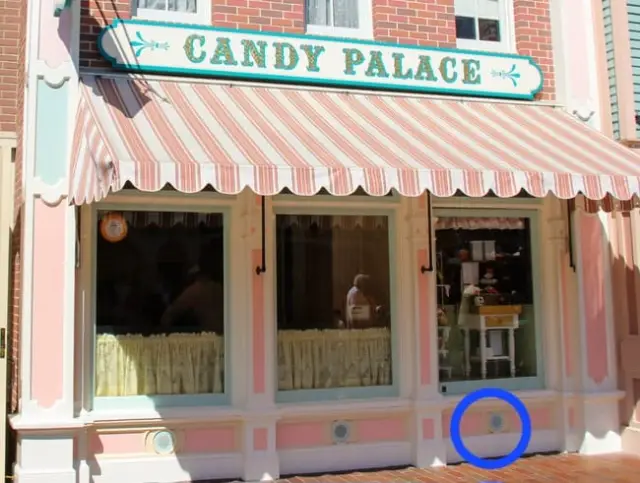
The Blue circle highlights an active smellitzer sending sweet aromas out into the park.
Image By Our Magical Disney Moments
Forced Perspective
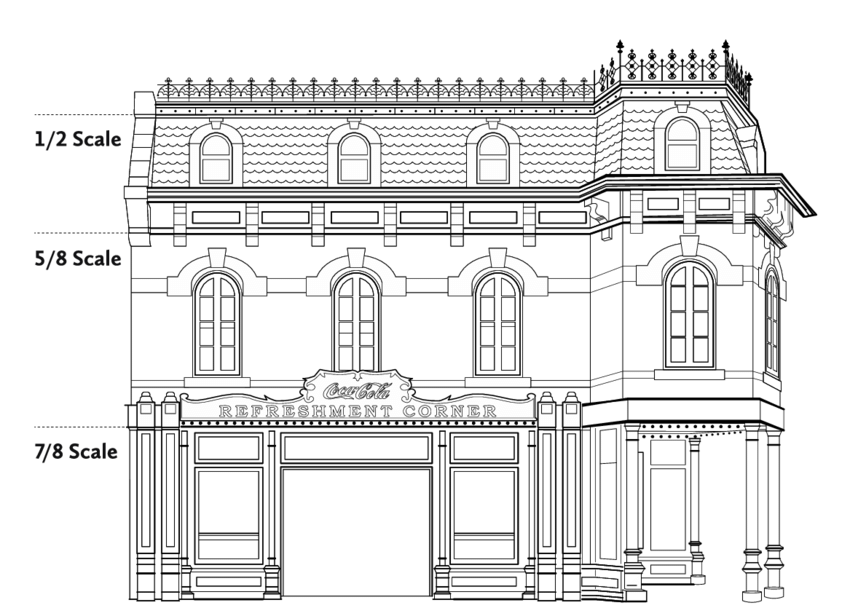
Disney’s commitment to creating immersive, magical experiences is not limited to using unconventional fuels or artificially generated aromas—it extends to the very architecture of the park. In Disneyland, forced perspective is a masterful illusion that transforms small, unremarkable structures into grand, fairy-tale landmarks, as it seamlessly complements the park’s other sensory tricks.

Image by Couponing to Disney
Image by WDW Magic
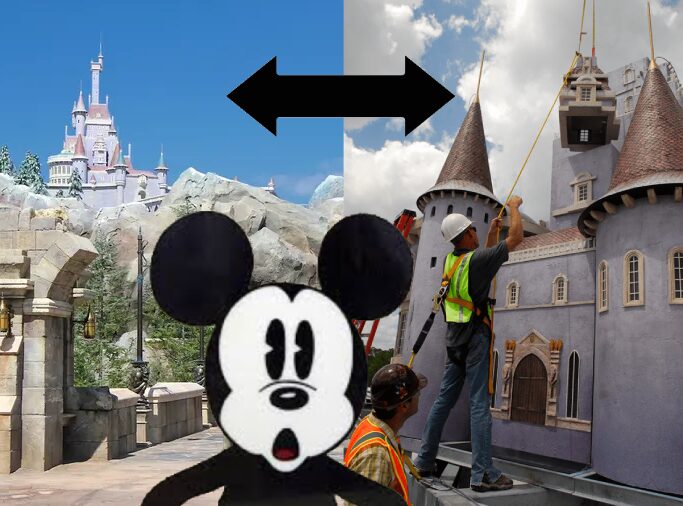
Just as Smellitizers are designed to influence behavior, forced perspective is used throughout Disneyland to trick the eye and expand perceived space. On Main Street, USA, for example, buildings are constructed with their upper portions scaled down. Although the actual structures are relatively small, the sloping walls and diminishing details create the illusion of a vast, busy street that stretches far beyond its physical boundaries. This deliberate manipulation of scale makes iconic landmarks—like Sleeping Beauty Castle—appear more majestic than they really are, deepening the sense of wonder and creating a world where fantasy becomes real. This technique not only enhances the park’s storytelling but also has significant economic benefits. By employing forced perspective, Disneyland is able to construct attractions that look larger and more elaborate without the high costs associated with building massive structures. Smaller, more efficient designs achieve the same “wow” factor, taking up less valuable space and reducing construction costs while producing an effective immersive appearance.
Whether the trick be environmental innovation, sensory manipulation, or architectural illusion, Disney’s Imagineering continues to use creativity and ingenuity to create what many consider to be the world’s best amusement parks – proving that the magic of Disney is not just in what guests see but in the carefully designed details they often do not.
 If you are interested in articles like this be sure to check out more on The Roundup. For a tech-geek analysis of the wonders of “Flight of Passage,” Disney’s amazing Pandora banshee experience, see my blog at Disney Parks and More Blog.