


For decades, Israel and Iran have been locked in what is often referred to as a “shadow war,” a long-running conflict fought mostly through indirect means rather than open or direct confrontation. The rivalry dates back to the aftermath of Iran’s 1979 Islamic Revolution, when the Pahlavi dynasty was overthrown and everything started going downhill for Iran. The current regime adopted a strongly anti-Israel stance and began positioning itself opposing Western influence, cutting any and all ties it had. Over time, that political hostility evolved into a larger problem that stretched across the middle east. Until now, much of the confrontation had taken place through proxy groups rather than direct military conflicts. Iran has spent many years supporting and arming organizations such as Hezbollah in Lebanon and various others operating in Syria and Iraq. These groups allowed the regime to expand its influence while avoiding direct war.
The Nuclear Question
At the same time, tensions increased over Iran’s nuclear program. Western governments and Israel repeatedly warned that Iran’s expanding uranium enrichment and missile development could eventually lead to nuclear weapon capabilities. Negotiations attempting to limit the program dragged on for years but repeatedly stalled over disagreements over varying reasons. As diplomacy became less likely, intelligence operations and covert missions became very common. Cyber attacks, sabotage, and targeted attacks were carried out on both sides in an attempt to weaken the other without triggering a full-scale war. Over time, however, the line between indirect and direct conflict blurred; by 2020 the shadow war was slowly turning into a full war.
Operation Epic Fury & Roaring Lion
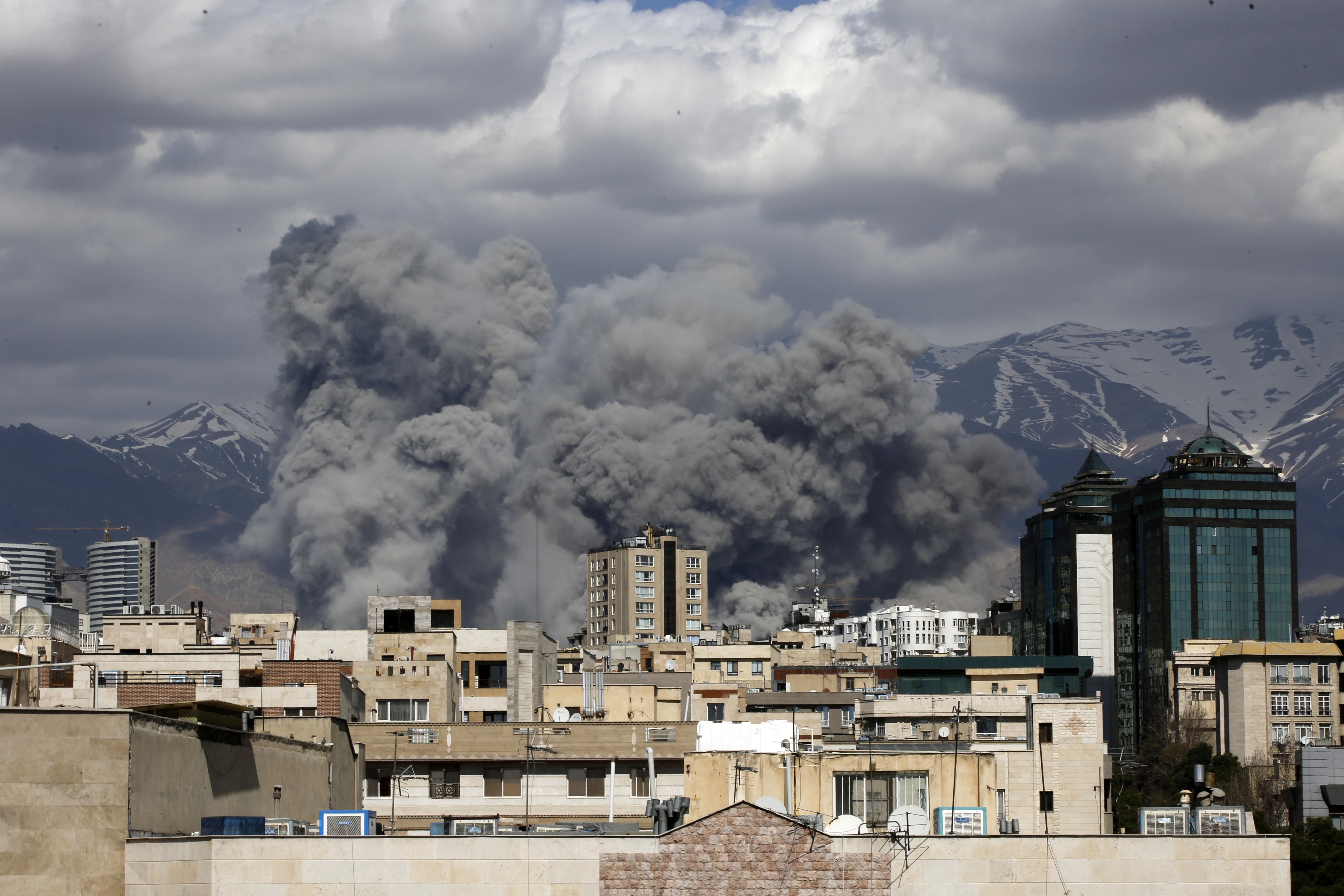
On February 28, 2026, the governments of Israel and the United States launched coordinated air and missile strikes against the Islamic Republic of Iran, marking a significant escalation in long-standing tensions over Iran’s nuclear program and regional influence. The operation, described by Israeli officials as Operation Roaring Lion and by U.S. authorities as Operation Epic Fury, targeted Iranian military infrastructure, missile sites, and air defenses across multiple cities including Tehran, Isfahan, Qom, Karaj, and Kermanshah. Within hours of the attack, Iranian state media and international outlets reported that the Islamic Republic of Iran’s Supreme Leader, Ayatollah Ali Khamenei, had been killed in the strikes, along with other high-ranking political and military officials. These actions represent one of the most ambitious and effective joint military campaigns against Iran in decades, resulting in a major destabilization of the regime and potential for revolution.

Retaliation
In the immediate aftermath, Iran launched widespread retaliatory strikes using missiles and drones against Israeli territory and U.S. military bases in several Gulf states, including Qatar, the United Arab Emirates, Bahrain, Kuwait, and Jordan. Furthermore, Iranian forces also declared the closure of the strait of Hormuz which ships over 20% of the worlds oil supply also declaring that any ship attempting to cross will be met with military force. This action was most likely an effort by the regime to pressure other countries to push the United States and Israel to back off. The strikes and Iran’s subsequent response quickly drew international attention and condemnation. The United Nations Security Council convened emergency sessions, with global leaders criticizing the escalation in the middle east and declaring it as unprovoked. However, that cannot be further from the truth. The intervention was intended to disrupt Iran’s nuclear and ballistic missile capabilities; programs Israel and the U.S. have considered dangerous left unchecked and a threat for years. Diplomatic efforts in 2025 and early 2026 sought limits on enrichment and missiles, but they repeatedly broke down amid disagreement. Israel maintained that a military response was necessary to curtail what it saw as an expanding threat.

Ripple Effects
Although the immediate consequences are mainly witnessed in the Middle East, the ripple effects are beginning to be seen in the United States. One of the most immediate impacts is appearing at the gas pump, with major cities like Los Angeles approaching nearly eight dollars per gallon. As tensions in the region increase, global oil markets will also continue to react with uncertainty. For many Americans, the conflict is becoming most visible not on television screens looking at the news but in the rising cost of fuel, groceries, and other necessities. Higher energy costs are also starting to spread. When fuel becomes more expensive that also translates to companies spending more on transport leading to rising production costs. If the situation continues to escalate or remains unstable for an extended period, these price increases could contribute to inflationary pressure across the U.S. economy. Financial Markets have also begun reacting to the uncertainty surrounding the conflict with investors reporting unstable or bearish short-term trends. Companies that heavily rely on global trade are also facing pressure as shipping routes and costs become more uncertain. Lastly, U.S. political discussions are also beginning to be influenced by the conflict. Lawmakers and policy makers are questioning how involved the United States should really be.

Global Reaction
The strikes and Iran’s retaliation quickly drew global attention. Within hours, the United Nations Security Council met for an emergency session as world leaders debated the legality and consequences of the attack. Several European governments including France and Germany criticized the operation, citing that it violated international law and warning that it risked pushing the middle east into a larger regional conflict. Leaders from these countries urged for de-escalation and renewed diplomatic efforts to prevent further military exchanges.
However, the appeals to international law carry little to no practical weight in situations where governments believe they are facing direct or growing security threats. Also, throughout modern history, states have only enforced international law when it’s convenient for one of the great powers. If we were to wait for international consensus, the element of surprise could be lost and the opposition could strengthen their capabilities, making future conflicts even more dangerous. At the same time, reactions across the Middle East were more mixed with some Gulf states expressing concern as Iranian retaliation had already targeted U.S. bases across the region. Many governments in the Gulf maintain close security relationships with the United States while also existing within the immediate geographical reach of Iran’s military capabilities. As a result, their responses have usually been on the side of caution.
Why It Was Not Unprovoked
Many critics and world leaders describe the strikes as unprovoked aggression, but that argument overlooks the nature of the Iranian regime itself. The regime’s leadership has funded proxy militias which remain active in Syria, Lebanon, Iraq, and Yemen; suppressed internal dissent; and consistently advanced uranium enrichment capabilities beyond previously negotiated thresholds which if left alone could reshape the balance of power internationally. And all this while isolating its own population from the global economy. On top of that, many Iranians have protested against the government repeatedly in recent years. From that perspective, the decision to act was more of a belief that inaction would lead to a more unstable situation over time if left alone. For Israel and the United States inaction, was not an option.

My Take
If you ask me, this operation was not reckless or unprompted– it was a pure display of genius, and about time. For months, the United States publicly pursued negotiations and diplomatic channels remained open. Deadlines were extended and communication insinuated Trump preferred diplomacy. That prolonged effort likely reinforced the perception in Tehran that Washington was reluctant to escalate. From the outside, it appeared that negotiations would continue indefinitely. But then surprise! The strike came. Timing matters in military operations, and the attacks reportedly occurred early on a Saturday morning, during the Jewish Sabbath, a time when military action from Israel was perceived as much less likely. I believe these were all calculated factors that allowed the operation to achieve surprise. And from a tactical standpoint, surprise is one of the most powerful advantages in historical and modern warfare.
But the significance of this moment goes beyond the impressive strategy. Iran itself is not a minor country in the international system. For thousands of years Iran stood as one of the greatest civilizations, contributing massively to culture, science, art, and trade. Even today, Iran remains a nation rich in history, natural beauty, and cultural depth. Yet, over 47 years the regime has isolated the country, ruining its beauty and limiting many of the freedoms enjoyed almost everywhere else in the world. Citizens have faced unimaginable hardships, restrictions on speech, and strict social laws. Protests are frequent with nothing to show for them, leading to extreme hate, frustration, and malice toward the regime. Millions of Iranians have left the country over the past several decades, building new lives abroad while continuing to express hope for a future in which their homeland can reconnect with the global community.

A Free Iran
Over past decades, Iranian citizens have lived under this regime oppressing people with their morality police, repressing political speech, and limiting civic freedoms. Economic sanctions and internal corruption have contributed to mass unemployment and massive inflation with the U.S. Dollar being equivalent to 1.3 million Iranian Rial. These conditions have not only created a major dissatisfaction with the political system but ruined lives of many. The removal of the Supreme Leader destabilizes the central pillar of that system and paves the way for internal political reform. Without that central figure, the balance of power is now unpredictable and could shift in many ways. For many Iranians, the main question now is if these events will lead to a positive replacement of the regime. Many supporters argue that a return to a constitutional monarchy is the path forward and would reconnect Iran with the global community after decades of isolation. One name that rises to the top is Reza Pahlavi the former crown prince of Iran and son of the last Shah, Mohammad Pahlavi. While no outcome is guaranteed, one thing is certain; the regime that governed Iran for decades will no longer be intact in its previous form. For millions of Iranians citizens who have endured fear, dehumanization, and repression, this moment could represent a bright and hopeful light for the future.
The Risk Ahead
None of this means the danger has passed. The regime still retains significant military capacity and proxy forces remain active and dangerous. With both sides still actively participating in ballistic missile warfare the greatest risk now is uncontrolled escalation. An attack of this magnitude must have clear limits and objectives, as without those even a successful operation can turn into a prolonged confrontation that is disadvantageous for all involved. Another concern lies in the network of proxy forces aligned with Iran across the region. Historically these groups have acted as extensions of the regime’s influence and could attempt to retaliate independently. These organizations have the ability to destabilize neighboring countries and prolong the conflict even if the central regime itself becomes weakened.
Conclusion
The strikes may mark the end of the long-running shadow war between Israel and Iran, but their long-term significance may prove notable elsewhere. If the regime’s grip on power weakens in the aftermath, Iran could enter a period of political transformation not seen since the 1979 revolution. For over 90 million Iranians who have lived under decades of censorship, isolation, and repression, the possibility of a different future may finally come into view. At the same time, the conflict is still young and unfolding with strikes still continuing and the path forward still remaining uncertain.
Tune into The Roundup’s viewpoint section for more commentary on politics, food, culture, and more!
